 Save to Pinterest
 I still remember the first time I attempted an elaborate charcuterie board—it was for my sister's engagement party, and I spent hours carefully folding prosciutto and sculpting cheese roses from provolone, my hands trembling slightly as I tried to create something that felt worthy of the occasion. That day, I discovered that a charcuterie board isn't just about throwing beautiful ingredients onto a board; it's about creating an edible landscape where every fold, every rose, every garnish tells a story of care and intention. This Advanced Artisan Array became my signature move, the centerpiece that guests photograph before they even taste it.
I'll never forget when my neighbor brought her elderly mother over and watched her face light up as she discovered a perfectly sculpted provolone rose nestled between the figs and manchego. That moment reminded me that food doesn't need to be complicated to be meaningful—it just needs to be made with intention and presented with love.
Ingredients
- Prosciutto, soppressata, capicola, chorizo, and mortadella (500 g total): These cured meats are the foundation of your board, and the variety ensures every palate finds something to love. Slice them paper-thin—ask your butcher to do this if you're not confident with a knife. The thinness allows them to fold elegantly without tearing.
- Five cheeses including brie, manchego, aged cheddar, goat cheese, gouda, and provolone (750 g total): I learned the hard way that mixing hard and soft cheeses is essential—the soft ones become your canvas for sculpting, while the hard ones provide textural contrast. Keep everything chilled until the last moment.
- Red and green grapes, figs, pomegranate, apple, and pear: Fresh fruits provide brightness and acidity that cuts through the richness of the cured meats and cheese. Slice the apple and pear just before assembly to prevent browning, or toss them lightly with lemon juice if preparing ahead.
- Dried apricots, dried cherries, dried figs, Marcona almonds, and pistachios (200 g total): These jewel-like elements add pops of color and create pockets of sweetness. Marcona almonds are buttery and luxurious—worth the splurge for this showstopper.
- Cornichons, mixed olives, roasted red peppers, artichoke hearts, whole grain mustard, fig jam, and honey: These accoutrements are your flavor accelerators. The mustard and jam bridge the gap between cheeses and meats, while the honey drizzled over soft cheese becomes pure magic.
- Baguette, assorted crackers, and grissini: These are your edible utensils. A mix of textures ensures that whether someone prefers crispy or chewy, they'll find their match.
- Fresh rosemary, thyme, edible flowers, microgreens, and radish roses: These garnishes transform the board from beautiful to museum-quality. The rosemary sprigs actually perfume the air as guests select ingredients.
Tired of Takeout? 🥡
Get 10 meals you can make faster than delivery arrives. Seriously.
One email. No spam. Unsubscribe anytime.
Instructions
- Prepare Your Canvas:
- Start with a large wooden or marble board—at least 18 by 24 inches. Wipe it clean and let it come to room temperature. Place small bowls for your jams, honey, and pickles around the edges. This is your stage, so think about the flow of the board and where you want eyes to land first.
- Sculpt Your Cheese Roses:
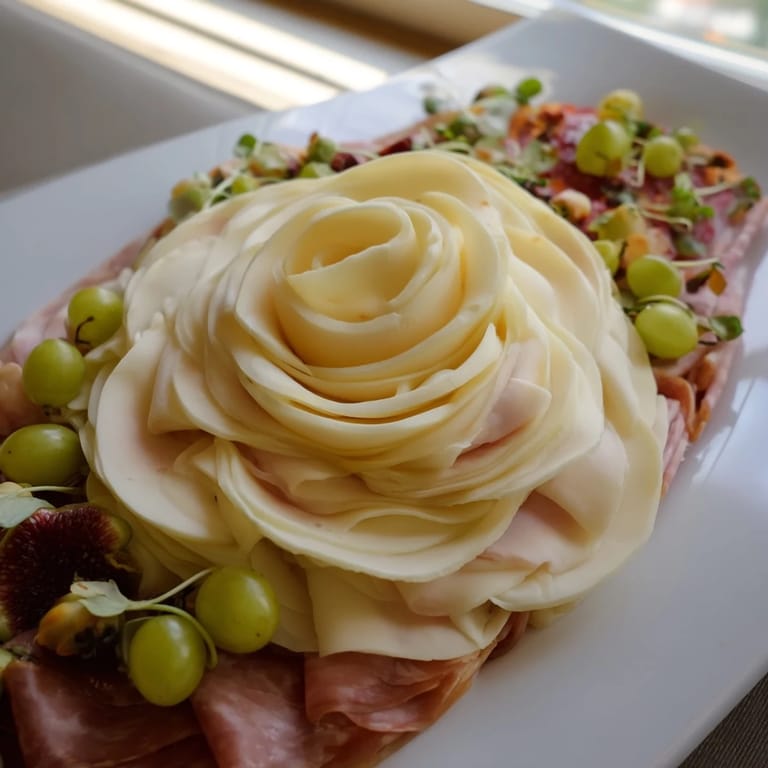
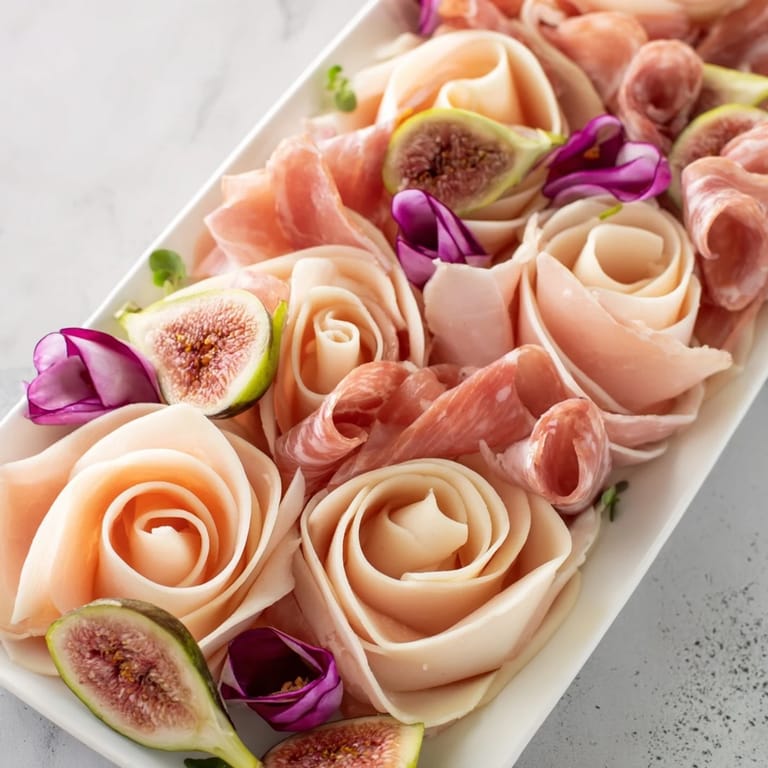
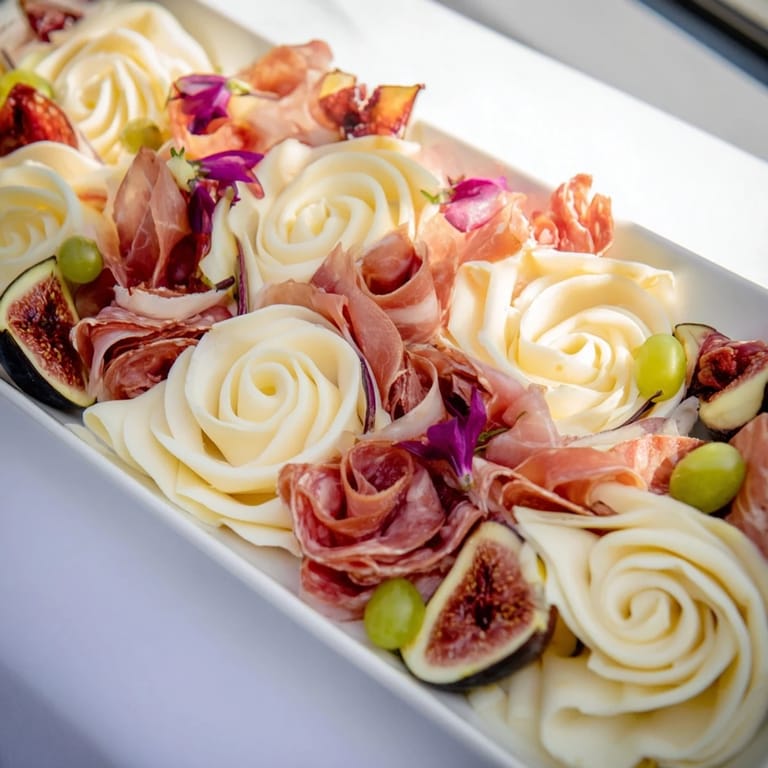
- This is where the magic happens, and yes, it feels like you're creating edible art. Take your provolone or pliable cheese and cut it into thin, long slices. Place one slice in your palm and gently roll it into a tight spiral, like you're creating the center of a rose. Then, one by one, wrap additional slices around this center, slightly overlapping each layer and gently fanning out the edges with your fingertips to resemble petals. It takes practice, but your third rose will feel effortless. The key is patience and a light touch—treat the cheese like delicate fabric.
- Create Meat Roses and Folds:
- Using the same technique, sculpt roses from your most vibrant cured meats—the soppressata or capicola work beautifully. For the remaining meats, create dramatic folds and layered ribbons. Fold each slice in half, then half again, creating standing peaks that look like they're dancing across the board. This creates height and movement, which is the secret to a board that feels alive rather than flat.
- Arrange Cheeses with Intention:
- Your cheese roses are the stars—position them first, spacing them to balance the board visually. Cut your hard cheeses into varied shapes: some into wedges, others into cubes, and a few into dramatic shards. The variety of shapes and sizes creates visual rhythm. Position the soft cheeses (like brie and goat cheese) where guests can easily access them with crackers.
- Cluster Your Fruits:
- Grapes should be left in small bunches—they're easier to grab and look more abundant this way. Scatter your pomegranate seeds like rubies. Layer your figs and dried fruits in little clusters, creating color blocks that guide the eye. Fresh pear and apple slices should go in last, just before serving, to maintain their pale beauty.
- Distribute Nuts, Olives, and Pickles:
- Create small piles or nestle these in small bowls throughout the board. This prevents the board from looking monotonous and gives guests clear points of interest. The roasted red peppers and artichoke hearts should be positioned where they can catch the light—their jewel tones are stunning visual elements.
- Arrange Your Vehicles:
- Fan out your baguette slices in flowing lines. Arrange crackers and grissini in the gaps and negative spaces, using them almost like you're painting. They're the supporting cast that allows the featured players to shine.
- Apply Your Finishing Touches:
- This is the moment where your board becomes extraordinary. Insert fresh rosemary sprigs vertically for height. Scatter edible flowers—pansies and nasturtiums are beautiful and actually taste lovely. Add microgreens for delicate greenery, and position your radish roses as final punctuation marks. Step back and see if there are any empty spots that feel awkward; fill them with something that complements the nearby ingredients.
 Save to Pinterest
 There was a moment during a dinner party when my friend picked up a perfectly folded piece of prosciutto topped with a sliver of manchego and fig jam, took a bite, and closed her eyes. She didn't say anything for a moment—she just smiled. That's when I realized this board had become more than just an appetizer; it was an experience.
The Art of Folding and Sculpting
The techniques that make this board special are genuinely easier than they appear. Folding prosciutto is about understanding that cold, thin meat is forgiving—it wants to be shaped. Start with your meat flat on a cold surface and fold it like you're creating a fan or accordion. For the standing folds that create height, fold your meat in half, then position it on the board so it stands upright. The key is that each fold should overlap slightly with the next, creating a cascading effect that makes the board feel abundant and generous. When you're sculpting cheese roses, remember that the first layer is your foundation—make it tight and secure. Each subsequent layer is looser and more open, so by the time you reach the outer petals, you're creating drama and movement. Don't overthink it; your hands know what to do.
Building Flavor Harmony
One of my biggest discoveries while perfecting this board was understanding how the elements support each other. The sharp aged cheddar needs the sweetness of the fig jam beside it. The richness of the mortadella benefits from the brightness of a pomegranate seed. The creamy brie wants the crunch of a grissini. As you arrange, think about creating flavor pairings within arm's reach of each other. Group your olives near your manchego. Position your whole grain mustard where it can accompany the chorizo. When guests can find naturally occurring flavor combinations on the board, they feel like geniuses—they've discovered secrets you planted for them.
Making It Your Own
Once you've mastered this formula, the beauty is that it's infinitely adaptable. I've made versions with smoked cheeses for depth, added candied nuts for extra sweetness, and once even included dark chocolate truffles nestled between the fruits and cheese (it was transcendent). The structure remains the same—maximize visual impact, create height and movement, cluster your elements, and balance colors—but the specific ingredients can reflect your taste and what's available at your market. Pair this board with a bold Syrah that echoes the richness of the meats, or choose a sparkling wine for an elegant, celebratory feel. Here's the real secret: your guests will be so mesmerized by the presentation that they'll give you credit for genius, even if you've simply followed a formula. That's the gift of this board.
- Prepare your board ahead of time, then cover it loosely with plastic wrap and refrigerate until thirty minutes before serving—this keeps everything fresh and cold while allowing flavors to shine.
- Always check labels for allergens, especially if you have guests with sensitivities; this board contains milk, tree nuts, gluten, and potentially sulfites.
- The best moments happen when you stop fussing and simply invite people to eat—your confidence in the presentation gives them permission to enjoy without hesitation.
 Save to Pinterest
 This Advanced Artisan Array has become my signature because it transforms the simple act of gathering around food into theater. Every time you make it, you'll refine your technique, discover new flavor combinations, and create memories around something beautiful that you built with your own hands.
Recipe FAQs
- → How do I sculpt cheese roses?
Use thin slices of pliable cheeses like provolone, rolling them into tight spirals before fanning out the edges to mimic petals for a delicate floral effect.
- → What meats work best for intricate folding?
Thinly sliced cured meats such as prosciutto, soppressata, capicola, and chorizo fold well to create layered ribbons and rosettes on the board.
- → How can I keep the board fresh before serving?
Cover the assembled board loosely with plastic wrap and refrigerate. Add fresh herbs and delicate garnishes last-minute to maintain vibrancy.
- → What garnishes enhance the presentation?
Fresh rosemary, thyme sprigs, edible flowers, microgreens, and radish roses add color, aroma, and artistic flair to the board.
- → Can I substitute ingredients for dietary preferences?
Yes, you can swap bread and crackers for gluten-free options or replace meats and cheeses with plant-based alternatives while maintaining textural diversity.