 Save to Pinterest
 There's something about the sizzle of bacon hitting a cold skillet on a quiet morning that makes you feel like you're actually cooking something worth eating. Years ago, I was tasked with making dinner for friends who claimed they didn't eat salad—until I roasted bacon, whisked its fat into something warm and tangy, and poured it over a bowl of bitter greens that had no choice but to surrender. That salad changed the conversation entirely, and now whenever someone says salad, I think of this one.
I made this for my partner on the first cold evening of autumn, when the kitchen felt less like work and more like the one place that made sense. The bacon smell drifted through the house, and by the time I brought the warm bowl to the table, there was no hesitation, no polite picking at leaves. Just two people eating something that felt both simple and genuinely special.
Ingredients
- Mixed bitter greens (4 cups): Escarole, frisée, dandelion, radicchio, or chicory each bring their own edge—use whatever looks freshest and slightly defiant at the market.
- Red onion (1 small): Thinly sliced so it becomes almost sweet and translucent when the warm dressing hits it.
- Thick-cut bacon (6 slices): The thicker the bacon, the more rendered fat you'll have, and this dressing lives or dies by that golden, savory fat.
- Red wine vinegar (2 tablespoons): Sharp enough to cut through richness but not so aggressive it bullies the greens.
- Dijon mustard (1 tablespoon): An emulsifier and a flavor anchor—it's what keeps everything from separating.
- Honey (1 teaspoon): Just enough sweetness to make the bitterness feel intentional instead of accidental.
- Freshly ground black pepper and salt (¼ teaspoon pepper, ⅛ teaspoon salt): Taste as you go; the bacon is already salty, so go easy.
- Extra-virgin olive oil (2 tablespoons): Added slowly so it emulsifies rather than just sitting on top like it doesn't belong.
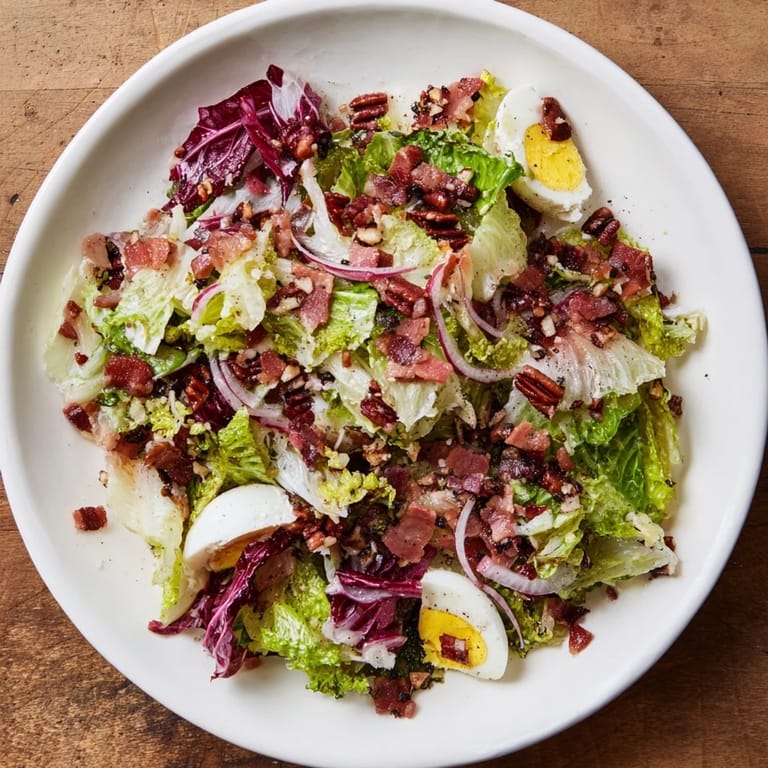
- Hard-boiled eggs and toasted walnuts or pecans (optional): These aren't required, but they turn a side dish into something that could stand alone as dinner.
Tired of Takeout? 🥡
Get 10 meals you can make faster than delivery arrives. Seriously.
One email. No spam. Unsubscribe anytime.
Instructions
- Prepare the greens:
- Rinse your bitter greens and dry them well—water is the enemy of salad dressing adhesion. Tear them into bite-size pieces, toss them with the red onion in a large bowl, and try not to dress them yet; they need to stay crisp until the hot dressing arrives.
- Cook the bacon:
- Dice your bacon and let it hit a medium-heat skillet without crowding. After seven to nine minutes, it should be crackling and deeply golden. Transfer it to paper towels and let the rendered fat stay behind like liquid gold.
- Build the dressing:
- Lower the heat to barely a whisper and whisk the vinegar, mustard, honey, pepper, and salt into that warm bacon fat, scraping up every browned bit stuck to the pan. Slowly drizzle in the olive oil while whisking constantly so it becomes creamy and emulsified rather than broken.
- Marry it all together:
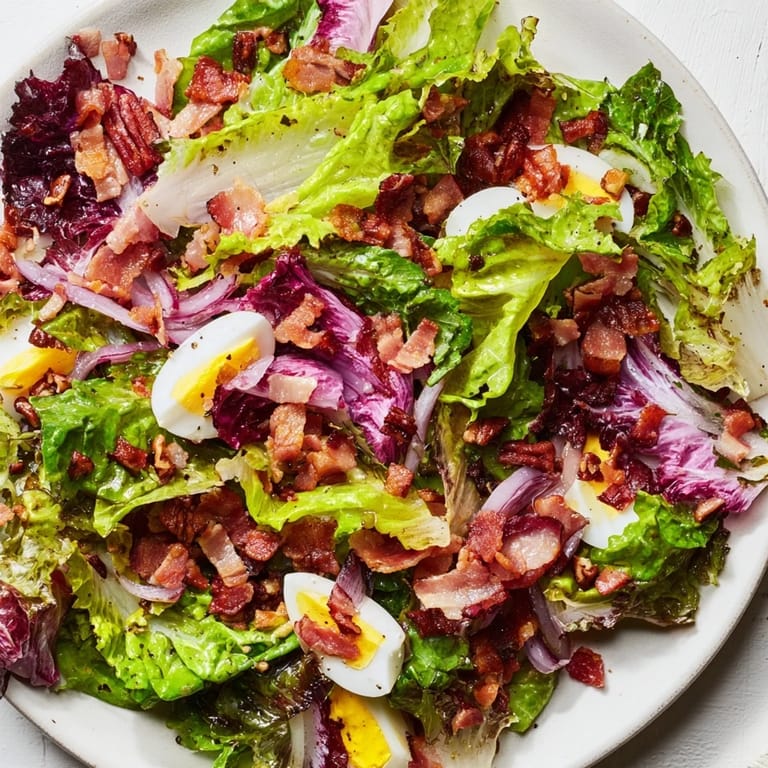
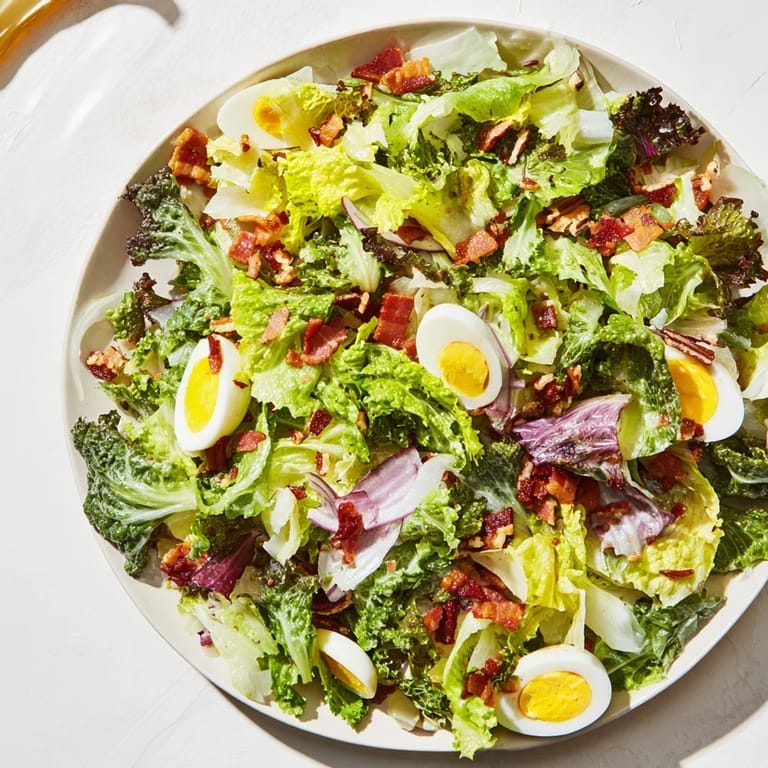
- Pour the hot dressing over the greens and onions, scatter the crisp bacon back in, and toss everything immediately so the heat just barely wilts the edges without cooking them into submission. Plate it, garnish with eggs and nuts if you're using them, and serve while everything is still warm.
 Save to Pinterest
 My mother used to say that salad was what you ate when you didn't have time to cook, which meant she'd never understood this one. When I made it for her, something shifted—she asked for the recipe, which she never did.
The Warmth Factor
Warm salads exist in a strange and wonderful space where they feel indulgent without demanding that you spend hours at the stove. The heat from the dressing softens the bitterness just enough that you remember why greens exist—they're not punishing; they're complex. This salad taught me that temperature changes everything, and that sometimes the best discoveries come from breaking the rules you didn't know were rules.
Variations and Flexibility
The beauty of this salad is that it invites tinkering. I've made it with maple syrup instead of honey on mornings when I wanted something slightly different, and the result felt both familiar and new. Thin slices of apple or pear add a brightness that plays well against the bacon and bitterness, or you can leave them out entirely and let the greens take center stage.
Making It Your Own
If you're vegetarian or just tired of bacon, sautéed mushrooms—especially cremini or shiitake—deliver an earthy depth that doesn't apologize for the absence of pork. Use extra olive oil where the bacon fat would go, and you'll have something that stands on its own. The greens will still wilt, the dressing will still emulsify, and you'll still have a salad that tastes like you meant to make something special.
- Bring all your ingredients to room temperature before you start; cold greens and cold bowls will cool your dressing faster than you'd like.
- If you're feeding a crowd, you can prep the greens and dressing separately and marry them just before serving, giving you a little breathing room.
- Leftover dressing (if there somehow is any) is beautiful over roasted vegetables or warm potatoes the next day.
 Save to Pinterest
 This salad has become the thing I reach for when I want to remind myself that simple ingredients, treated with attention and warmth, can feel like you're doing something remarkable. It's proof that salad doesn't have to be an afterthought.
Recipe FAQs
- → What types of greens work best in this salad?
Bitter greens like escarole, frisée, dandelion, radicchio, and chicory provide the ideal robust flavor and texture for this dish.
- → How does the warm bacon dressing affect the greens?
The warm dressing slightly wilts the greens, softening their bitterness while coating them in rich, smoky flavors from the bacon fat and vinegar blend.
- → Can this dish be made vegetarian?
Yes, by omitting bacon and replacing bacon fat with extra olive oil, you can sauté mushrooms to add a similar savory depth.
- → What garnishes complement this salad?
Hard-boiled egg quarters and toasted walnuts or pecans add contrasting textures and subtle richness to the greens.
- → Are there variations to the dressing sweetness?
Honey can be swapped with maple syrup for a different sweetness profile, adjusting to taste preferences.