 Save to Pinterest
 I'll never forget the afternoon my neighbor Sarah knocked on our door asking if I could help with a last-minute gathering. She had about thirty minutes and a tight budget, but wanted to impress her book club. That's when I realized that a beautiful, abundant spread doesn't require hours of cooking or fancy ingredients—just thoughtful arrangement and generous portions. We threw together what we had: quality deli meats from the discount bin, some good cheeses, crisp vegetables, and loads of crackers. Her friends arrived to a platter that looked like it had taken all day, and Sarah learned that sometimes the simplest entertaining creates the warmest memories.
I think back to that day with Sarah's book club, how the women circled that platter like it was treasure, filling their small plates with different combinations. What struck me most wasn't that the food was fancy—it was watching people relax and enjoy each other's company while grazing. That's when I understood that sharing food doesn't have to mean cooking; sometimes it's just about creating a landscape of delicious possibilities.
Ingredients
- Sliced cooked ham (200 g): Buy pre-sliced from the deli counter to save time and money—it's one of those smart shortcuts that doesn't compromise quality
- Sliced turkey breast (200 g): The milder flavor is a crowd-pleaser and pairs beautifully with both mild and sharp cheeses
- Sliced salami (150 g): This adds a little richness and visual color variation; don't skip it as it gives the platter personality
- Mild cheddar, sliced (200 g): Its approachable flavor makes it the anchor cheese that most guests will reach for repeatedly
- Swiss cheese, sliced (150 g): The holes and subtle sweetness make it visually interesting and give you a textural contrast
- Cream cheese (100 g): Spread on crackers or paired with vegetables, this becomes an instant flavor builder for guests who want something richer
- Carrots, sliced into sticks (2 large): Raw vegetables provide essential freshness and a satisfying crunch that balances the richness of meats and cheeses
- Cucumber, sliced into rounds (1): These pale green circles are refreshing and add visual appeal to fill empty spaces on the platter
- Red bell pepper, sliced (1): The bright color is non-negotiable for visual impact, and the slight sweetness is universally enjoyed
- Cherry tomatoes (1 cup): Their jewel-like appearance and natural sweetness make them work as both nutrition and decoration
- Assorted budget-friendly crackers (400 g): Volume matters here—guests should see mountains of crackers, making them feel abundant and encouraged to fill their plates freely
- Baguette, sliced (1): These toasted or fresh slices add a different textural option and stretch your carbohydrate offerings
- Hummus (1 cup): A flavor anchor that transforms simple vegetables into something more interesting
- Green olives (½ cup): Their briny pop adds sophistication without effort
- Pickles (½ cup): These acidic bites cut through richness and refresh the palate between other flavors
Tired of Takeout? 🥡
Get 10 meals you can make faster than delivery arrives. Seriously.
One email. No spam. Unsubscribe anytime.
Instructions
- Set the stage with your meats:
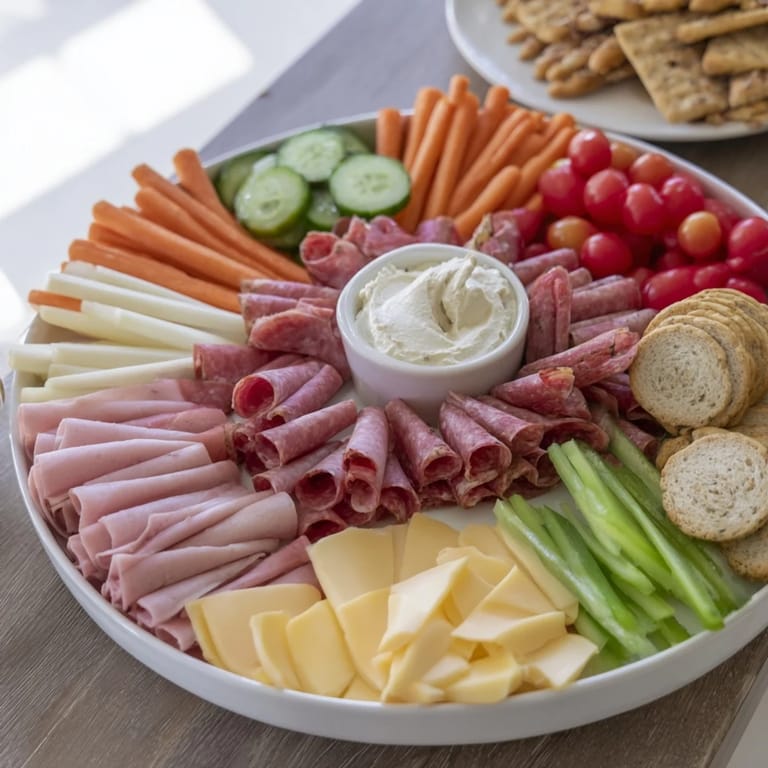
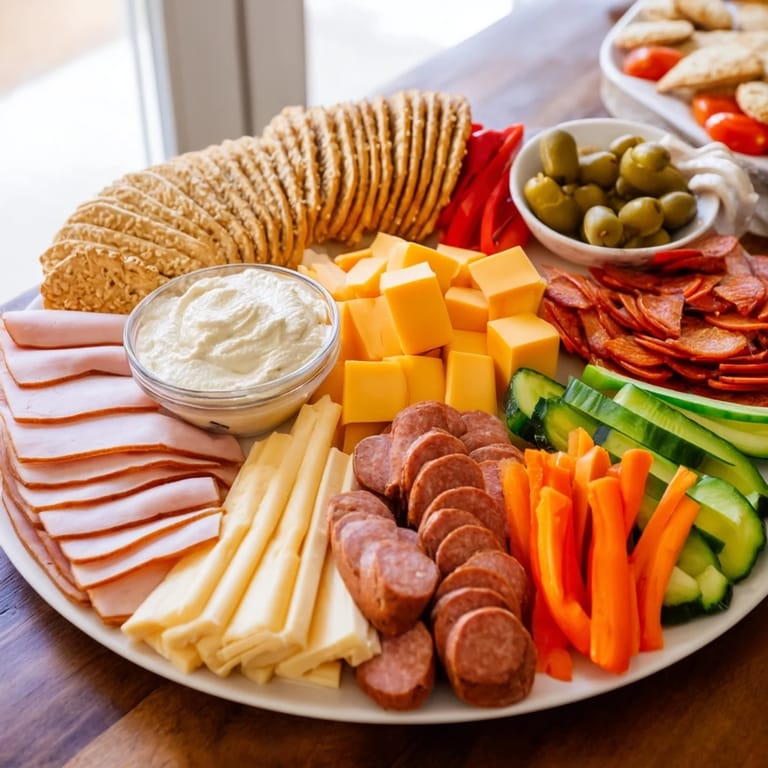
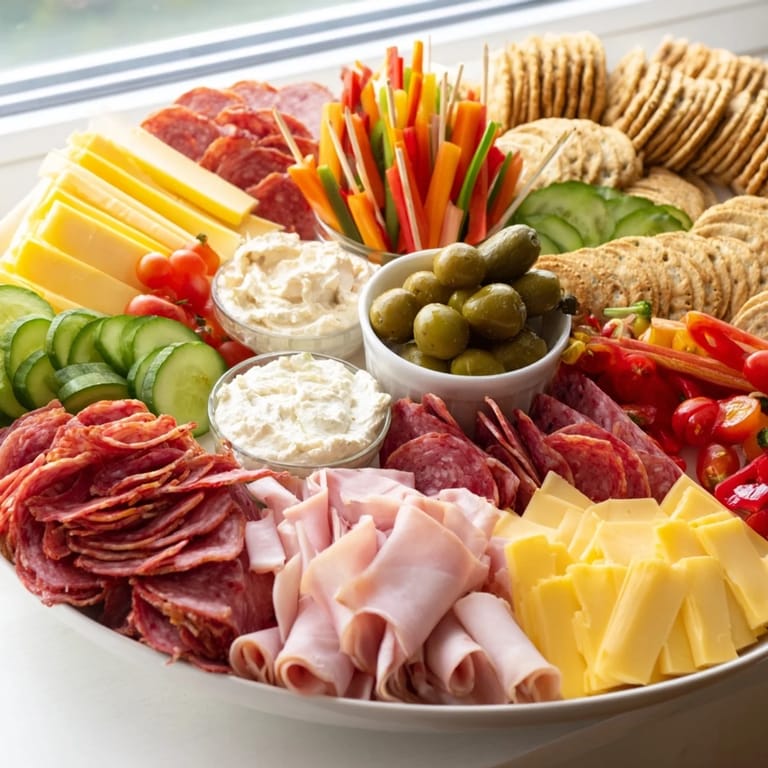
- Start by arranging your sliced ham, turkey, and salami in generous, overlapping piles at different corners of your large platter. Don't be shy—these piles should look abundant and inviting, like you've brought out the good stuff. Each person should feel like they can grab a handful without depleting the pile.
- Fan out the cheeses:
- Next to each meat pile, layer your cheddar and Swiss slices in a slightly fanned arrangement, letting them overlap just slightly so they're easy to peel off one at a time. This visual technique makes people feel like the cheese is effortlessly accessible, which is half the battle of good sharing boards.
- Create vegetable zones:
- Place your raw vegetables in large, distinct heaps around the platter—keep carrots together, tomatoes in their own cluster, pepper slices grouped, cucumber rounds in another spot. This visual organization makes it easy for guests to navigate without overthinking, and keeps the board looking intentional rather than scattered.
- Bowl the soft components:
- Pour your cream cheese, hummus, olives, and pickles into small bowls and position them around the platter's perimeter. Small bowls feel more intentional than trying to spread these directly on the board, and they're easier to refresh during your gathering.
- Stack the carbohydrates high:
- Arrange your crackers and baguette slices in tall stacks from multiple angles so guests can reach them from any position around the platter. High stacks signal abundance and make people feel encouraged to take generously.
- Serve and refresh:
- Bring your platter to the table immediately—the first ten minutes are when people establish their eating patterns. Keep an eye on depleted sections and quietly refresh them, especially the crackers and vegetables, which go faster than you'd expect.
 Save to Pinterest
 Years later, when Sarah hosted that same book club again, she made another spread—but this time she called me over beforehand to build it together. We laughed about how we'd somehow turned 'I have nothing to serve' into this moment of genuine togetherness. That's when I truly understood: this platter isn't about expensive ingredients or complicated cooking. It's about saying to your guests, 'I want you to feel taken care of and free to enjoy yourself.'
Building a Platter That Tells a Story
The best boards aren't just about what's on them—they're about the feeling they create. When you arrange items with intention and abundance, you're communicating care without saying a word. Think of your platter as a landscape: the meats are your mountains, the vegetables are the valleys, the crackers are the plains. This isn't random; it's creating a journey for the eye and the hand. I've learned that people eat with their eyes first, and when they see generosity and thoughtfulness in how food is presented, they relax and actually enjoy themselves rather than worrying about whether there's enough.
Smart Shopping for Maximum Impact
The magic of this platter is that it doesn't require premium ingredients—it requires smart choices. Buy your meats and cheeses from the deli counter where you can ask for exactly the thickness you want, and often they're less expensive than pre-packaged options. Seasonal vegetables are your friend here; in winter, you might add apple slices or pears, in summer, fresh berries or stone fruits. The beauty is that this platter adapts to what's affordable and in season where you live. I've discovered that the difference between a 'nice' board and a 'wow' board isn't the cost—it's the variety and the confidence in your choices.
Making It Your Own: Variations That Work
After making this platter dozens of times, I've learned that the formula is flexible. Some of my favorite versions came from working with what was actually available and affordable. One winter, I swapped the turkey for roast beef and added sharp aged cheddar instead of mild, creating a completely different mood. For a vegetarian gathering, I doubled the cheeses, added roasted chickpeas for crunch, and threw in some marinated artichokes for sophistication. The crackers, baguette, and vegetables become even more important in these variations because they're doing the heavy lifting. Trust your instincts and your budget—the platter works because the concept works, not because you followed an exact recipe.
- Add seasonal fruit like apple slices, grapes, or dried apricots for unexpected flavor bridges between savory and sweet
- Roasted or marinated vegetables elevate the board instantly; roasted red peppers, marinated mushrooms, or charred broccolini add sophistication without extra cooking
- Consider your guests and swap cheeses or meats strategically—local cured meats or regional cheeses tell a story and often cost less than imported options
 Save to Pinterest
 Every time I make this platter now, I think of Sarah and that moment when I realized that feeding people well isn't about complexity—it's about generosity and thoughtfulness. This spread has become my secret weapon for when I want to gather people without the stress of cooking, and somehow it always feels like I've done something special.
Recipe FAQs
- → What meats are included in the platter?
The platter features sliced cooked ham, turkey breast, and salami arranged in generous portions.
- → Are there vegetarian alternatives suggested?
Yes, meats can be omitted and replaced with more cheeses, roasted vegetables, or plant-based deli slices.
- → How should the vegetables be prepared?
Vegetables like carrots, cucumber, bell pepper, and cherry tomatoes are sliced or served whole for easy grabbing.
- → What types of crackers are recommended?
Assorted budget-friendly crackers are used, combined with baguette slices to add variety and volume.
- → Can this spread be prepared in advance?
This platter is best served fresh but can be assembled shortly before serving to maintain crispness of ingredients.