 Save to Pinterest
 I discovered the magic of a cheese platter by accident one autumn evening when I was scrambling to put together something impressive for unexpected guests. Instead of panicking, I grabbed what I had and arranged it in concentric circles around a bowl of herbed cream, and something clicked—the pattern felt intentional, almost sacred. That's when I realized a cheese board could be more than just thrown-together snacks; it could tell a story, especially when inspired by something as timeless as the Celtic cross. Now, whenever I arrange these four quadrants, I'm not just serving cheese; I'm creating a moment for people to slow down and appreciate good food together.
I made this platter for my sister's book club last spring, and what I remember most isn't how it looked on the table—though it did catch everyone's attention immediately—but how people kept gravitating back to it between conversations. Someone would drift over, grab a cracker with blue cheese and honey, and suddenly they'd be standing there nodding thoughtfully, almost meditatively. That's when I knew this wasn't just about arranging ingredients; it was about creating a reason for people to pause and connect.
Ingredients
- Irish cheddar: Its sharp, slightly sweet character anchors the board and reminds you that good cheese doesn't need to be fancy to be memorable.
- Brie: This is your creamy, approachable moment on the platter—the one people who think they don't like cheese often choose first.
- Blue cheese: It's bold and polarizing, but that's the point; it makes the board interesting and gives it backbone.
- Manchego: Nutty and smooth, it bridges the gap between the adventurous and the cautious eaters at your gathering.
- Sour cream or Greek yogurt: The base for your dip should be tangy enough to cut through the richness of the cheeses without overpowering them.
- Fresh chives: A small handful transforms the dip from forgettable to the thing people ask you about afterward.
- Seedless red grapes and dried apricots: These aren't just color; the tartness of the fruit plays against the salt and creaminess in a way that makes people reach for another piece.
- Walnuts: Their slight bitterness and crunch prevent the board from feeling too soft and precious.
- Rustic crackers and fresh baguette: Different textures matter more than you'd think; some should crunch, some should yield.
Tired of Takeout? 🥡
Get 10 meals you can make faster than delivery arrives. Seriously.
One email. No spam. Unsubscribe anytime.
Instructions
- Build your dip foundation:
- Stir sour cream with finely chopped chives, a squeeze of lemon, salt, and pepper until it tastes bright but not sharp. Taste as you go because this is your flavor anchor.
- Create the center point:
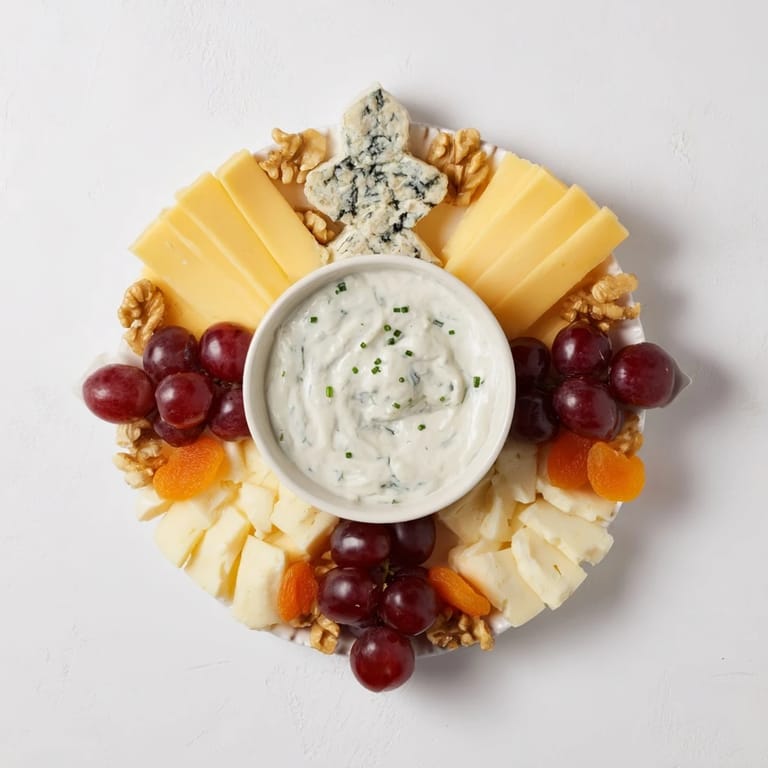
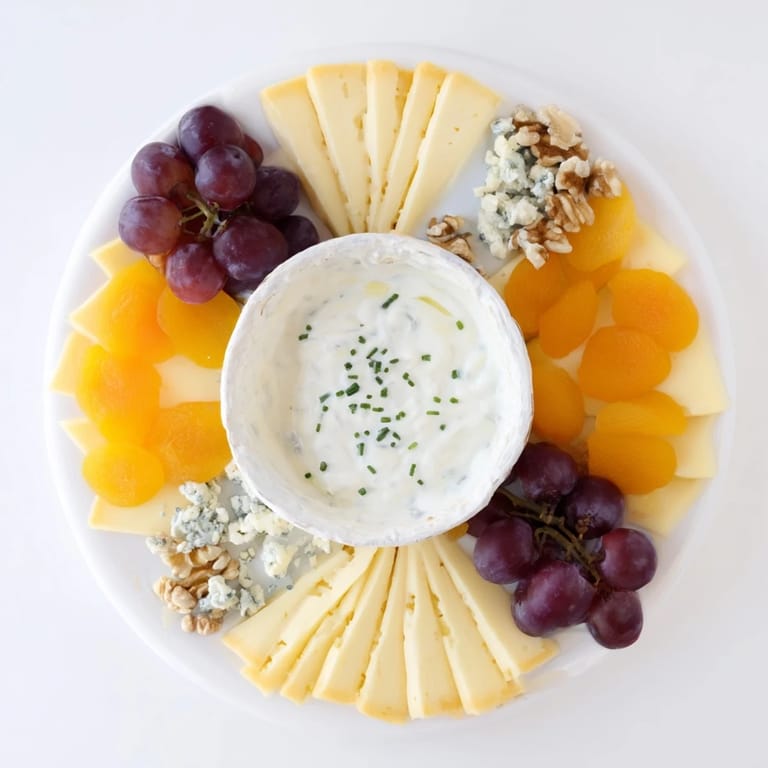
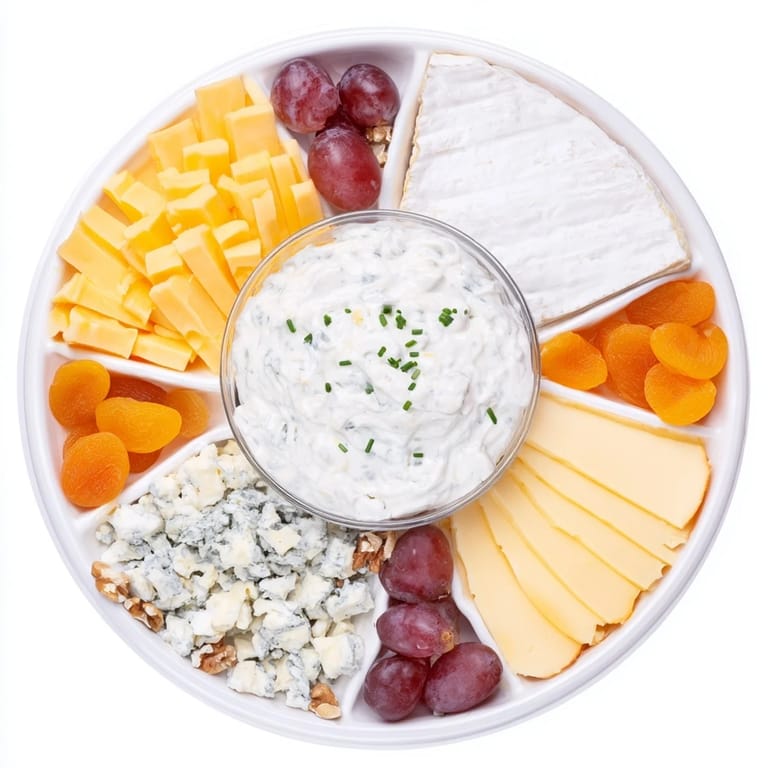
- Spoon the dip into a small round bowl and place it dead center on your serving platter—this is your Celtic cross hub.
- Divide into four mindful sections:
- Imagine the platter as a compass and mentally divide it into north, south, east, and west. Each quadrant gets one cheese type, arranged with intention—fan the Brie slices, nest the blue cheese loosely, stack the cheddar for height, and lay the Manchego flat.
- Paint with fruit and nuts:
- Fill the spaces between quadrants with grapes clustered here, apricots scattered there, and walnuts tucked into pockets. This is where you make it feel alive, not rigid.
- The honey moment:
- Drizzle honey over the blue cheese section just before serving—this tiny detail transforms that bold cheese into something people won't forget. It's a small gesture that feels generous.
- Frame it all:
- Arrange crackers and baguette slices around the outer edge, leaving enough room for hands to reach everything comfortably.
 Save to Pinterest
 There was a moment during that book club gathering when the conversation had naturally split into different groups, but everyone was standing at the platter together, and suddenly they were all talking—not about the books they were supposed to discuss, but about cheese, about places they'd traveled, about their favorite flavors. That's when I understood that a beautiful platter is really just an excuse to bring people into the same moment.
Why the Celtic Cross Shape Matters
The four-quadrant arrangement isn't just pretty; it actually serves a practical purpose. By dividing the cheeses into distinct sections, you give guests a clear visual map of what's available, and they're less likely to demolish one type completely while ignoring the others. I've found that symmetry makes people respect the arrangement more and serve themselves more thoughtfully. There's also something subtly welcoming about a design that echoes ancient symbols—it suggests care and intention, even if you threw it together in fifteen minutes.
The Dip: Your Secret Weapon
Never underestimate how much this little bowl in the center transforms the entire experience. I've seen people who swear they don't really eat dips suddenly become interested when it's made from scratch and seasoned with actual thought. The trick is keeping it simple—chives and lemon are all you need to make Greek yogurt or sour cream taste like you've done something special. Some people swirl it when they first arrive, creating little whirlpools in the white surface, and somehow that small act makes the platter feel interactive rather than just decorative.
Pairing and Serving Wisdom
I learned the hard way that this platter loves wine—not because the recipe demands it, but because the combination of tangy, creamy, sharp, and nutty flavors demands something to rinse your palate between bites. A crisp Sauvignon Blanc cuts through the blue cheese beautifully, while a light Pinot Noir somehow complements every single component without overwhelming anything. The timing of this platter also matters; serve it when people are settling in to a gathering, not when they're ravenous, because cheese boards are meant to punctuate conversation, not fuel a main meal.
- Let cheese sit out for thirty minutes before serving so flavors wake up properly.
- If you're serving this at a warm gathering, refresh the platter halfway through by removing any dried-out items and adding fresh crackers.
- Always have small cheese knives available so people don't use their fingers and then feel awkward about it.
 Save to Pinterest
 This platter works because it respects both the food and the people eating it—it's beautiful enough to feel special but approachable enough that no one feels intimidated. Make it, watch people linger, and you'll understand why simple things done with intention are often the most memorable.
Recipe FAQs
- → How should the cheeses be arranged on the platter?
Arrange each cheese type in its own quadrant around the central dip, fanning or grouping pieces attractively for visual balance.
- → What is the purpose of the central dip?
The dip adds a creamy element that complements the cheeses and ties the flavors together, placed centrally for easy access.
- → Can the platter accommodate dietary restrictions?
Yes, using vegetarian cheeses makes it suitable for vegetarian diets, but always check labels for specific allergen content.
- → What pairings enhance this cheese arrangement?
Pairings like crisp white wines such as Sauvignon Blanc or light reds like Pinot Noir complement the variety of cheeses.
- → How can I add extra flavor or variety?
Add fresh fruit slices like apples or pears, or swap cheeses for regional favorites to customize the flavor profile.
- → What tools are needed to prepare this platter?
A large round serving platter, small bowl for dip, cheese knives, and spoons for serving dip and honey are recommended.