 Save to Pinterest
 I discovered the magic of a charcuterie board for one on a quiet Sunday afternoon, sitting by the window with nothing but good light and a moment to myself. I'd been rushing through meals for weeks, eating standing up at the kitchen counter, until a friend sent me a photo of their beautifully arranged board and something clicked. Why couldn't I take five minutes to make eating feel like an occasion, even if the audience was just me? That day, I pulled together a few slices of prosciutto, some cheese I'd been saving, and suddenly my lunch felt like a small celebration. It became my favorite way to pause.
I remember making one of these for my partner on an anniversary morning before they woke up, arranging everything on our best small plate with a tiny cup of coffee beside it. They came downstairs and actually paused, stood there for a moment taking it in, and said, "You did this for me?" That's when I realized a charcuterie board isn't just food—it's a love language spelled out in cheese and cured meat.
Ingredients
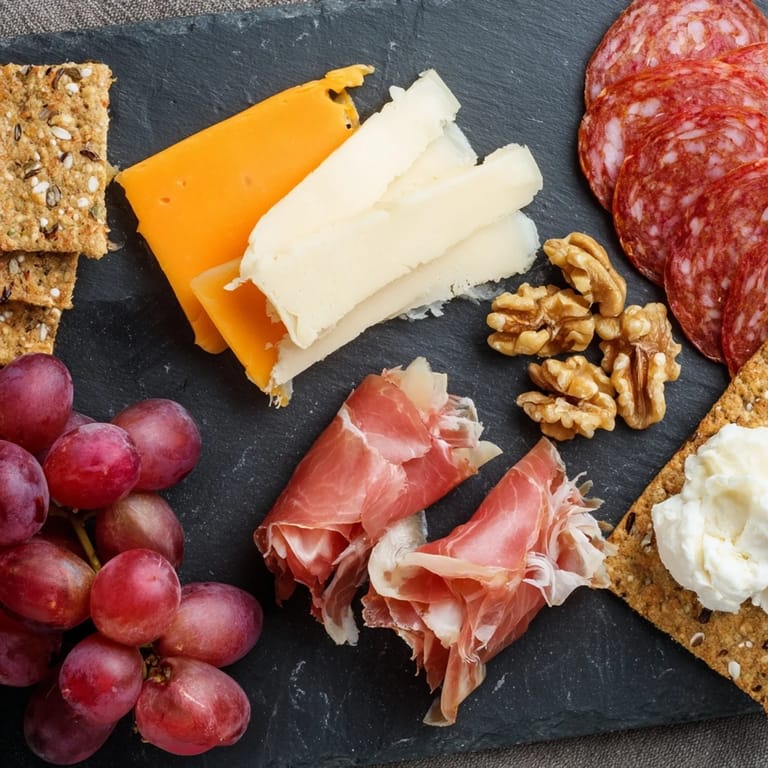
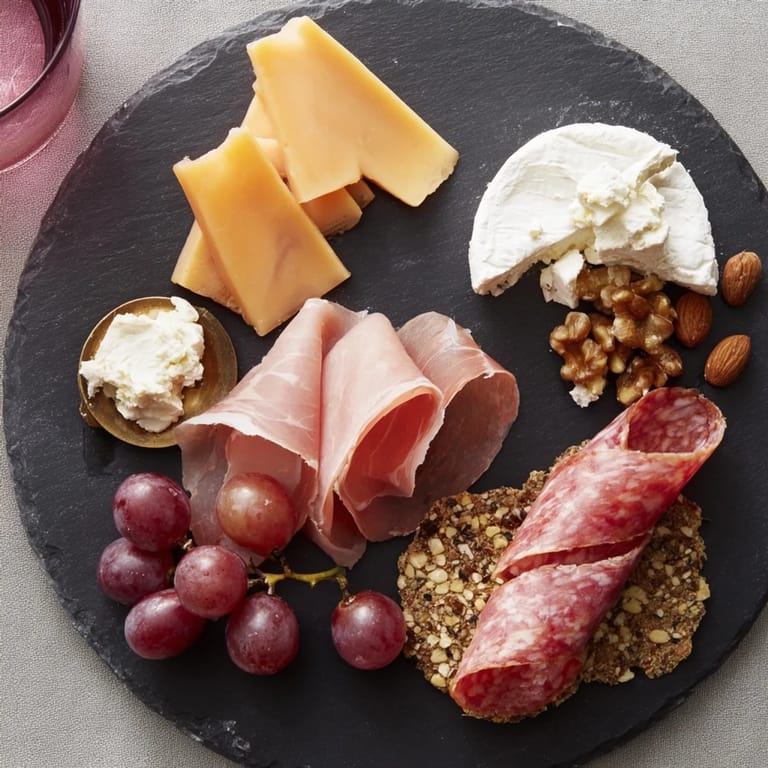
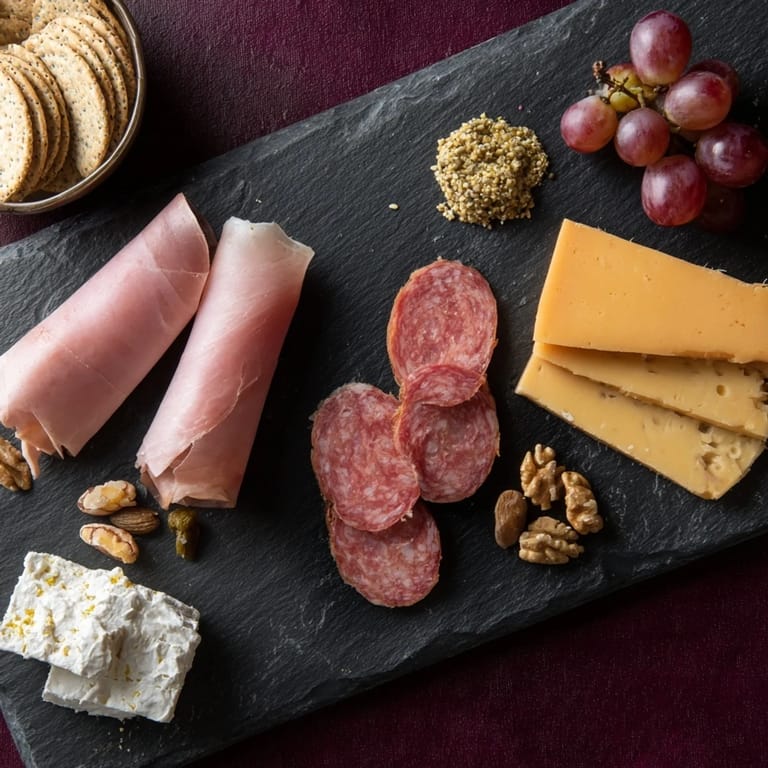
- Prosciutto: Two delicate slices, paper-thin and slightly salty. The key is letting it drape naturally on the plate—it shouldn't be tight or rolled too carefully. Let it have character.
- Soppressata or salami: Two slices of something with personality, ideally from a butcher who knows their craft. The marbling in good soppressata tells you it's been loved.
- Aged cheddar or brie: About an ounce, cut into a wedge or small cube depending on your mood. Aged cheddar brings a sharp note; brie feels luxurious and creamy.
- Soft goat cheese or blue cheese: Another ounce, a contrasting choice that adds complexity. Goat cheese feels bright; blue cheese feels bold.
- Seedless grapes or fresh berries: A small handful, roughly five to seven pieces. These aren't just garnish—they're palate cleansers, little moments of sweetness between bites of salt and richness.
- Mixed nuts: A tablespoon of almonds, walnuts, or whatever you have that feels crispy. Toast them lightly if you want to add an extra layer of flavor.
- Cornichons or baby gherkins: Two or three, for that briny snap that wakes up your mouth.
- Whole grain mustard: Just a teaspoon, a tiny dollop that you'll dab onto crackers. It's the unexpected guest that somehow makes everything better.
- Small crackers or sliced baguette: Three to four pieces, ideally something with texture that won't crumble under the weight of cheese. Gluten-free versions work beautifully if that matters to you.
Tired of Takeout? 🥡
Get 10 meals you can make faster than delivery arrives. Seriously.
One email. No spam. Unsubscribe anytime.
Instructions
- Choose your canvas:
- Find a small slate coaster, a ceramic appetizer plate, or even a cutting board if that's what calls to you. Something that feels intentional, not just functional. This is the stage where your little meal will perform.
- Arrange the meats with intention:
- Lay the prosciutto and soppressata on one side of the plate, letting them fold and create texture. Don't make them too neat—nature isn't neat, and neither should this be. Let them overlap slightly, creating shadows and depth.
- Position the cheeses for conversation:
- Place your two cheeses next to the meats, but give them their own space. If the cheddar is hard, cut it into a small wedge. If the goat cheese is soft, let it sit as a small mound. They should look like they each have something to say.
- Fill the gaps with life:
- Now comes the fun part—tuck your grapes or berries into the empty spaces, scatter the nuts, nestle the cornichons. This is where you get to play, where the arrangement becomes art. Don't overthink it; trust your eye.
- Add the mustard moment:
- Place a small teaspoon of whole grain mustard on the plate, either in a tiny dollop or on the side. This is your flavor anchor, the thing that will make you go back for another bite.
- Stack the crackers with pride:
- Lean your crackers or baguette slices against each other in the remaining space. They should feel sturdy enough to hold the toppings you'll pile on them, but arranged in a way that shows you cared.
- Step back and admire:
- Before serving, look at what you've created. Notice how the colors balance—the deep red of the meats, the pale gold of the cheese, the green of the grapes. This is your moment. Then serve immediately to yourself, and take your time with every single bite.
 Save to Pinterest
 One evening, I made a charcuterie board while on a video call with my sister who lives across the country. She was eating her dinner, and I was eating mine, and for forty-five minutes we just sat there together, talking and eating and sharing that quiet, comfortable silence that only happens between people who really know each other. The board suddenly wasn't just about the food anymore—it became about connection, about saying, "I'm taking time for myself, and I'm okay with that."
The Art of Small Pleasures
There's something revolutionary about deciding that you deserve a beautiful meal, even if you're eating alone. Most of us are trained to think that putting effort into food is only justified when we're feeding others, when we have an audience. But somewhere along the way, I learned that the most important person at the table is always you. When you treat yourself with the same care and attention you'd give a guest, something shifts. You start to taste better, enjoy more, and actually remember the meal instead of just consuming it while distracted by your phone.
Pairing and Serving Suggestions
A charcuterie board for one is endlessly flexible, which is exactly why it became my go-to for so many different moments. On a lazy afternoon, I pair it with a crisp white wine—something with acidity that cuts through the richness of the cheese and cured meat. If I'm feeling something deeper, a light red works beautifully. But honestly, it's just as good with sparkling water and a squeeze of lemon, or even a strong cup of tea if that's what the moment calls for. The point isn't the drink; the point is that you're creating a moment, and everything else is just details.
Make It Your Own
The beauty of this board is that it's a starting point, not a rulebook. Swap the meats for whatever your butcher recommends that day. Trade the cheddar for a manchego if that's what you're craving. Add a small square of dark chocolate for sweetness—yes, really, it works. I've made boards with fig jam, with honey, with roasted peppers. I've added hard-boiled eggs, fresh figs when they're in season, even a small spoonful of pesto. The ingredients aren't sacred; what matters is that each element represents something you actually want to eat in that moment.
- Trust your instincts when choosing cheeses and meats—buy what makes you happy, not what the recipe demands.
- If something on the board doesn't excite you, remove it. A perfect board with items you love beats a complete board with obligatory elements.
- Remember that this takes ten minutes, so don't stress about symmetry or perfection—a board made with genuine care will always look beautiful.
 Save to Pinterest
 A charcuterie board for one has become my favorite small rebellion against a world that says we should always be busy, always be feeding others, always be performing. It's a reminder that you deserve beauty, intentionality, and time—even if it's just ten minutes on a Tuesday afternoon.
Recipe FAQs
- → What meats are ideal for this board?
Thinly sliced cured meats such as prosciutto and soppressata or salami offer rich flavors and texture contrast.
- → How should the cheese be chosen and arranged?
Use a mix of aged cheddar or brie with soft goat or blue cheese, arranged separately to showcase their textures and colors.
- → What accompaniments complement the board?
Fresh grapes or berries, mixed nuts, cornichons, and a dollop of whole grain mustard enhance flavor and variety.
- → Can this board be adapted for dietary needs?
Yes, substituting gluten-free crackers and selecting allergen-friendly nuts or cheeses will accommodate various diets.
- → How to present the board attractively?
Arrange items on a small slate or appetizer plate with balanced colors and shapes for visual harmony and appeal.