 Save to Pinterest
 One summer afternoon, I was staring into my nearly empty fridge wondering what could possibly feel refreshing in that heat, and I spotted a forgotten box of soba noodles. I'd bought them on impulse at an Asian market weeks before, imagining some grand dish that never materialized. That day, something clicked—what if I turned them into something cold, something that would actually make me want to eat? What started as necessity became my go-to answer for those brutal hot days when cooking itself feels like a punishment.
I made this for my sister's surprise birthday dinner on a sweltering July evening, and I'll never forget how she took one bite and immediately asked for the recipe. She sat in my kitchen, chopsticks in hand, eating straight from the serving bowl while we talked about everything and nothing. It became the dish she requests every summer now, and honestly, I think she loves it as much for the memory as for the taste.
Ingredients
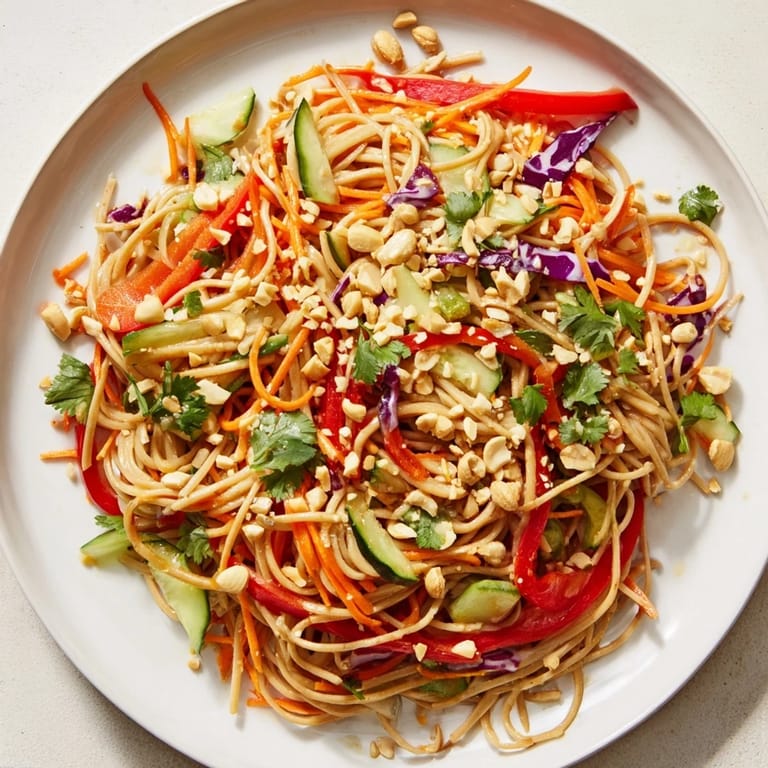
- Soba or rice noodles (250g): Soba brings an earthy nuttiness, but rice noodles work beautifully if you're avoiding wheat—the key is rinsing them thoroughly in cold water after cooking so they don't clump together.
- Carrot, julienned: Use a vegetable peeler or mandoline to create thin ribbons that catch the dressing and add a subtle sweetness.
- Red bell pepper, thinly sliced: The brightness cuts through the richness of the sesame oil and makes every bite feel alive.
- Cucumber, seeded and julienned: Seeding prevents the salad from getting watery as it sits, which I learned the hard way after making a soggy batch for a picnic.
- Spring onions, finely sliced: These provide a gentle onion bite that keeps the whole dish from feeling too heavy.
- Red cabbage, thinly shredded: It holds its crunch longer than other vegetables and adds visual drama with that deep crimson color.
- Fresh cilantro, chopped: Not everyone loves cilantro, so taste as you go—you can always add more but you can't take it back.
- Soy sauce (3 tbsp): Use good quality soy sauce if you can; the cheaper versions taste thin and overly salty.
- Rice vinegar (2 tbsp): This is gentler than regular vinegar and gives the dressing a subtle sweetness that balances the salty-savory elements.
- Toasted sesame oil (2 tbsp): A little goes a long way here—it's intensely fragrant and nutty, so don't be tempted to add more thinking it will improve the dish.
- Honey or maple syrup (1 tbsp): This rounds out the dressing and tames any harsh edges, making it taste more complex than the sum of its parts.
- Fresh ginger, finely grated (1 tbsp): Grate it directly over the dressing—there's a brightness to freshly grated ginger that you lose with pre-minced versions.
- Garlic clove, minced (1): One clove is usually enough unless you're a garlic lover like I am, in which case add what feels right.
- Sriracha or chili sauce (1 tsp, optional): This is your heat control—skip it entirely if you prefer mild, or lean into it if you like a kick.
- Toasted sesame seeds (1 tbsp): Toast your own if you have the time; they transform from barely noticeable to nutty and vibrant.
- Roasted peanuts or cashews: These add the final textural element—they stay crunchy even when the salad has been sitting, which is essential.
Tired of Takeout? 🥡
Get 10 meals you can make faster than delivery arrives. Seriously.
One email. No spam. Unsubscribe anytime.
Instructions
- Boil the noodles until tender:
- Get water to a rolling boil and cook the noodles according to package directions, usually around 8-10 minutes for soba. The moment they're done, drain them into a colander and run cold water over them while stirring gently with your fingers—this stops the cooking and prevents sticking.
- Prep your vegetables with care:
- Julienne means thin matchstick cuts, and honestly, the more uniform your cuts, the better the salad looks and eats. If you don't have a mandoline, a sharp knife and a little patience work just fine.
- Whisk the dressing until it sings:
- Combine soy sauce, rice vinegar, sesame oil, honey, ginger, garlic, and sriracha in a small bowl, whisking until the honey dissolves and everything looks glossy and emulsified. Taste it now while it's just dressing—it should make your mouth water.
- Bring it all together in one bowl:
- Add the cooled noodles and all your prepped vegetables to a large mixing bowl, then pour that dressing over everything. Toss gently but thoroughly, making sure every strand of noodle gets coated—this is where the magic happens, where individual ingredients become something unified.
- Finish with crunch and color:
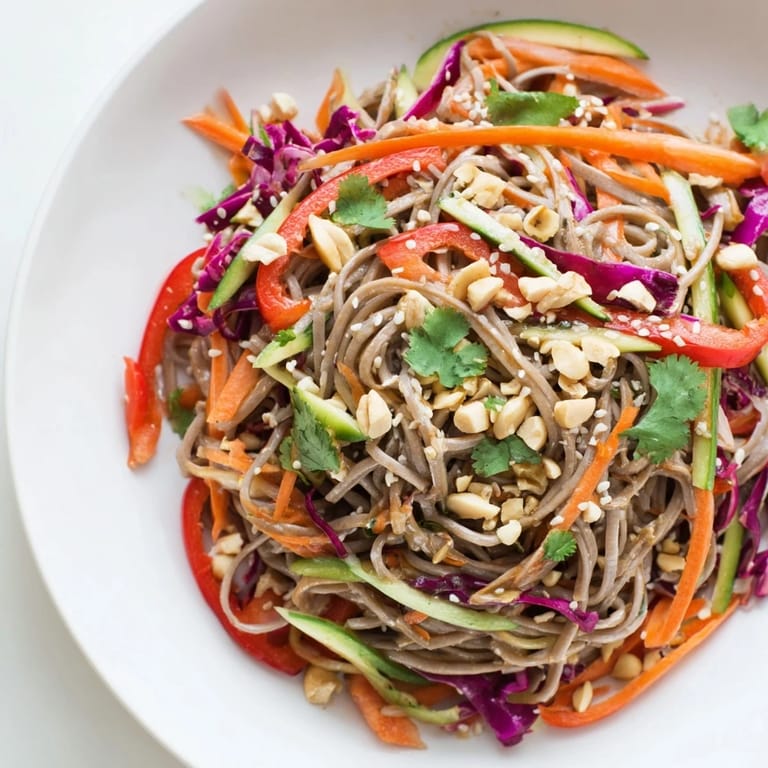
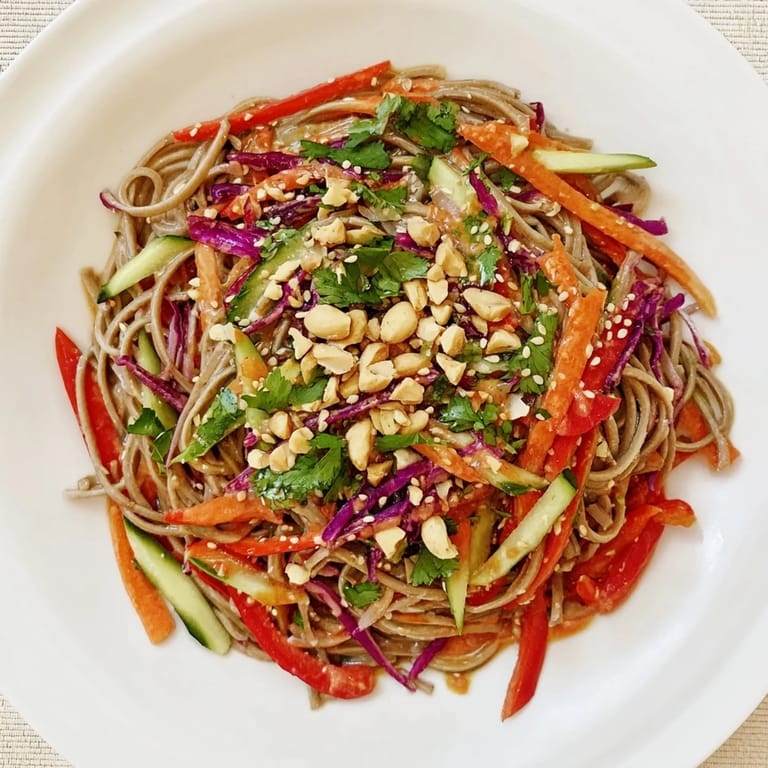
- Divide the salad among bowls and scatter roasted peanuts and sesame seeds over each one right before serving. The textural contrast is what elevates this from side dish to something you actually want to sit down and enjoy.
 Save to Pinterest
 There's something profoundly satisfying about serving a salad that's both beautiful and nourishing, especially when someone comes back for seconds without prompting. I've watched people who claim they don't really eat salads dig into this with real enthusiasm, and I think it's because it doesn't feel like punishment food—it feels like a genuine choice.
How to Make It Your Own
The skeleton of this recipe is flexible enough that you can follow it loosely and still end up with something delicious. I've made it with whatever vegetables were on hand—thin slices of zucchini, shredded beets, fresh mint instead of cilantro—and each version told a different story about what my garden or farmers market had offered that week. The dressing is the real hero, so keep that consistent and let the vegetables be your canvas.
Serving Ideas and Timing
This salad is naturally flexible about when you want to eat it. Serve it immediately while the noodles still have warmth and the vegetables are at peak crunch, or chill it for an hour and let all the flavors settle into something more cohesive and deep. I've brought it to picnics in a sealed container, transported it in my car, and even served it straight from the fridge at midnight when heat kept us all awake—it held up beautifully every time.
Scaling and Storage
The quantities I've given make four generous servings, but this recipe scales up beautifully for crowds without losing its charm. Store leftovers in an airtight container in the refrigerator for up to three days, though I'd recommend keeping the nuts separate and stirring in fresh ones right before eating to maintain that textural contrast. If you find it's dried out a bit, whisk another tablespoon of sesame oil and rice vinegar together and toss it through gently—the salad will come back to life.
- Double or triple the quantities if you're feeding a group; the cooking time stays roughly the same.
- Make the dressing in a jar and shake it well before using, which is easier than whisking if you're multiplying the recipe.
- Keep dressed salad in one container and toppings in another if you're meal prepping, combining them only when you're ready to eat.
 Save to Pinterest
 This is the salad that taught me summer cooking doesn't have to mean compromising on satisfaction, and that sometimes the best meals come from working with what you have rather than what you planned. I hope it becomes as much a part of your warm season as it's become part of mine.
Recipe FAQs
- → What noodles work best for this dish?
Soba noodles provide a nutty flavor, but rice noodles are a great gluten-free alternative with a soft texture.
- → Can I make the dressing spicier?
Yes, adding more Sriracha or chili sauce will increase the heat to your preference.
- → How should I prepare the vegetables?
Julienne or finely slice the vegetables to ensure they mix well and provide a crisp texture.
- → Is it best served immediately or chilled?
Serving chilled after an hour enhances the flavors, but it can also be enjoyed immediately.
- → Can I add protein to this salad?
Yes, cooked shrimp, grilled chicken, or tofu complement the salad well for added protein.
- → How to adjust for nut allergies?
Omit the peanuts or cashews and substitute with crunchy seeds like pumpkin or sunflower seeds.