 Save to Pinterest
 One sweltering afternoon, I found myself staring into an empty refrigerator, desperate for something that didn't require turning on the oven. A jar of tahini caught my eye, and I remembered my friend raving about cold sesame noodles from her favorite takeout spot. That night, I threw together what I had—some spaghetti, a handful of vegetables, and a wild guess at what the sauce should taste like. When I tossed it all together and took that first slurp, the cool, nutty sauce coating every strand, I realized I'd stumbled onto something I'd be making all summer long.
I made this for a backyard picnic last July when everyone showed up wilted and exhausted from the heat. Watching my neighbor go back for thirds, sauce dripping from the corner of her mouth while she complained about how good it was, made me feel like a genius in the kitchen. She asked for the recipe right there, standing on my grass in bare feet, and I realized this simple noodle dish had somehow become the star of the afternoon.
Ingredients
- Wheat noodles or spaghetti (350 g): Use whatever pasta you have; the sturdy noodles hold the sauce beautifully without falling apart when chilled.
- Sesame oil (1 tbsp for noodles): This initial toss prevents everything from clumping into a brick once the noodles cool down.
- Tahini or Chinese sesame paste (4 tbsp): This is the soul of the sauce—find good quality stuff and you'll taste the difference immediately.
- Smooth peanut butter (2 tbsp): It adds richness and helps emulsify the sauce into something silky rather than gritty.
- Low-sodium soy sauce (3 tbsp): The salt anchor that brings everything into focus; taste as you go because soy sauces vary wildly in saltiness.
- Rice vinegar (2 tbsp): The brightness that cuts through all that richness and keeps the dish from feeling heavy.
- Honey (1 tbsp): A touch of sweetness that rounds out the savory and spicy notes; maple syrup works just as well if you're vegan.
- Toasted sesame oil (1 tbsp): Different from regular sesame oil—this stuff is darker, more fragrant, and adds nutty depth.
- Garlic and ginger (2 cloves and 1 tbsp): Finely grated so they dissolve into the sauce rather than sitting as chunks.
- Chili oil (1–2 tsp): Optional, but it transforms the dish from comforting to exciting; start with less and build up.
- Cold water (3–5 tbsp): The secret to sauce consistency—add it slowly because you can always add more but you can't take it back.
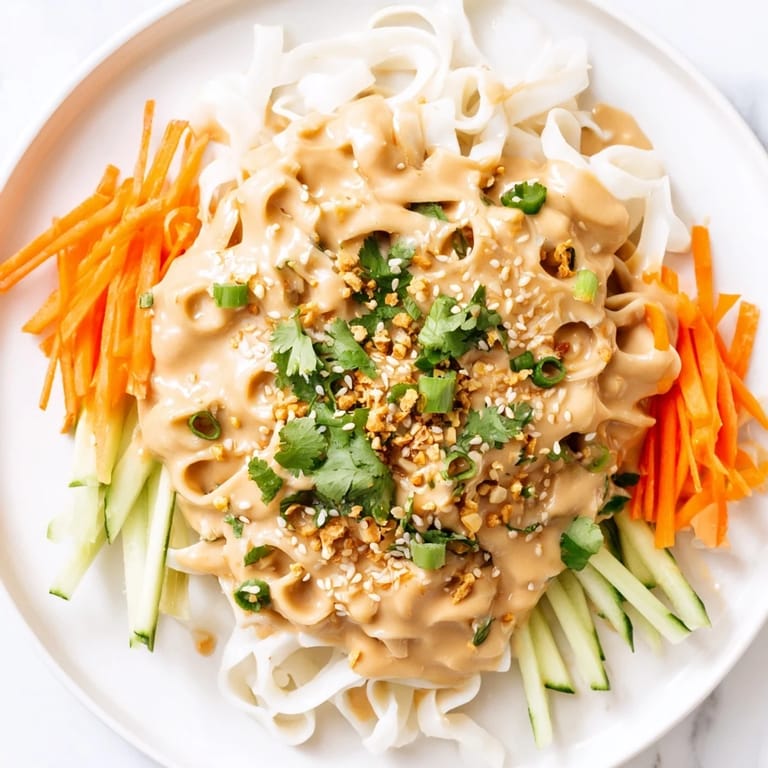
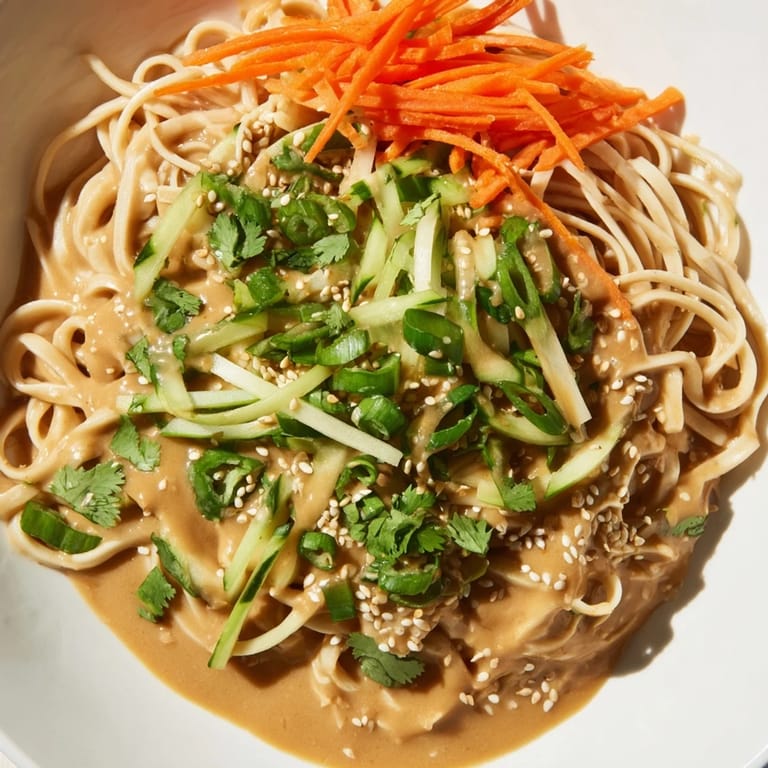
- Cucumber, carrots, and spring onions: Julienned vegetables add crunch and freshness that keeps every bite interesting.
- Toasted sesame seeds and cilantro: The final flourish that makes this look like you actually know what you're doing.
- Lime wedges (optional): A squeeze of fresh lime right before eating brightens everything.
Tired of Takeout? 🥡
Get 10 meals you can make faster than delivery arrives. Seriously.
One email. No spam. Unsubscribe anytime.
Instructions
- Get your noodles ready:
- Boil water, cook noodles until just tender but still with a bit of bite, then drain and run them under cold water—really cold, not just a quick rinse. The sesame oil toss at the end keeps them from turning into a clump.
- Build the sauce:
- Whisk tahini, peanut butter, soy sauce, vinegar, honey, and toasted sesame oil together in a bowl. Grate in the garlic and ginger, add chili oil if you're feeling bold, then slowly pour in cold water while whisking until it looks silky and pourable. Taste it and adjust—this is your moment to make it exactly what you want.
- Bring noodles and sauce together:
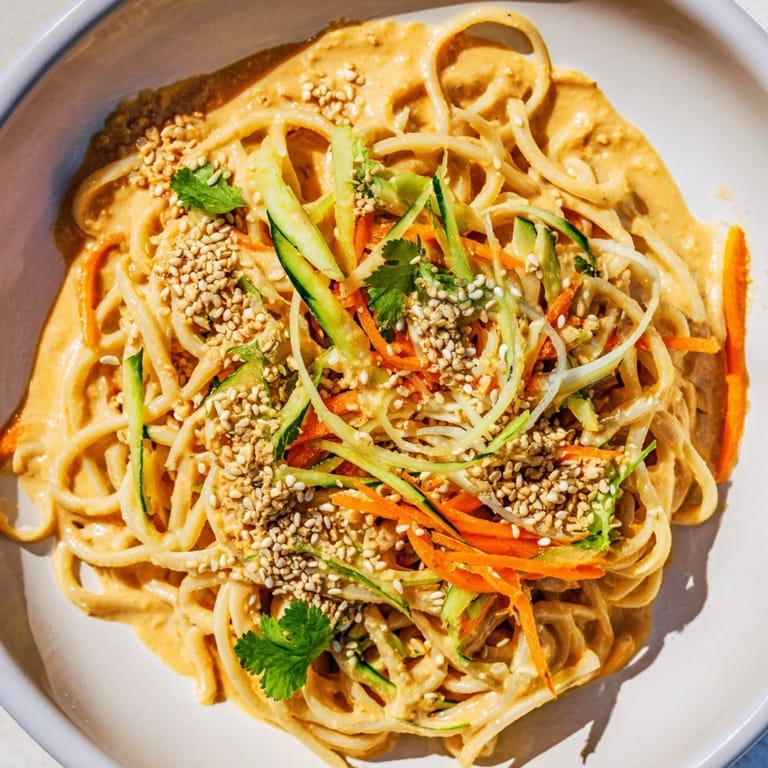
- Toss the cooled noodles with that glossy sauce, making sure every strand gets coated. This is honestly the most satisfying part of the whole process.
- Compose your bowls:
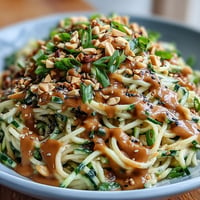
- Arrange noodles in bowls and pile on the fresh vegetables, sesame seeds, cilantro, and peanuts. Serve with lime wedges so people can add brightness at the table.
- Chill and serve:
- Let it sit in the fridge for 10–15 minutes if you have the patience, which allows flavors to meld and everything to become properly cold. Or serve right away—I won't judge.
 Save to Pinterest
 My daughter, who normally turns her nose up at anything green, asked for seconds of this dish because she was too busy crunching on vegetables to complain about them. Watching her slurp noodles with such unselfconscious joy reminded me that sometimes the best moments in cooking aren't about impressing anyone—they're about feeding people something that tastes like summer and friendship.
Making the Sauce Creamy
The magic happens when tahini and peanut butter meet cold water in the right sequence. When I first made this, I dumped all the water in at once and ended up with something grainy and separated. Now I whisk the dry ingredients first, then add water a tablespoon at a time, watching it transform into something silky. It's like watching emulsion happen right in front of you—suddenly all those oil-based ingredients decide to play nicely together.
Vegetable Prep and Texture
Julienning vegetables might seem fussy, but those thin matchsticks are the whole point. They contribute crunch without overwhelming the delicate noodles, and they look elegant without requiring any special skill beyond patience. I've learned to prep the vegetables while the noodles cook so everything comes together at the same moment, and honestly, the repetitive motion of cutting is almost meditative on a stressful day.
Flavor Customization and Serving Ideas
This dish is endlessly flexible—sometimes I add shredded rotisserie chicken, sometimes crispy tofu, sometimes nothing but vegetables. The sauce stays consistent and magnificent no matter what protein you choose. The real magic is that it tastes even better the next day, making it the ultimate answer to the question of what to eat when you're too hot to think about cooking.
- Keep chili oil on the side so everyone can customize their heat level rather than guessing how spicy to make the whole batch.
- Fresh lime juice added at the table perks everything up and adds a brightness that tastes like summer in a squeeze.
- Leftovers keep for three days in the fridge, and cold noodles straight from the container make an unbeatable midnight snack.
 Save to Pinterest
 This dish has become my answer to summer's most pressing question: what do we eat tonight that doesn't involve heat? Make it once and you'll understand why it's the recipe I keep coming back to, the one that's become as essential to warm weather as an icy drink and a shaded spot to sit.
Recipe FAQs
- → What noodles work best for this dish?
Wheat noodles or spaghetti work well, but gluten-free noodles can be used to accommodate dietary needs.
- → How can I adjust the sauce thickness?
Gradually add cold water while whisking the sauce until it reaches a smooth, creamy but pourable consistency.
- → Can I make this dish spicy?
Yes, adding chili oil provides a mild heat that complements the sesame and peanut flavors nicely.
- → What garnishes enhance the dish?
Julienned cucumber, carrots, spring onions, toasted sesame seeds, fresh cilantro, and crushed peanuts add layers of texture and flavor.
- → Is this suitable for meal prep?
Definitely. The noodles can be cooked and cooled in advance, and the sauce can be mixed ahead for quick assembly before serving.