 Save to Pinterest
 There's something almost meditative about chopping vegetables for minestrone on a quiet Sunday afternoon. My neighbor Maria taught me her version years ago, standing at her kitchen counter with the radio playing softly in the background, and I realized then that this soup isn't just about throwing ingredients together, it's about the rhythm of the knife hitting the board, the way the kitchen fills with the smell of sautéed onions and garlic, and how something so humble becomes deeply nourishing. Every time I make it now, I'm transported back to that moment, her hands guiding mine, her voice explaining why you never rush the soffritto.
I once made this for a group of friends on a gray January evening when everyone showed up damp and tired from the cold. Watching them wrap their hands around warm bowls and sink into the couch, that's when I understood why minestrone has survived for centuries in Italian kitchens, not because it's fancy, but because it does exactly what you need it to do in that moment.
Ingredients
- Olive oil: Use good quality if you can, because you'll taste it early on when you're building the foundation of the soup.
- Onion, celery, and carrots: This is your soffritto, the holy trinity that makes every Italian soup sing, so don't skip the proper chopping and sautéing step.
- Garlic: Mince it fine and add it after the soffritto so it doesn't burn and turn bitter on you.
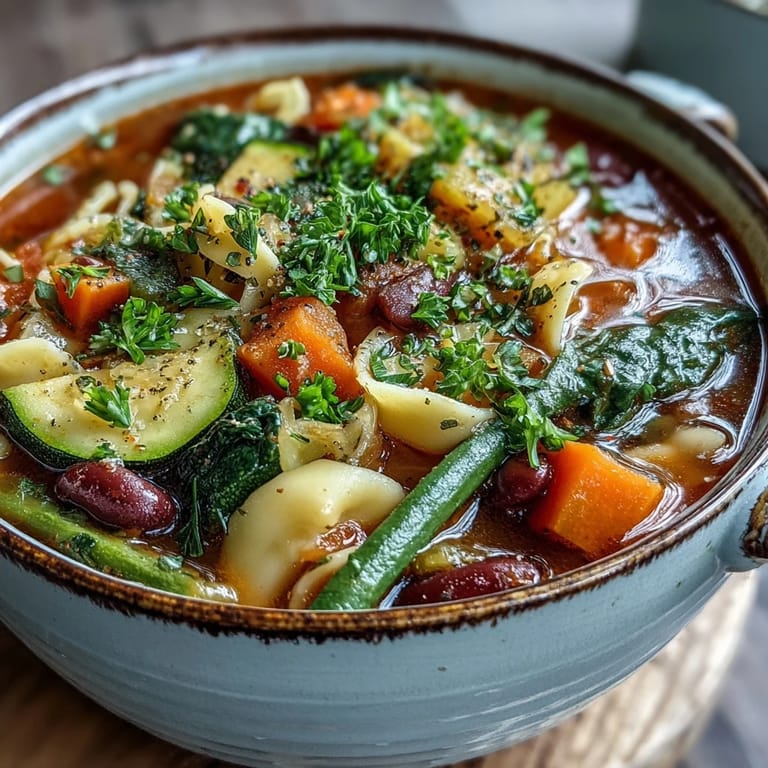
- Zucchini and green beans: These add freshness and texture, but feel free to swap in whatever seasonal vegetables you've got on hand.
- Baby spinach or kale: The greens go in at the very end so they stay vibrant and don't turn into mush.
- Diced tomatoes and tomato paste: The tomato paste is your secret weapon for depth, trust it even though it seems like a small amount.
- Vegetable broth: A good broth matters here, so if you have homemade, this is the time to use it.
- Small pasta like ditalini: It should be truly small so every spoonful has a bit of pasta in it, creating that perfect balance.
- Cannellini or kidney beans: Already cooked and canned is fine, just rinse them well to remove excess sodium.
- Dried oregano, basil, and thyme: These three herbs are non negotiable, they're what make it taste unmistakably Italian.
- Bay leaf: One is enough, and remember to fish it out before serving.
- Fresh parsley: Save some for garnish because it brings color and a fresh note that finishes the whole thing beautifully.
Tired of Takeout? 🥡
Get 10 meals you can make faster than delivery arrives. Seriously.
One email. No spam. Unsubscribe anytime.
Instructions
- Build your base with the soffritto:
- Heat the olive oil in a large pot over medium heat, then add the diced onion, celery, and carrots all together. Let them sauté for about five minutes until they soften and start to turn golden at the edges, and your kitchen will smell incredible.
- Deepen with aromatics:
- Stir in the minced garlic along with the zucchini and green beans, cooking for just three to four minutes until everything is fragrant and slightly tender. This is where the soup starts to feel real.
- Create the flavorful liquid:
- Add the canned tomatoes with their juice, the tomato paste, vegetable broth, and all your dried herbs plus the bay leaf. Stir it together and bring the whole thing to a boil, then immediately lower the heat and let it simmer gently for fifteen minutes so all the flavors have time to meld together.
- Finish with the pasta and beans:
- Stir in the small pasta and drained beans, cooking for about ten minutes until the pasta is tender but still has a little bite to it. Taste as you go because every pasta shape cooks a bit differently.
- Wilt in the greens:
- Add the spinach or kale along with the fresh parsley, then simmer for just two or three minutes until everything is wilted and brilliant green. This is the final moment where the soup transforms into something complete.
- Season and serve:
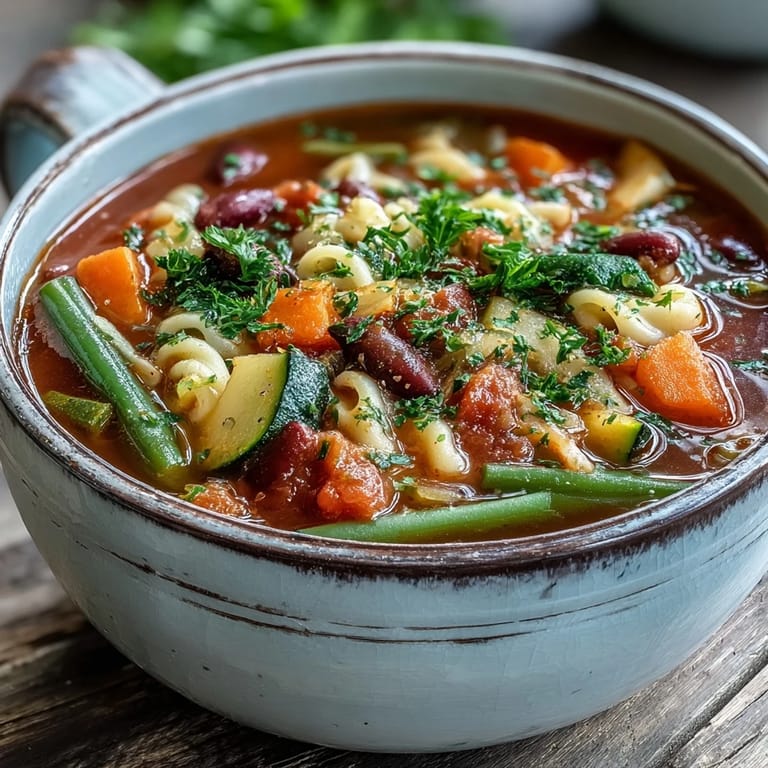
- Remove the bay leaf, then taste and adjust with salt and pepper until it feels right to you. Ladle it into bowls, finish with more fresh parsley, and serve while it's still hot with crusty bread on the side.
 Save to Pinterest
 The real magic happened when my teenage daughter came home from school, tossed her backpack aside, and asked if I'd made 'that soup' because she could smell it from the driveway. I realized that minestrone had become comfort in our house, not just a recipe.
Why Minestrone is Your New Weeknight Weapon
This soup teaches you something important about cooking if you let it, which is that simplicity and good technique can turn basic ingredients into something that feels luxurious and satisfying. There's no cream, no complicated steps, no special equipment beyond what you already have, yet somehow a bowl of minestrone can shift your entire evening in the right direction.
The Flexibility That Makes This Recipe Shine
Once you understand the formula, minestrone becomes a blank canvas for whatever you have on hand. Summer versions bulge with zucchini and fresh tomatoes and basil picked from the garden, while winter versions go deeper with root vegetables and heartier greens. I've added roasted red peppers, swapped in chickpeas, thrown in kale, used orzo instead of ditalini, and every version has been delicious because the structure stays sound.
Serving and Storing Your Soup
Minestrone is one of those rare recipes that actually tastes better the next day because all the flavors have had time to really get to know each other. The pasta will continue to absorb liquid as it sits, so if you're saving leftovers, store the soup and any extra pasta separately and combine them when you reheat, or add a splash of broth when reheating to loosen things back up.
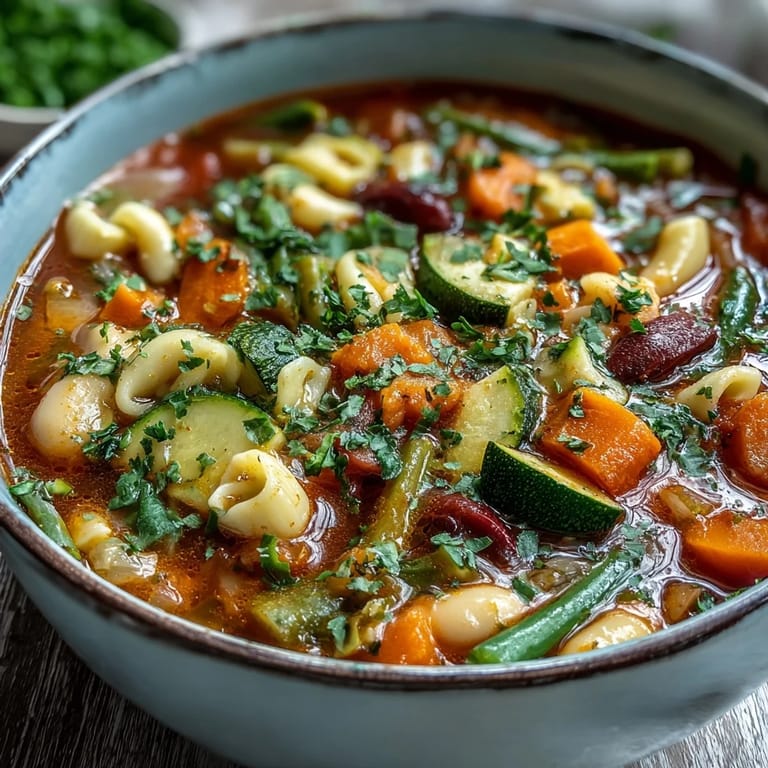
- Serve it in wide bowls with a generous handful of fresh parsley and a good grating of Parmesan cheese if you eat dairy.
- A thick slice of crusty bread is practically mandatory here, perfect for soaking up every last bit of broth.
- This soup freezes beautifully for up to three months, just let it cool completely before transferring to freezer containers.
 Save to Pinterest
 Minestrone reminds us that the most nourishing meals are often the simplest ones, built on technique rather than fuss. Make this soup and you'll understand why it's been feeding people for generations.
Recipe FAQs
- → What pasta works best in minestrone?
Small pasta shapes like ditalini, elbow macaroni, or small shells work perfectly. They cook evenly and fit on the spoon with vegetables.
- → Can I freeze this minestrone?
Yes, freeze for up to 3 months. Consider slightly undercooking the pasta as it will soften when reheated. Add fresh greens after thawing.
- → What vegetables can I substitute?
Swap seasonal vegetables freely. Try diced potatoes, bell peppers, cabbage, or butternut squash. Use whatever fresh produce you have available.
- → How do I make this gluten-free?
Use gluten-free pasta and ensure your vegetable broth is certified gluten-free. The rest of the ingredients are naturally gluten-free.
- → Can I make this in a slow cooker?
Sauté vegetables first, then transfer everything except pasta and spinach to your slow cooker. Cook on low for 6-7 hours. Add pasta during the last 30 minutes.
- → What makes minestrone authentic?
Authentic minestrone features the holy trinity of Italian cooking—onions, carrots, celery—plus tomatoes, beans, and pasta in a herb-infused broth.