 Save to Pinterest
 There's something almost meditative about the first time hojicha touches your kitchen—that warm, toasted aroma filling the air while you're folding delicate egg whites into a batter. I discovered this roll cake on a quiet afternoon, not through a cookbook, but from watching someone in a small Tokyo café layer thin sponge with fragrant cream like they were composing a painting. The mango twist came later, a spontaneous addition when I had one sitting on my counter that needed using, and somehow it became the version I make again and again.
I'll never forget making this for my sister's birthday dinner last spring—she'd just started getting into Japanese desserts, and I wanted to impress her without being obvious about it. When she took that first bite and closed her eyes, something shifted in how I understood cooking. It wasn't about complexity or technique showing off; it was about creating a moment where someone tasted care.
Ingredients
- Eggs, separated (4 large): The magic happens in the separation—yolks give richness while whites become your structural foundation when beaten to stiff peaks, creating that cloud-like texture.
- Granulated sugar (80 g, divided): Split between the yolks (40 g) and whites (40 g) to build flavor gradually and ensure your meringue holds firm without becoming grainy.
- Whole milk (60 ml): Use full-fat milk if you have it; it keeps the sponge tender and prevents the dry crumb that skim milk can create.
- Vegetable oil (50 ml): This stays liquid at room temperature, making the cake more tender than butter-based cakes—don't skip it or substitute with melted butter.
- Cake flour, sifted (70 g): Sifting matters here because cake flour is delicate; lumps trap pockets of dry flour that become tough spots when baked.
- Cornstarch (10 g): This small amount replaces some flour, lowering the protein content further for an even softer crumb that rolls without cracking.
- Hojicha powder (1 tbsp for cake, 2 tsp for cream): Roasted green tea powder carries all the flavor—buy from a Japanese market if possible, as quality varies widely and affects the taste noticeably.
- Salt (1/4 tsp): A pinch amplifies the hojicha flavor without tasting salty, so don't leave it out thinking it won't matter.
- Heavy cream, chilled (200 ml, minimum 35% fat): Cold cream whips faster and holds peaks better; room temperature cream will never achieve the same structure.
- Powdered sugar (2 tbsp): This dissolves instantly into cream while granulated sugar leaves gritty texture, so the type matters.
- Ripe mango, peeled and sliced (1 whole): Choose one that yields slightly to thumb pressure; underripe mango is tough to eat in a roll and overripe becomes mushy.
Tired of Takeout? 🥡
Get 10 meals you can make faster than delivery arrives. Seriously.
One email. No spam. Unsubscribe anytime.
Instructions
- Prepare your workspace:
- Preheat the oven to 170°C (340°F) and line your 23 x 33 cm baking tray with parchment paper, letting it come up the sides. This temperature is lower than typical cakes because a delicate sponge bakes gently and evenly, preventing the edges from setting while the center stays underbaked.
- Build the yolk base:
- Whisk the 4 separated egg yolks with 40 g sugar in a large bowl until the mixture turns pale and creamy—this takes about 2 minutes and signals that air is being incorporated. Add the 60 ml milk and 50 ml oil, mixing until completely smooth and glossy before you move to the next step.
- Fold in the dry ingredients:
- Sift the cake flour, cornstarch, hojicha powder, and salt together into a separate bowl, then gently fold into the yolk mixture using a spatula in a slow, deliberate motion. Stop folding as soon as no streaks of flour remain, because overworking develops gluten and toughens the crumb—you're aiming for barely combined.
- Create the meringue:
- In a completely clean, dry bowl, beat the 4 egg whites on medium speed until foamy and opaque, then gradually add the remaining 40 g sugar while continuing to beat. Once stiff peaks form—when you lift the beaters and the peaks stand straight up—stop immediately or the meringue breaks down and becomes watery.
- Combine with care:
- Fold the meringue into the yolk-flour mixture in three separate additions, using large, gentle strokes from the bottom of the bowl upward. This staged approach prevents the heavy batter from deflating all your hard-whipped air in one go, which is the most common mistake that leads to dense, sunken cakes.
- Bake the sponge:
- Pour the batter into the prepared tray and smooth the surface gently with an offset spatula, then tap the tray on the counter a few times to release trapped air bubbles. Bake for 13 to 15 minutes until the surface springs back when you press it lightly with your finger—the cake should be pale golden but not brown.
- Cool and prepare for rolling:
- Remove the cake from the oven and immediately invert it onto a fresh sheet of parchment paper, then gently peel away the original baking paper. Loosely cover the warm cake with a clean kitchen towel and let it cool completely on the counter—this prevents it from drying out while the structure sets enough to roll without cracking.
- Whip the hojicha cream:
- Once the sponge has cooled, place your chilled bowl and beaters in the freezer for 5 minutes, then add the 200 ml heavy cream, 2 tbsp powdered sugar, and 2 tsp hojicha powder. Whip on medium-high speed for about 2 minutes until the mixture reaches medium-stiff peaks—you want it thick enough to spread but still soft enough to not overwork when rolling.
- Assemble the roll:
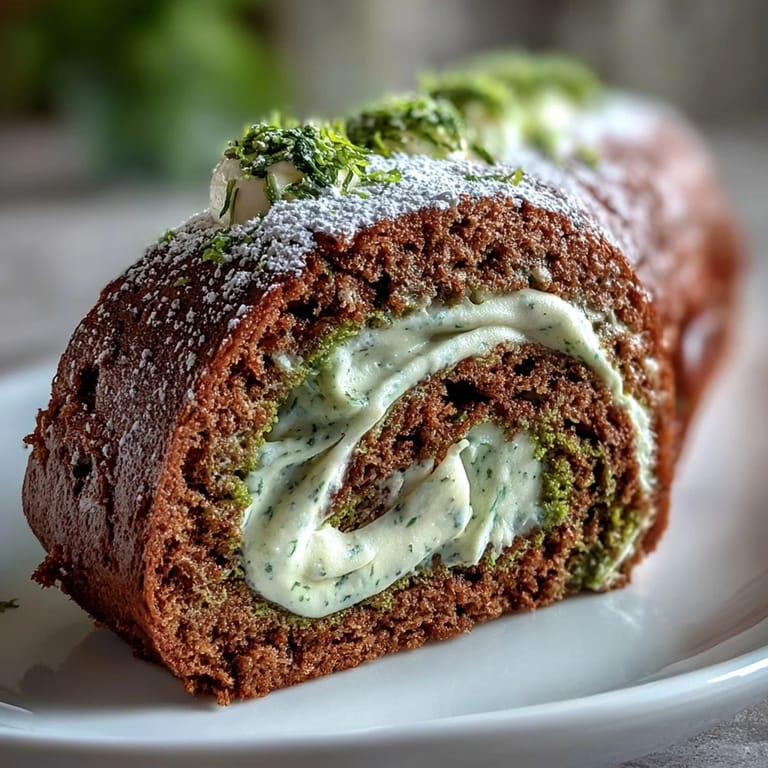
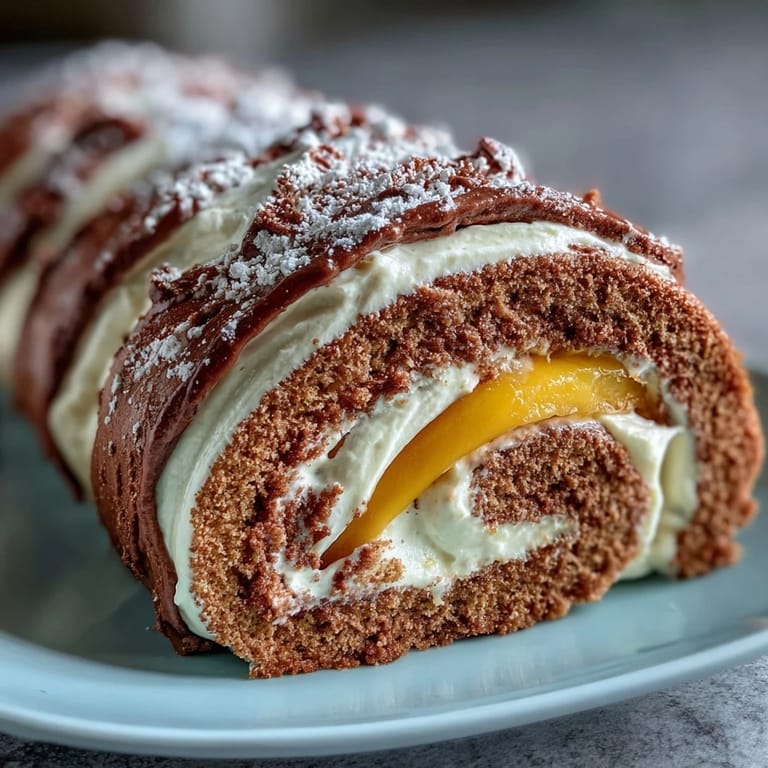
- Spread the hojicha cream evenly across the entire surface of the cooled sponge using an offset spatula, leaving about 1 cm (0.5 in) bare along the far edge to prevent cream from squishing out. Arrange your mango strips in a neat line along one short edge, then use the parchment beneath to guide the cake as you roll it tightly from the mango side into a spiral.
- Set and serve:
- Wrap the roll in fresh parchment paper and place it seam-side down on a baking sheet, then refrigerate for at least 30 minutes so the cream sets and the roll holds its shape when sliced. Trim the ends with a sharp, warm knife (wipe it clean between cuts) for a neat presentation, and dust with a pinch of hojicha powder or powdered sugar just before serving.
 Save to Pinterest
 The first time someone told me they made this for their own dinner party, I felt something I hadn't expected—a quiet pride that a recipe I loved had traveled into someone else's kitchen and become theirs too. That's when I realized hojicha roll cake isn't really about technique or ingredients; it's become a small bridge between people who want to create something beautiful together.
Why Hojicha Matters
Hojicha is green tea that's been roasted at high temperature, which strips away its grassy notes and replaces them with warmth—toasted grain, nuts, caramel, and smoke all at once. Unlike regular matcha, hojicha has lower caffeine and a gentler, almost comforting flavor that doesn't compete with the delicate sponge but instead wraps around it. The first time I tasted a proper hojicha, I was in a small tea shop in Kyoto on a cold morning, and something about that roasted aroma felt like it belonged in dessert all along.
Timing and Temperature Secrets
Baking this cake at 170°C instead of the typical 180°C might seem like a small difference, but it completely changes how the sponge develops. Lower heat means gentler expansion, which creates smaller, more uniform crumbs that are tender enough to roll without the papery, thin, cake-mix texture you get from higher heat and shorter time. The key is watching for that light golden color and the spring-back test—ovens vary wildly, so trust your senses more than the timer.
Customizing Your Roll
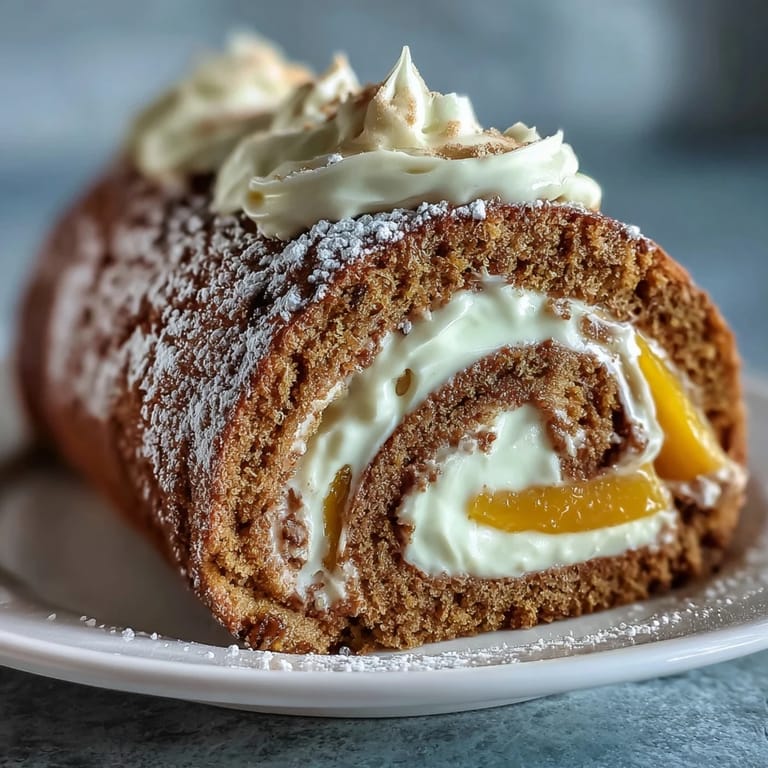
Once you understand the basic structure, this cake becomes a canvas for whatever you're craving or what your market has in season. Strawberries work beautifully if you can find ripe ones; slice them thin so they distribute evenly through the roll without creating wet spots that weep into the cream. Peaches, raspberries, or even lightly candied citrus peel all bring different textures and brightness, and sometimes the best version is the one that uses what's ripest today.
- If substituting fruit, choose something with enough texture to not turn to mush during rolling and chilling.
- For a less sweet version, reduce the powdered sugar in the cream to 1 tablespoon and let the hojicha flavor take the lead.
- A light dusting of hojicha powder on the serving plate adds a professional touch and reminds people of that toasted tea flavor.
 Save to Pinterest
 This hojicha roll cake has a way of becoming the dessert people ask for by name, the one that sits in the quiet corner of memory where food becomes comfort. Make it once, and you'll understand why it keeps coming back to your table.
Recipe FAQs
- → What is hojicha?
Hojicha is roasted green tea from Japan, distinguished by its deep reddish-brown color and earthy, nutty flavor profile. The roasting process reduces caffeine content while creating a warm, toasty aroma that pairs beautifully with dairy in desserts.
- → Why did my sponge crack when rolling?
Cracking typically occurs when the cake is rolled while too warm or has been overbaked. Ensure the sponge springs back when touched, and let it cool completely on a fresh sheet of parchment. Rolling while warm makes the sponge more pliable and less prone to cracks.
- → Can I make this ahead of time?
Yes, the assembled roll can be wrapped tightly in plastic and refrigerated for up to 24 hours. The hojicha cream may soften slightly, but the flavors will develop beautifully. Bring to room temperature for 15 minutes before slicing for cleaner cuts.
- → What can I substitute for mango?
Strawberries, peaches, or raspberries work wonderfully. For a pure hojicha experience, omit fruit entirely and dust the finished roll with additional hojicha powder for an intense tea presentation.
- → How do I know when the sponge is done baking?
The sponge is ready when it springs back when lightly pressed with a finger, approximately 13-15 minutes at 170°C. Avoid opening the oven door too early, as the sudden temperature change can cause the delicate sponge to collapse.
- → Can I use regular green tea powder instead of hojicha?
Matcha or regular green tea powder will alter the flavor significantly—hojicha's roasted, earthy notes are unique to this variety. While possible, the result will be more grassy and bitter rather than the warm, toasty profile intended.