 Save to Pinterest
 A friend arrived at my place on a rainy Thursday evening with nothing but a loaf of bread and an appetite, so I raided the deli counter and my cheese drawer to see what we could create. What emerged wasn't a fussy charcuterie board—it was something bolder, cleaner, almost architectural. I'd grabbed a rough slate tile from a renovation project sitting in my kitchen and thought, why not? The straight lines felt honest, the stark presentation electric. That night taught me that the best entertaining doesn't require fussiness, just confidence and good ingredients arranged with intention.
When my neighbor popped over with wine, I realized this platter had somehow turned into the meal—everyone just kept returning to it, picking, tasting combinations. The black pepper hit different against the salty prosciutto, and watching someone taste manchego with a cornichon for the first time felt like sharing a small secret. That's when I understood: this wasn't about complexity, it was about permission to linger and discover.
Ingredients
- Smoked prosciutto: Buy it sliced paper-thin from the counter—the smoke adds depth that pairs beautifully with sharp cheeses.
- Soppressata: This Italian cured salami has just enough garlic and pepper to stand up to bold flavors without overwhelming.
- Coppa: Slightly softer than soppressata with a marbled appearance, it offers richness without heaviness.
- Mortadella: Its delicate, slightly sweet pork flavor acts as a bridge between the sharper and milder elements.
- Aged cheddar: Look for something with crystalline bits that crunch between your teeth—that texture is everything.
- Manchego: Nutty and buttery, it's Spanish excellence that holds its own against aggressive flavors.
- Gruyère: Complex and slightly caramelized, it brings umami depth to the lineup.
- Blue cheese: The wild card that makes people pause and reconsider what they thought they wanted.
- Seedless red grapes: They provide sweetness and slight acidity that resets the palate between bites.
- Cornichons: These tiny pickles are essential—their vinegar cuts through richness like nothing else can.
- Whole grain mustard: Coarse seeds add texture and mild heat without the sharp bite of yellow mustard.
- Mixed olives: Include both green and black for variety in flavor and visual contrast.
- Freshly cracked black pepper: The final finish—ground just before serving releases aromatics that elevate everything.
Tired of Takeout? 🥡
Get 10 meals you can make faster than delivery arrives. Seriously.
One email. No spam. Unsubscribe anytime.
Instructions
- Set Your Canvas:
- Place the slate or stone board where it'll be the focal point—this is your stage. If you have time, chill it in the freezer for 15 minutes so everything stays cool longer and the board becomes tactile and inviting.
- Line Up the Meats:
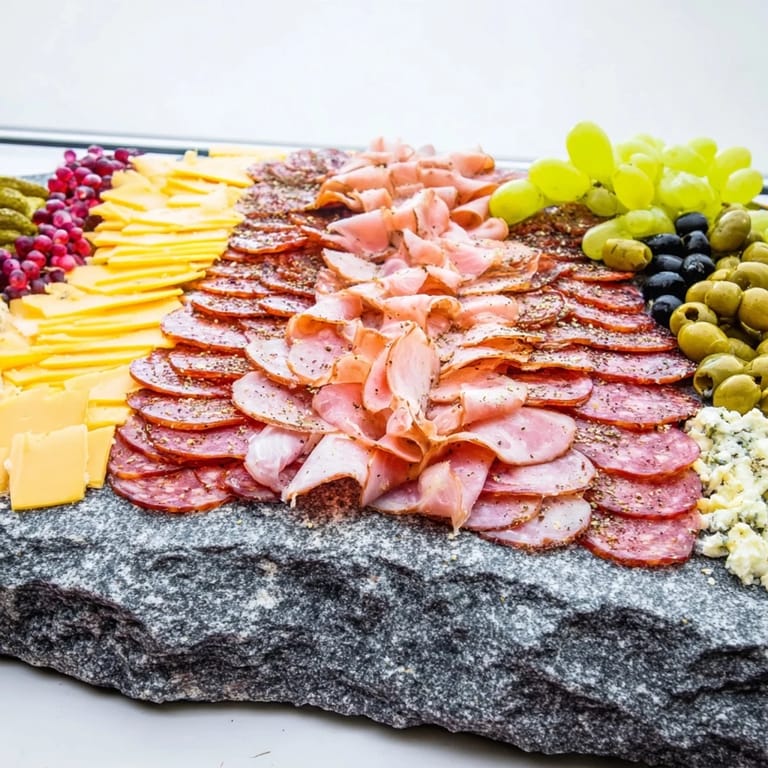
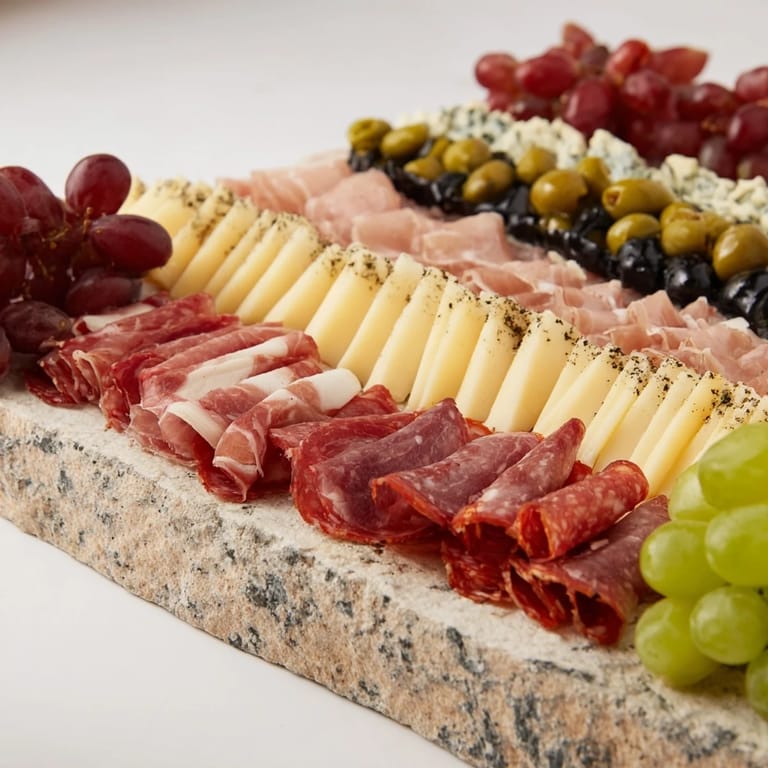
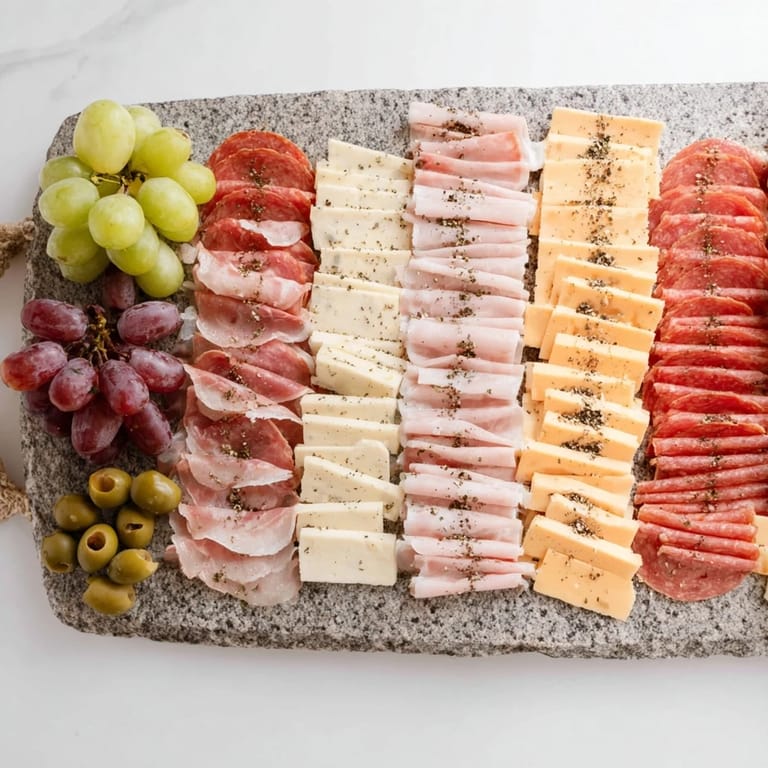
- Arrange prosciutto, soppressata, coppa, and mortadella in four distinct, parallel lines down one side of the slate. Keep them separated so each one can be identified and appreciated individually—the eye should follow clean lines, not confusion.
- Mirror with Cheese:
- On the opposite side, create matching lines with aged cheddar, Manchego, Gruyère, and blue cheese. This symmetry sounds rigid but actually creates visual rhythm that makes people want to photograph it.
- Fill the Gaps:
- Nestle small grape clusters, cornichons, and olives into the spaces between your lines. These aren't afterthoughts—they're palate cleansers that make the board taste better when strategically placed.
- Add the Mustard:
- Drop small spoonfuls of whole grain mustard in a neat diagonal, or use a small ramekin at the corner. It should be accessible but feel intentional, not scattered.
- Finish with Pepper:
- Crack black pepper directly over the meats and cheese just before serving. You want people to smell it before they taste it—that aroma is half the experience.
- Present with Confidence:
- Step back and look at what you've created. The minimalism is the style, not a lack of effort.
 Save to Pinterest
 There's something ceremonial about arranging food this way, even though it takes barely any time. Maybe it's because it forces you to slow down, to think about how flavors sit next to each other, to care about presentation. Suddenly you're not just serving food—you're creating an experience.
The Power of Straight Lines
I used to think beautiful boards had to be chaotic and abundant, but this one taught me that restraint and geometry can be just as striking. The straight lines make your ingredients the star because there's nowhere to hide—everything has to be good. This style also makes it easier for guests to see what's available and take what they want without playing board detective.
Why Slate Matters More Than You'd Think
The unpolished surface isn't just aesthetic—it's functional. The texture grips food so nothing slides around, it's naturally cold, and it feels substantial in a way that makes the whole presentation feel more intentional. If you don't have slate, a wooden board works, but the visual contrast of the dark stone against bright cheeses and deep reds of the meats is what makes this platter feel modern and bold.
Making It Your Own
Once you understand the structure, the formula becomes a framework rather than a rule. I've made versions with different cheeses, added roasted nuts for crunch, and swapped meats based on what the deli had that day. The point isn't rigid perfection—it's thoughtful arrangement of things you love.
- For vegetarians, skip the meats and double down on cheeses, add roasted almonds, and include marinated artichoke hearts or roasted red peppers.
- Pair this with a dry white wine like Sauvignon Blanc that cuts through the richness, or go bold with a Cabernet Sauvignon if you want to match intensity for intensity.
- Chill your slate in the freezer before plating if it's warm outside—cold appetizers stay fresher longer when the board itself helps keep the temperature down.
 Save to Pinterest
 Serve this board immediately and watch how people interact with it—the moment before they taste something new, the combinations they choose. That's where the magic actually lives.
Recipe FAQs
- → What types of meats are used for this platter?
The platter includes smoked prosciutto, soppressata, coppa, and mortadella, each arranged separately in parallel lines.
- → Which cheeses complement the meats in this arrangement?
Aged cheddar, Manchego, Gruyère, and blue cheese are sliced or crumbled to pair beautifully with the cold meats.
- → How should the accompaniments be placed on the slab?
Seedless red grapes, cornichons, mixed olives, and whole grain mustard are placed between the lines of meats and cheeses for balanced flavor and visual interest.
- → Can this platter accommodate dietary restrictions?
For a vegetarian option, substitute the cold meats with marinated artichoke hearts and roasted nuts while keeping the cheeses and accompaniments.
- → What serving tools are necessary for this presentation?
A heavy unpolished stone or slate board, a sharp cheese knife, and small bowls or ramekins are ideal for arranging and serving.
- → Any tips for enhancing the serving experience?
Chilling the stone slab before arrangement helps keep ingredients cold longer. Pairing with crisp white or bold red wines complements the flavors.