 Save to Pinterest
 The first time I made okonomiyaki, I stood in my kitchen on a rainy Tuesday evening, watching the cabbage sizzle on the griddle while my neighbor peered over the counter asking what smelled so good. I'd just returned from a small Japanese market with dashi stock and bonito flakes, armed with a recipe I'd half-memorized from a cooking show. The moment those dancing flakes hit the hot pancake, I understood why this dish had become such a comfort in Japanese kitchens for generations.
I made these for friends during a casual dinner party, and watching them experience that first bite—the contrast of textures, the umami from the sauce hitting them all at once—made me realize this wasn't just a snack. It became the centerpiece of the evening, and suddenly everyone wanted seconds.
Ingredients
- All-purpose flour: Use 1 cup as the base—it gives structure without making the pancakes dense or heavy.
- Dashi stock: This 2/3 cup of liquid is what separates okonomiyaki from regular pancakes; it carries the umami flavor. Water works, but dashi transforms it completely.
- Large eggs: Two eggs bind everything together and add richness that makes these pancakes feel indulgent despite being relatively light.
- Salt and baking powder: A half teaspoon each ensures the pancakes stay tender and rise slightly without tasting flat.
- Finely shredded green cabbage: Three cups of this is the heart of the dish—shred it fine so it cooks through quickly and distributes evenly.
- Green onions: A half cup thinly sliced adds a bright, sharp note that cuts through the richness of the sauce and mayo.
- Carrot: The optional half cup julienned gives sweetness and color; it's worth including if you want visual appeal and a hint of natural sugar.
- Cooked shrimp or bacon: Either protein option (about a half cup chopped) adds depth—shrimp keeps it light, bacon makes it smoky and indulgent.
- Okonomiyaki sauce: This quarter cup is essential; it's slightly sweet and tangy, draping over the pancake like liquid gold.
- Japanese mayonnaise: A quarter cup of Kewpie mayo is richer and more delicate than American mayo—worth seeking out for authentic flavor.
- Bonito flakes: A quarter cup of these paper-thin fish flakes create that iconic dancing effect from residual heat and add a savory, smoky finish.
- Aonori: Two tablespoons of dried seaweed flakes sprinkled at the end add a briny, umami punch and vibrant green color.
- Pickled ginger: Optional but recommended—two tablespoons of beni shoga adds a sharp, cleansing bite between bites.
- Neutral oil: Two tablespoons total for cooking keeps the exterior crispy without overwhelming the delicate interior.
Tired of Takeout? 🥡
Get 10 meals you can make faster than delivery arrives. Seriously.
One email. No spam. Unsubscribe anytime.
Instructions
- Combine your base:
- Whisk together the flour, dashi, eggs, salt, and baking powder in a large bowl until the mixture is completely smooth with no lumps. Don't overmix—you want the batter to flow gently when poured, not be whisked into submission.
- Fold in the vegetables:
- Add the shredded cabbage, green onions, carrot, and your protein of choice, mixing gently until everything is distributed evenly throughout the batter. The batter will look loose and veggie-heavy, which is exactly right.
- Heat your surface:
- Pour a half tablespoon of oil into a nonstick skillet over medium heat, letting it shimmer and spread. You'll know it's ready when a tiny piece of batter sizzles immediately on contact.
- Pour and shape:
- Scoop about one cup of batter onto the center of the skillet and gently shape it into a thick round pancake roughly six inches across, using a spatula to tuck in any strays. Work quickly but gently—you're not pressing down, just nudging it into shape.
- First side:
- Cook undisturbed for four to five minutes until the bottom turns a deep golden brown and smells nutty and caramelized. Peek underneath with your spatula to check the color.
- The flip:
- Using a confident motion, slide the spatula underneath and flip the pancake in one smooth move, letting it land gently on its other side. If it falls apart slightly, just press it back together—nobody will know.
- Second side:
- Cook another four to five minutes until this side is also golden and the pancake feels firm when pressed gently with the spatula, indicating the center is cooked through. The inside should be tender but not wet.
- Repeat the process:
- Transfer the finished pancake to a plate and repeat with the remaining batter, adding another half tablespoon of oil between each pancake. Keep finished pancakes warm on a nearby plate if you're cooking in batches.
- Sauce and crown:
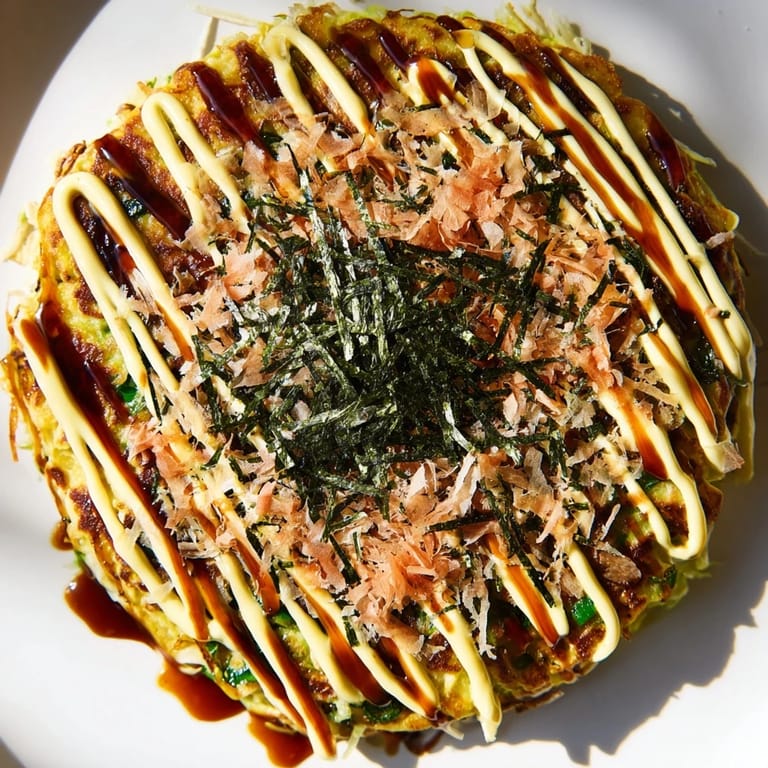
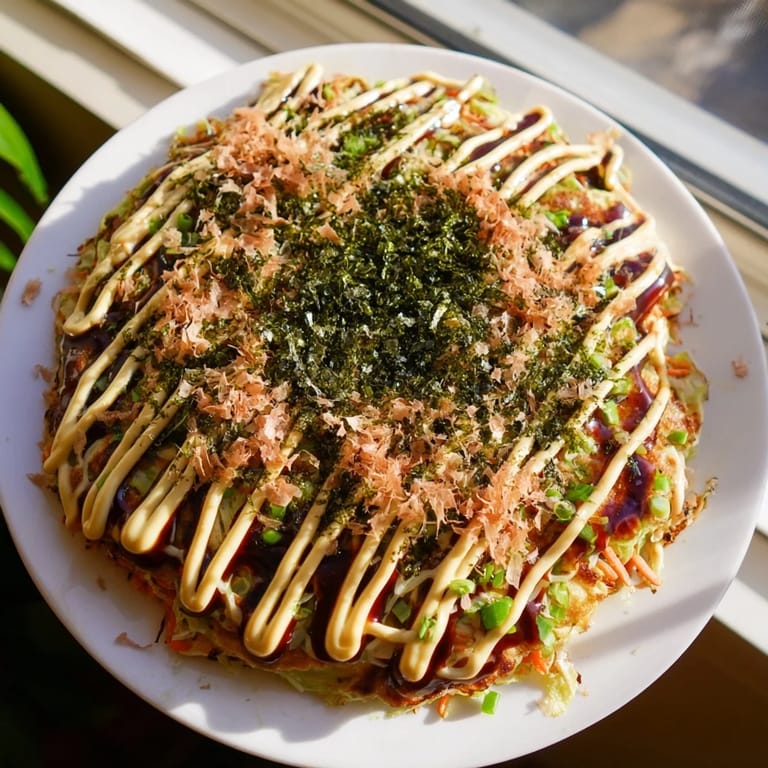
- While the pancakes are still hot, drizzle generously with okonomiyaki sauce in a zigzag pattern, then do the same with the Japanese mayonnaise, letting the warmth soften and blend the sauces slightly. Top immediately with bonito flakes while the heat makes them quiver like they're alive.
- Final flourish:
- Sprinkle with aonori and pickled ginger, then serve immediately while the pancakes are still warm and the contrast between temperatures is at its peak.
 Save to Pinterest
 There's something almost ceremonial about the moment those bonito flakes start dancing on the hot okonomiyaki, and I found myself slowing down, watching them flutter like tiny flags before tucking into the meal. That simple moment transformed a weeknight snack into something memorable.
The Magic of Dashi
When I first substituted water for dashi in a moment of grocery store laziness, I tasted the difference immediately—the pancakes became bland and one-dimensional instead of savory and complex. Dashi, even instant dashi made from powder, carries an umami depth that makes okonomiyaki taste like it's been simmering with intention. If you can't find packaged dashi, kombu and bonito stock or even a pinch of MSG dissolved in water will bring back that essential salty, seafaring flavor that defines the dish.
Getting the Texture Just Right
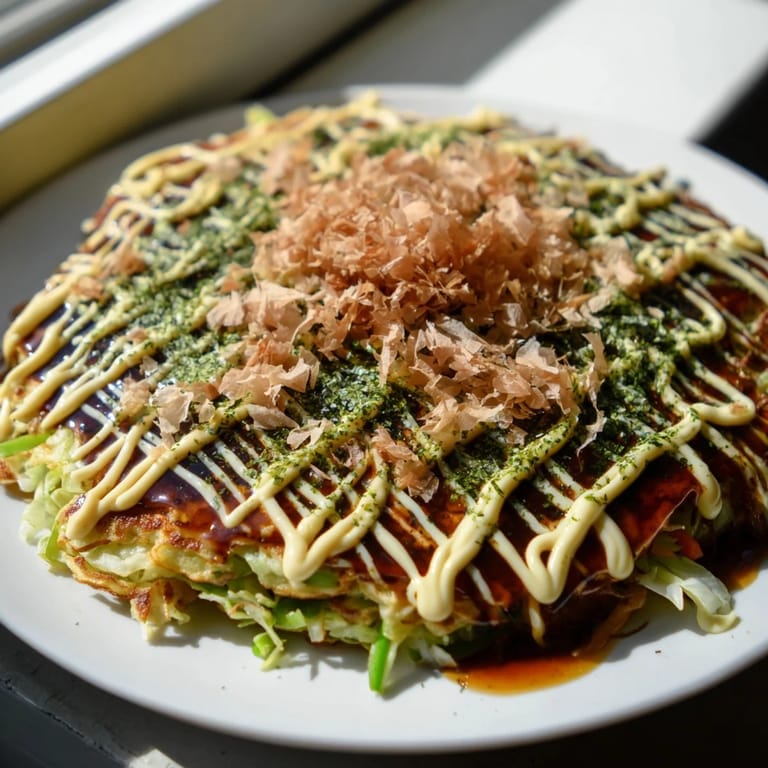
The first pancake I made was too thick and stayed gooey in the middle despite cooking the outsides dark brown, teaching me that shaping really matters. The batter needs to be about three-quarters of an inch thick—substantial enough to hold together but thin enough that the heat penetrates to the center in four to five minutes. Your skillet temperature also affects timing; if your pancakes are cooking too fast on the outside before the inside is done, lower the heat slightly and cook a bit longer.
Customizing Your Okonomiyaki
The beauty of this dish is how it welcomes improvisation—I've made versions with mushrooms, corn, even leftover roasted vegetables folded into the batter, and every variation has been delicious. For a vegetarian version, simply skip the shrimp or bacon and increase the vegetables; leave off the bonito flakes and aonori if you want it plant-based, though the seaweed flakes are technically vegetarian and add irreplaceable savor. If you can't find okonomiyaki sauce, combine equal parts ketchup and Worcestershire sauce with a splash of soy and a tiny pinch of sugar for a surprisingly close substitute.
- Cooked vegetables like broccoli, mushrooms, or zucchini work beautifully folded into the batter.
- For extra richness, toss some grated cheese or mozzarella into the batter before cooking.
- Cold Japanese beer or iced green tea is the ideal pairing, cutting through the richness beautifully.
 Save to Pinterest
 Make okonomiyaki when you want something that tastes like comfort but arrives on the plate in thirty minutes, and watch how it brings people together around the table. It's a dish that makes eating feel like an occasion, even on ordinary nights.
Recipe FAQs
- → What is okonomiyaki sauce made of?
Okonomiyaki sauce is a tangy, sweet-savory condiment often made from a blend of Worcestershire sauce, ketchup, soy sauce, and sugar, giving the pancakes rich, umami flavor.
- → Can I make this dish vegetarian?
Yes, simply omit shrimp, bacon, and bonito flakes and increase the amount of shredded cabbage and vegetables for extra texture and flavor.
- → How to achieve crispy edges when cooking?
Use medium heat and a nonstick skillet, cooking the pancake until the bottom is golden brown before flipping. Adding a bit of oil helps develop a crispy exterior.
- → What substitutes can be used for dashi stock?
Water can be used in place of dashi stock for a milder flavor, though dashi adds a distinctive umami element to the batter.
- → How should I serve these pancakes for best flavor?
Serve hot with generous drizzles of okonomiyaki sauce and Japanese mayonnaise, then sprinkle with bonito flakes, dried seaweed, and pickled ginger for authentic taste.