 Save to Pinterest
 I discovered the magic of the keto power plate during a lazy Sunday afternoon when a friend dropped by unexpectedly. Rather than stress about cooking, I raided my refrigerator and found beautiful slices of roast beef, aged cheeses, and crisp vegetables. As I arranged them on a large platter like an artist composing a masterpiece, something clicked—this wasn't just a quick fix, it was elegant, nourishing, and honestly, more satisfying than any elaborate meal I'd spent hours preparing. That moment taught me that the most impressive dishes sometimes require nothing but intention and quality ingredients.
I'll never forget the first time I served this platter at a dinner party where I had just started keto. My skeptical sister picked at it cautiously, expecting something boring and restrictive. Twenty minutes later, she was still grazing contentedly, commenting that she felt satisfied and energized rather than sluggish. That's when I realized this plate wasn't just food—it was proof that eating well doesn't mean deprivation.
Ingredients
- Roast beef, 120 g sliced: Look for deep red color and tender slices from a quality deli counter. Roast beef provides rich protein and satisfying iron, anchoring your platter with familiar comfort.
- Smoked turkey, 120 g sliced: This leaner option offers a subtle smokiness that contrasts beautifully with richer cheeses. It's the crowd-pleaser that even cautious eaters reach for first.
- Prosciutto, 120 g: Thin, delicate, and intensely flavored, prosciutto brings an air of sophistication. Roll the slices loosely for visual interest and easier eating.
- Salami, 100 g sliced: Choose a quality variety that appeals to you—spicy, herb-infused, or classic. The paprika notes complement sharp cheeses wonderfully.
- Aged cheddar, 100 g cubed: The sharpness of aged cheddar cuts through rich meats and adds textural interest. I prefer cubes over slices here because they're easier to grab.
- Gruyère, 100 g sliced: Nutty and complex, Gruyère elevates the whole platter. Its slight sweetness balances the salty cured meats beautifully.
- Manchego, 100 g sliced: This Spanish cheese adds a slightly sweet, firm quality that provides another textural dimension. It's the ingredient that makes people ask what they're eating.
- Cherry tomatoes, 1 cup halved: These tiny bursts of brightness prevent the platter from feeling heavy. The acidity refreshes the palate between bites of rich meat and cheese.
- Cucumber, 1 cup sliced: Cool, crisp, and hydrating, cucumber slices offer subtle flavor that lets other ingredients shine. Slice them thick enough to have substance.
- Radishes, 1 cup sliced: Peppery and assertive, radishes wake up your mouth and aid digestion. They're the ingredient that transforms this from simple to sophisticated.
- Baby bell peppers, 1 cup sliced: Sweeter than full-size peppers, these add color and a gentle vegetable sweetness without any sugar guilt.
- Celery sticks: Don't overlook the humble celery. Its clean, grounding flavor prevents flavor fatigue when grazing across multiple rich ingredients.
- Green and black olives, 1/4 cup each: These briny anchors punctuate the platter with bold flavor and visual drama. I prefer mixed olives for complexity.
- Fresh parsley, 2 tbsp chopped: The final flourish that makes everything look intentional and alive. The chlorophyll notes cut through richness elegantly.
- Extra virgin olive oil, 2 tbsp: A quality oil that you'd actually drizzle on salad, not a cooking oil. It should smell fruity and fresh.
- Black pepper, freshly ground: Never underestimate pepper. Freshly ground has an aromatic quality that pre-ground can't match. It brightens every single element.
Tired of Takeout? 🥡
Get 10 meals you can make faster than delivery arrives. Seriously.
One email. No spam. Unsubscribe anytime.
Instructions
- Begin with your canvas:
- Place your large platter on a clean surface where you have room to work. This is your blank canvas, so take a moment to visualize how you want the composition to flow. I like to imagine the platter divided into sections, with meats and cheeses anchoring the center and vegetables filling the gaps like a puzzle.
- Build your meat foundation:
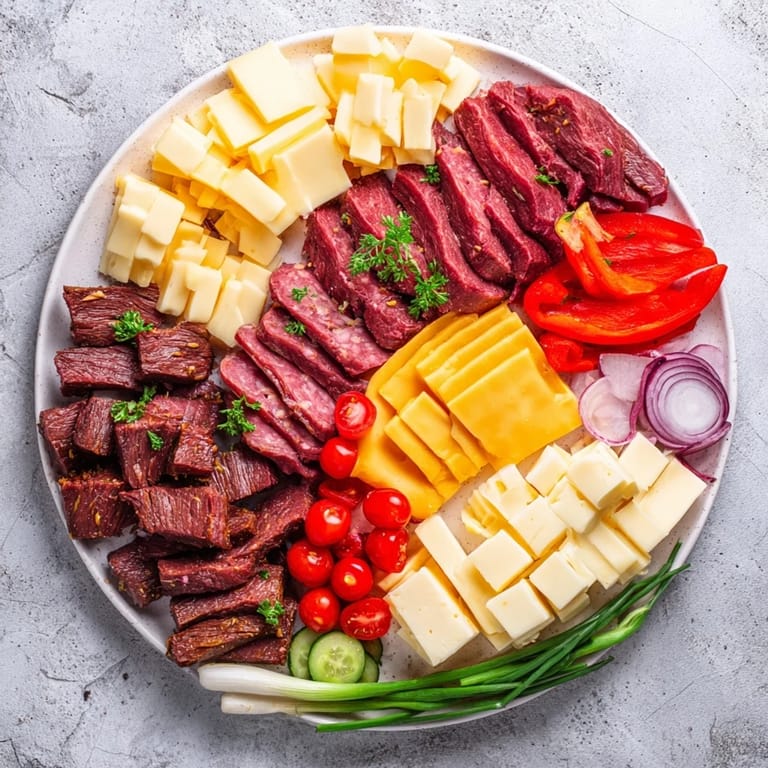
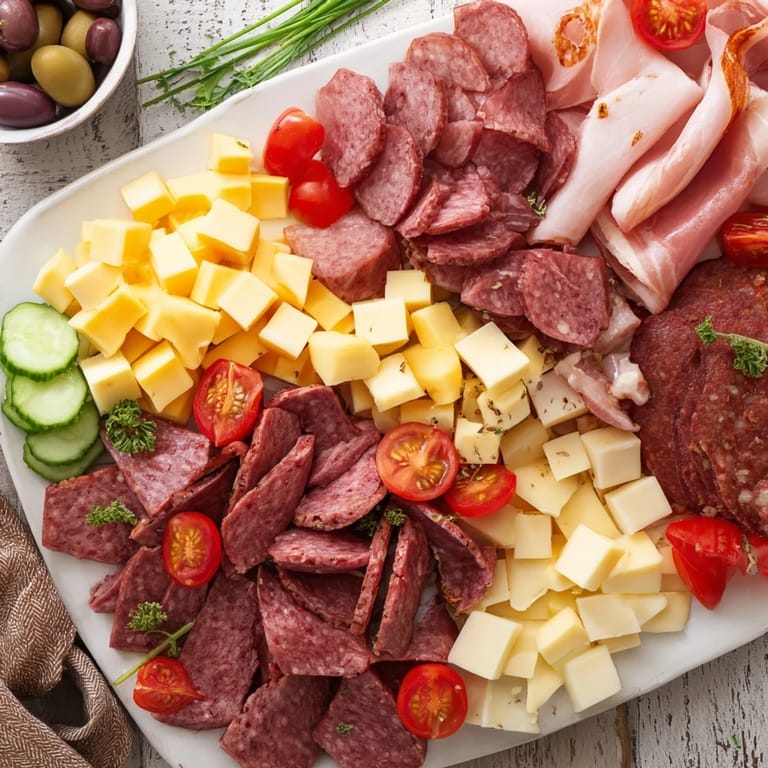
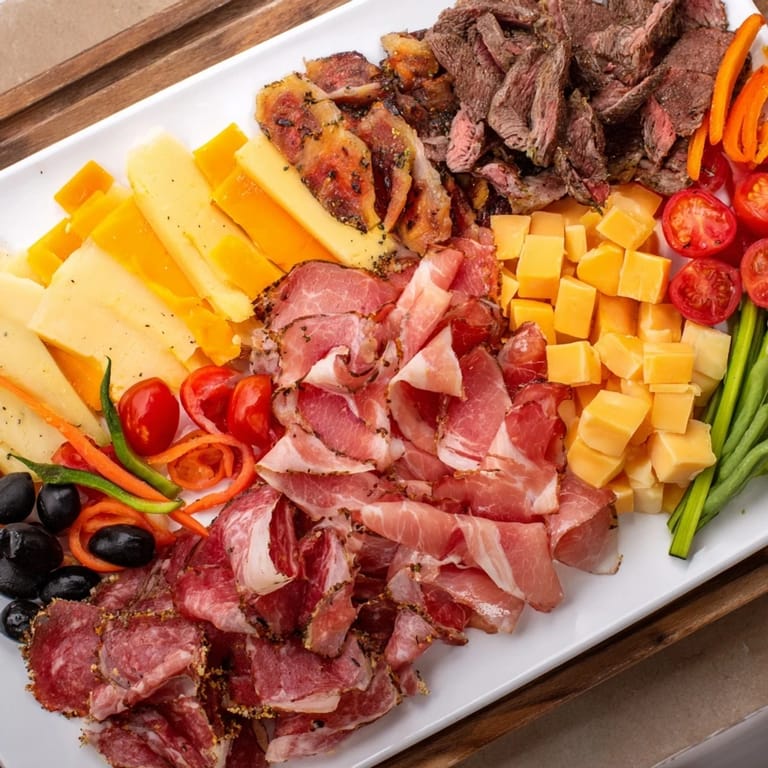
- Arrange the roast beef, smoked turkey, prosciutto, and salami in distinct clusters, grouping each type together for visual impact. Fold some slices loosely, lay others flat, and create height variation. Think about color contrast—the deep red of roast beef beside the pale pink of turkey, for example. This isn't random; you're creating a visual story that makes people eager to taste.
- Add cheese architecture:
- Position your cheeses beside the meats, alternating shapes and colors. Gruyère slices next to Manchego, then cubes of aged cheddar clustered together. The variety of shapes—cubes, slices, irregular chunks—keeps the eye moving and makes the platter feel generous and abundant.
- Fill the spaces with vegetables:
- Now you're playing the role of artist filling negative space. Tuck radish slices into gaps, cluster cherry tomatoes together, create lines of cucumber slices. Group similar vegetables together rather than scattering them randomly—this creates visual rhythm and makes it easier for people to find their preferred vegetables when grazing.
- Scatter the olives:
- Distribute your green and black olives throughout the platter, using them as flavor and color jewels. Let a few rest in gaps between other items, almost like you've accidentally left these treasures behind.
- Apply the finishing oil and pepper:
- Very lightly drizzle the extra virgin olive oil over the vegetables specifically. You want a gentle sheen, not a pool. Then finish with several grinds of fresh black pepper over the entire platter. This step is crucial—it signals that this is intentional and cared for.
- Garnish with presence:
- Just before serving, sprinkle the chopped fresh parsley across the platter. The green brings everything to life and adds an herbaceous aroma. Stand back and admire your work. If it looks good enough to photograph, you've succeeded.
 Save to Pinterest
 The moment that sealed this recipe into my regular rotation came when my aging mother, who had always been skeptical about dietary restrictions, sat down to this platter with visible hesitation. She picked slowly, then something shifted. I watched her realize that eating well didn't require deprivation or strange substitutions—just thoughtful ingredients arranged with care. We sat together for two hours just talking and grazing, and she kept saying, 'This is what food should be.' That afternoon, she became my greatest advocate for simple, real eating.
The Art of the Platter
I've learned that presentation matters more than most recipes admit, especially when there's no cooking involved. Your skill here is purely in arrangement and intention. Think of it like setting a table for someone you love—every placement should feel purposeful. The goal is to create visual flow that draws the eye and makes people feel welcomed and celebrated. When you arrange with care, you're saying 'I thought about you' without speaking a word.
Shopping Smart
Building this platter became my favorite excuse to visit the deli and cheese counters instead of grabbing pre-packaged items. There's something about selecting exactly what you want—talking to the counter person about which salami has the best depth of flavor, tasting a sliver of three different cheddars to find the right sharpness. This personal touch transforms shopping from a chore into exploration, and the quality difference shows immediately on your platter.
Making It Your Own
One of my favorite discoveries is how beautifully this framework adapts to seasons and preferences. In summer, I add more fresh herbs and lighter vegetables like snap peas and asparagus tips. In winter, I lean into roasted vegetables and richer meats. Substitutions feel natural—use roast chicken instead of turkey, swap Emmental for Gruyère, add pickled onions for complexity. The structure remains, but the personality changes based on what calls to you that day.
- Serve this with small bowls of keto-friendly dips like aioli, herbed cream cheese, or spicy mustard for extra flavor dimension
- Pair with dry white wine, sparkling water with fresh lemon, or even a quality dry cider for a complete grazing experience
- Leftover components keep beautifully in the refrigerator for 3-4 days, making this platter perfect for meal prep and quick lunches throughout the week
 Save to Pinterest
 This keto power plate taught me that the best meals aren't always the most complicated. Sometimes the most nourishing, beautiful thing you can offer is quality ingredients arranged with intention and care. It's become my answer to last-minute entertaining, midweek meals, and the eternal question of what to eat when you want something that feels both indulgent and wholesome.
Recipe FAQs
- → How should the meats be arranged on the platter?
Arrange meats in dense, organized clusters grouped by type to enhance visual appeal and ease of serving.
- → Can I substitute the cheeses with other varieties?
Yes, you can swap the cheeses with alternatives like Emmental or other hard cheeses based on preference.
- → What vegetables work best for this platter?
Non-starchy vegetables such as cherry tomatoes, cucumbers, radishes, baby bell peppers, and celery provide fresh crunch and color.
- → How is the olive oil used in this dish?
Drizzle olive oil lightly over the vegetables to add richness and help meld the flavors together.
- → Are there any suggested garnishes for this platter?
Freshly chopped parsley adds a bright, herbal note and enhances the overall presentation.