 Save to Pinterest
 My first tteokbokki came from a tiny street vendor in Seoul, where an older woman worked the stove with practiced ease, tossing rice cakes in a deep red sauce that smelled like heat and fermentation. I was skeptical until I tasted it—the chewy cakes absorbing that spicy-sweet sauce, slightly sticky on my fingers, absolutely addictive. Years later, I found myself trying to recreate that exact moment in my own kitchen, learning that the magic wasn't complicated, just honest ingredients and patience. Now it's the dish I make when I want something that feels both comforting and alive, something that reminds me why Korean street food earned its reputation.
I made this for my roommate on a random Tuesday night when she mentioned being homesick for Seoul, and watching her face when she tasted it—that moment of recognition mixed with surprise—reminded me why sharing food matters more than getting everything technically perfect. She went back for seconds before I'd even sat down, and we ended up talking until midnight about street food and growing up. That's when I knew this recipe was worth keeping around.
Ingredients
- Korean cylindrical rice cakes (tteok), 500 g: These are chewy and slightly dense, nothing like the rice cakes you might find elsewhere—look for them frozen or refrigerated in Korean markets, and give them a warm water soak if they're stiff.
- Large eggs, 4: They become soft and creamy inside, balancing the spice with their gentle richness.
- Gochujang (Korean chili paste), 3 tablespoons: This is the soul of the dish—fermented, complex, and worth finding the real thing rather than settling for substitutes.
- Gochugaru (Korean chili flakes), 2 tablespoons: These add a different kind of heat than gochujang, more direct and slightly sharper.
- Soy sauce, 2 tablespoons: Use good quality here; it adds depth without overshadowing the chili.
- Sugar, 1 tablespoon: A touch of sweetness that makes the spice feel rounder, less aggressive.
- Honey or corn syrup, 1 tablespoon: This is what gives the sauce its glossy finish and helps it cling to the rice cakes.
- Garlic, 2 cloves, minced: Fresh is non-negotiable—it brightens everything it touches.
- Toasted sesame oil, 1 teaspoon: Just a whisper of this adds a toasty, nutty note that makes people ask what your secret is.
- Water, 3 cups: The vehicle for everything else; good water makes good broth.
- Dried kelp (kombu), 1 piece (10x10 cm): It creates a subtle umami base without making the broth taste fishy.
- Dried anchovies, 8, heads and guts removed: These are optional but genuinely elevate the broth's depth—for vegetarian versions, skip them entirely.
- Small onion, sliced, 1: It softens into the sauce and adds a gentle sweetness.
- Green onion, sliced, 1: Save this for the very end so it stays bright and fresh against the deep sauce.
- Fish cake, 1 sheet, sliced: Optional, but it adds a different texture and plays nicely with the rice cakes.
- Toasted sesame seeds, 1 tablespoon: The final sprinkle that ties everything together.
Tired of Takeout? 🥡
Get 10 meals you can make faster than delivery arrives. Seriously.
One email. No spam. Unsubscribe anytime.
Instructions
- Prepare your rice cakes:
- Soak them in warm water for 10 minutes if they're hard or straight from the fridge—they'll become pliable and ready to absorb the sauce without turning to mush. Cold or stiff rice cakes won't cook evenly and will throw off your whole timing.
- Build a humble broth:
- In a medium saucepan, add water, kombu, and anchovies, then bring to a gentle boil. Let it simmer for 10 minutes—you'll notice the broth becoming clearer and more flavorful—then fish out the kombu and anchovies, leaving behind a clean, umami-rich base.
- Cook the eggs while you wait:
- Boil them for 8 to 9 minutes depending on how soft you like the yolk, then plunge them into cold water immediately so they don't develop that gray-green ring. This step takes patience, but cool eggs peel so much more easily and look prettier on the plate.
- Marry the sauce:
- Add gochujang, gochugaru, soy sauce, sugar, honey, garlic, and sesame oil to your hot broth and stir everything until completely smooth. There shouldn't be any gochujang lumps hiding at the bottom—this is where the sauce actually comes together.
- Let the rice cakes dance in the sauce:
- Add your drained rice cakes, sliced onion, and fish cake if using, then simmer over medium heat for 10 to 12 minutes, stirring occasionally. You'll watch the sauce gradually thicken and deepen in color, and the rice cakes will go from slightly firm to luxuriously chewy—you want them soft enough to cut with a spoon but not falling apart.
- Finish with the eggs:
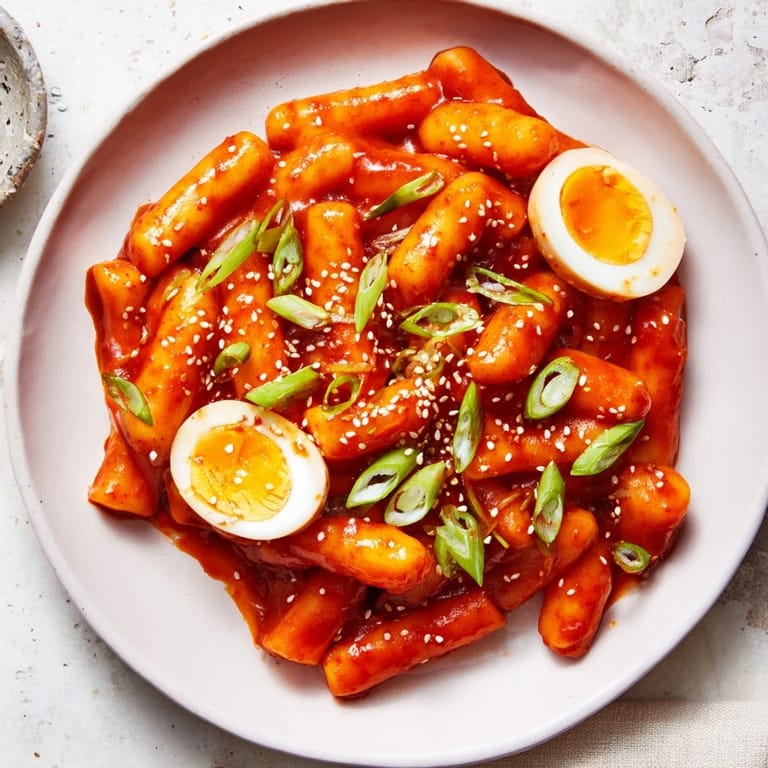
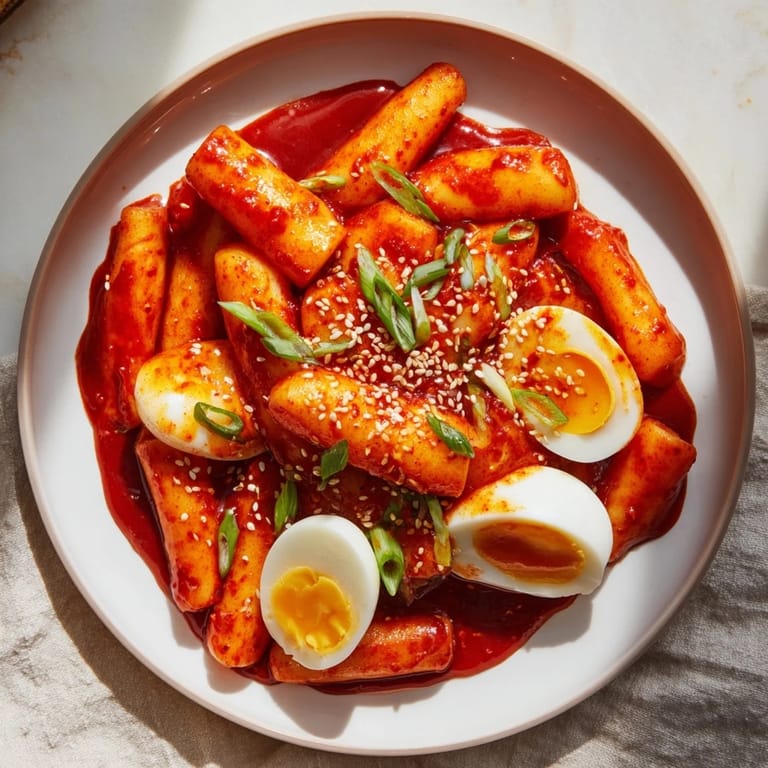
- Halve your boiled eggs and nestle them into the sauce, then simmer for another 2 to 3 minutes just to warm them through. The eggs should still feel firm but the yolk will have absorbed some warmth and flavor.
- Garnish and serve immediately:
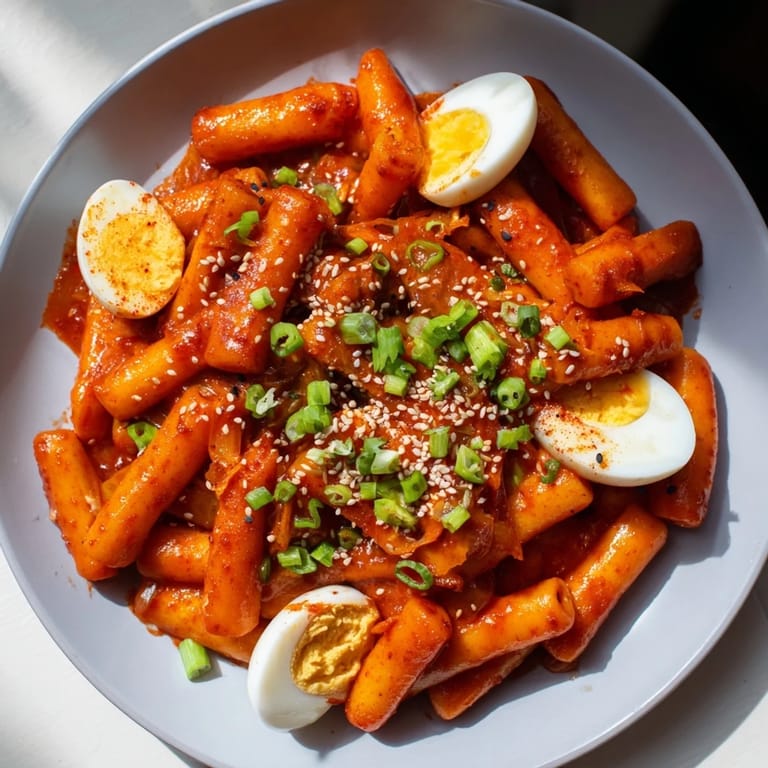
- Top with green onions and sesame seeds right before serving—these add brightness and texture that will disappear if you wait. Serve it hot, in bowls deep enough to hold the sauce, with a spoon for sipping what's left behind.
 Save to Pinterest
 There's a specific silence that happens in a quiet kitchen when everyone around the table is too focused on eating to make conversation—that's when you know you've made something right. This dish creates that moment, pulls people in, and reminds them why gathering around food still matters.
The Spice Conversation
Tteokbokki's heat isn't mean or punishing; it builds gently, warming your mouth without destroying your ability to taste what comes next. The combination of gochujang and gochugaru creates layers—one is fermented and complex, the other is sharp and bright—so you're experiencing warmth from multiple angles. I learned to respect this balance by watching people who grew up eating it, and I noticed they never seemed to be suffering; they were enjoying themselves, reaching for water occasionally, but always going back for more. That taught me that the goal isn't to make it painful but to make it memorable.
Making It Your Own
The template is solid, but this dish is forgiving enough to invite experimentation. I've added thin strips of cabbage that soften into the sauce, shredded carrots that stay slightly crisp, even broken ramen noodles that become silky and absorb the sauce like little flavor sponges. The vegetables don't need to be added at a special time—just put them in with the rice cakes and let everything cook together.
Storage and Reheating
Tteokbokki is best eaten fresh, straight from the stove when the sauce is still glossy and clinging to everything. If you have leftovers, store them in an airtight container in the refrigerator for up to three days, though the rice cakes will soften and absorb more of the sauce, which some people actually prefer. Reheat gently on the stovetop with a splash of water to loosen the sauce, stirring often so nothing sticks to the bottom.
- The eggs are best added fresh right before serving, since reheated eggs can turn rubbery.
- If you're meal-prepping, keep the components separate and assemble just before eating.
- Frozen rice cakes thaw beautifully in the warm sauce, so you don't need to plan ahead.
 Save to Pinterest
 This is the kind of dish that brings people back—not because it's complicated, but because it understands something fundamental about how food makes us feel. Make it for yourself first so you know it by heart, then make it for someone else.
Recipe FAQs
- → How do I prepare the rice cakes for cooking?
Soak the rice cakes in warm water for 10 minutes if they are hard or refrigerated to ensure soft and chewy texture during cooking.
- → Can I make a vegetarian version of this dish?
Yes, omit anchovies and fish cake, and use vegetable broth instead to maintain rich flavors without animal products.
- → What level of spiciness does this dish have?
It offers a bold but balanced spiciness from gochujang and gochugaru, which can be adjusted to taste for milder or hotter preferences.
- → How are the boiled eggs incorporated?
Eggs are boiled separately until firm, peeled, then added to the simmering sauce in the last few minutes to warm through.
- → What garnishes enhance the final dish?
Sliced green onions and toasted sesame seeds provide fresh aroma and a subtle crunch to finish the dish beautifully.