 Save to Pinterest
 The first time I truly understood laksa was in a steamy kitchen in Kuala Lumpur, watching a street vendor work with the kind of muscle memory that only comes from making the same pot of broth a thousand times. Years later, I recreated that moment at home, and what started as a humble attempt to chase a memory became my go-to comfort meal whenever I needed something that felt both challenging and deeply rewarding. There's something magical about how coconut and spice transform into pure comfort in a bowl.
I remember my partner wrapping their hands around a steaming bowl on a rainy afternoon, just inhaling the steam before taking the first spoonful, and I knew right then that this recipe had crossed over from "something I made" to "something we needed." That quiet moment—no phones, just two people and a bowl of noodles—reminded me why I love cooking in the first place.
Ingredients
- Vegetable oil: Use a neutral oil like canola or coconut oil; it carries the spices without overpowering them.
- Onion, garlic, ginger, and lemongrass: This aromatic base is non-negotiable—it's where all the flavor begins, so don't skip or rush it.
- Laksa paste: This is your shortcut to authentic flavor; buy it from an Asian market or make your own if you're feeling ambitious.
- Coconut milk: Full-fat is essential here; it creates that silky, luxurious mouthfeel that defines laksa.
- Vegetable broth: A good-quality broth makes a difference; homemade is wonderful if you have it, but store-bought works beautifully too.
- Soy sauce and sugar: These balance the heat and richness, bringing harmony to the bold flavors.
- Rice noodles: Thicker noodles hold the broth better, but use what you prefer or what you can find.
- Firm tofu: Pressing it briefly before frying helps it develop a golden crust and absorb the broth's flavor.
- Fresh vegetables and herbs: Bean sprouts, carrots, peppers, and cilantro add crunch, color, and freshness that contrast beautifully with the creamy broth.
Tired of Takeout? 🥡
Get 10 meals you can make faster than delivery arrives. Seriously.
One email. No spam. Unsubscribe anytime.
Instructions
- Wake up the aromatics:
- Heat your oil in a large pot and add the onion, garlic, ginger, and lemongrass. You'll know it's working when the kitchen smells incredible and the onions turn translucent—this usually takes about 3 to 4 minutes. Don't rush this step; it's the foundation of everything that comes next.
- Introduce the laksa paste:
- Stir it in and let it cook for a minute or two, allowing the spices to bloom and release their oils. You'll see the paste deepen in color and smell even more fragrant.
- Build the broth:
- Pour in the coconut milk and vegetable broth slowly, stirring as you go to ensure the paste incorporates smoothly. Bring it to a gentle simmer and let it bubble softly for about 10 minutes; this is when the flavors really get to know each other.
- Season to taste:
- Add soy sauce, sugar, and salt, adjusting to your preference. Taste as you go—laksa should be spicy, creamy, and well-balanced, with no single flavor bullying the others.
- Prepare your noodles and tofu:
- While the broth simmers, cook or soak your rice noodles according to package directions and have them ready. In a nonstick skillet, fry the tofu cubes until they're golden and crispy on all sides, which only takes a few minutes.
- Add the vegetables:
- About 5 minutes before serving, add the carrots, bell pepper, and snow peas to the broth so they stay bright and just tender, not mushy. Fresh vegetables are key to making each spoonful interesting.
- Assemble with care:
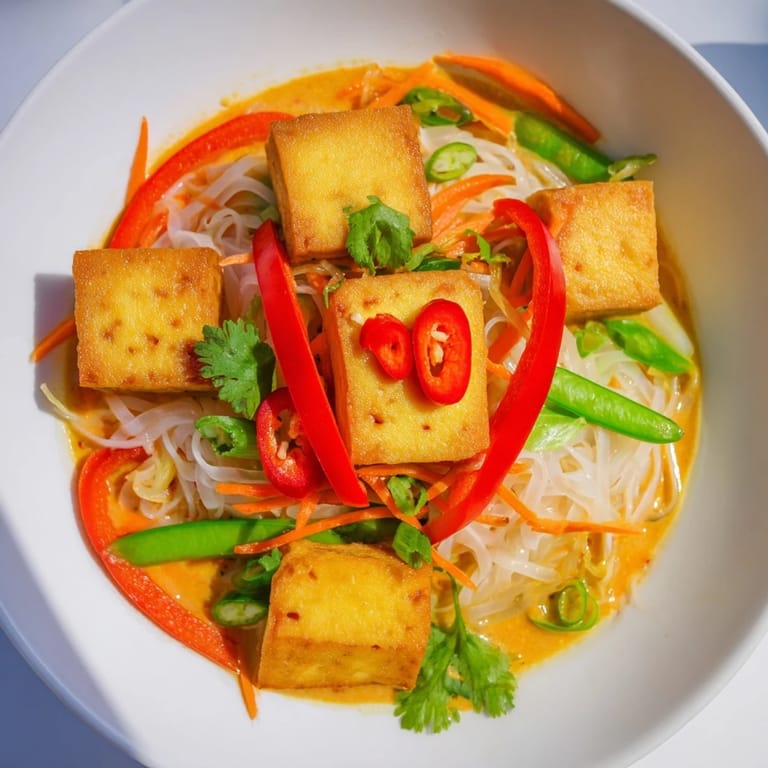
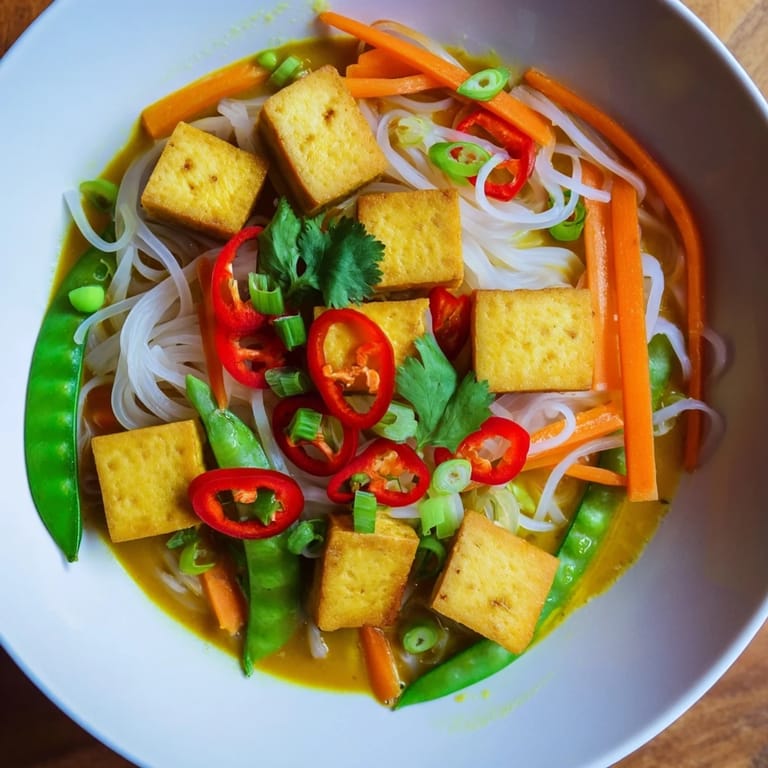
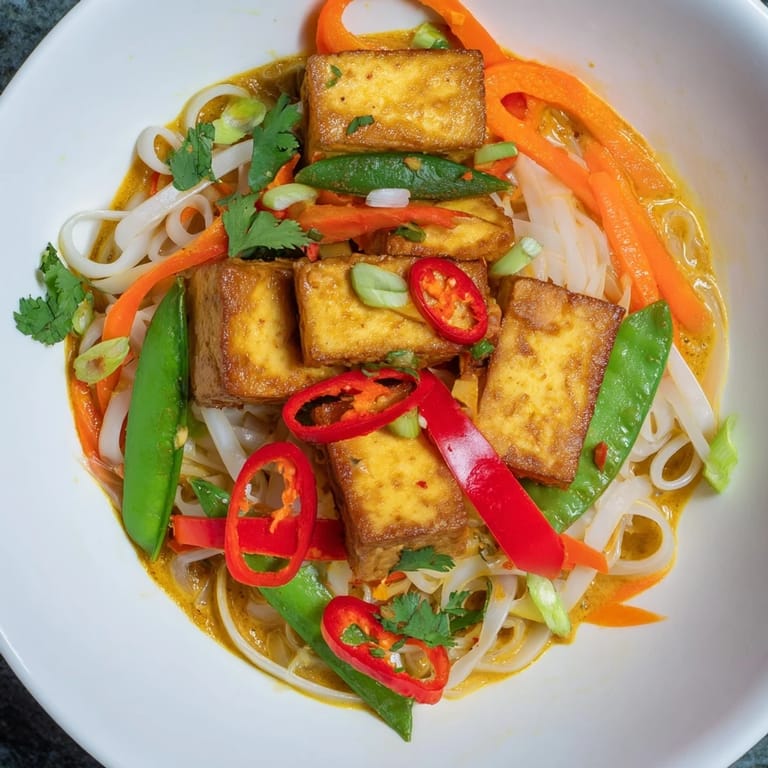
- Divide noodles among bowls, ladle the hot broth and vegetables over them, then crown each bowl with fried tofu, bean sprouts, spring onions, cilantro, and a scatter of chili if you like the heat. Serve with lime wedges on the side so everyone can add brightness to their own taste.
 Save to Pinterest
 There's a moment during the assembly phase when you're standing at the stove with all your colorful vegetables prepped and the broth smelling like heaven, and you realize that what started as separate ingredients is becoming something whole and alive. That's when you know laksa has worked its magic.
Why Laksa Feels Special
Laksa walks a line that few dishes do—it's elegant enough for a dinner party, comforting enough for a Tuesday night, and complex enough to feel like you've accomplished something real. The way the coconut cream mingles with the heat of the laksa paste, how the noodles become vehicles for all that flavor, and the way each vegetable topping adds its own moment of freshness and crunch—it all works together like a well-rehearsed conversation where everyone gets to speak.
Customizing Your Bowl
This recipe shines because it's endlessly flexible without ever losing its identity. I've added mushrooms when I wanted earthiness, swapped in bok choy for a different green, and even thrown in cashews for unexpected richness. The broth is the backbone; everything else is an invitation to play. Some mornings I'll add a soft-boiled egg for richness, and sometimes I'll skip the tofu altogether and use it as a vegetable-forward soup instead.
Building Layers of Flavor
What makes laksa memorable is how it teaches you that flavors don't compete—they collaborate. The bitter-bright lemongrass pushes against the sweet richness of coconut milk, the heat of the spices brings everything into focus, and then lime juice comes in to tie it all together with a clean, citrusy finish. Each component has a job, and when you respect that balance, the results feel almost orchestrated. One last thing to remember: don't skip the final garnishes; they're what transform a hot broth into a proper bowl of laksa.
 Save to Pinterest
 Laksa is the kind of dish that reminds you cooking doesn't have to be complicated to be meaningful. Make it once and you'll find yourself craving it again and again.
Recipe FAQs
- → What type of noodles work best in this laksa?
Rice noodles, either thick or vermicelli, soak or cook well to absorb the coconut curry broth without becoming mushy.
- → Can I make this dish vegan?
Yes, ensure the laksa paste used contains no shrimp paste or fish sauce, and use vegetable-based broth.
- → How do I enhance the broth's flavor?
Sautéing aromatics like garlic, ginger, lemongrass, and onions before adding laksa paste deepens the curry’s complexity.
- → What vegetables complement this dish?
Carrots, red bell peppers, snow peas, bean sprouts, and spring onions add freshness and texture to the curry.
- → How can I add protein besides tofu?
For non-vegetarian options, add hard-boiled eggs or substitute tofu with cooked shrimp or chicken.
- → What garnishes provide the best finishing touches?
Fresh cilantro, lime wedges, and red chili slices bring brightness, acidity, and heat to balance the creamy broth.