 Save to Pinterest
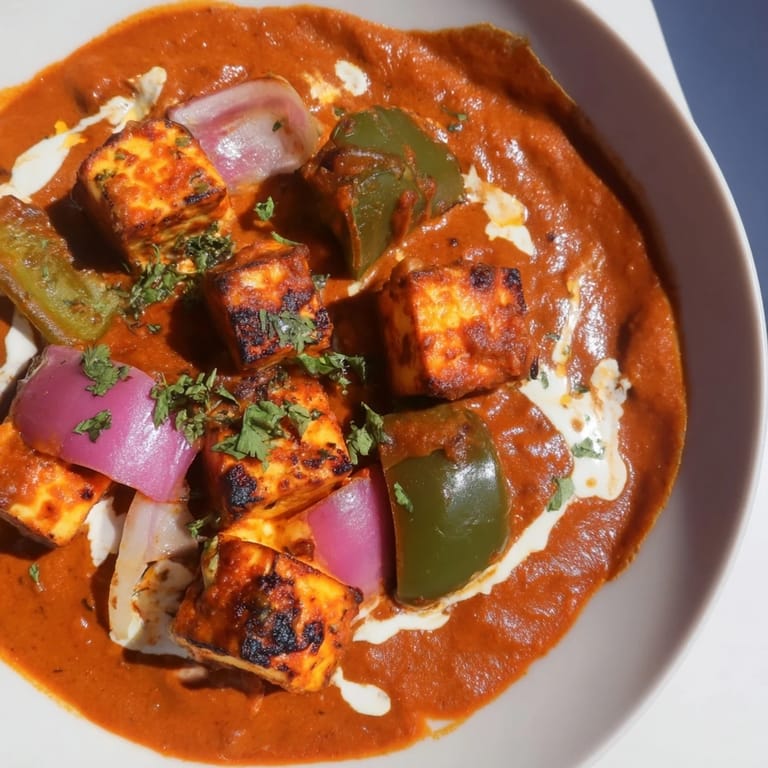
 My neighbor's kitchen smelled like a restaurant that evening—charred paneer hitting hot oil mixed with cream and tomato, a smell that made me follow her voice down the hallway. She'd invited me over on a whim, and what arrived at the table was this golden, smoky paneer tikka masala that somehow tasted both indulgent and balanced. I learned that night that this dish isn't about following rules; it's about understanding heat, timing, and when to let spices whisper instead of shout.
I made this for friends who were skeptical about vegetarian main courses, and I watched their faces change with that first forkful. Someone asked if the paneer was actually cheese, because it had this almost meat-like satisfaction to it. That's when I realized this dish has a quiet power—it doesn't need to convince anyone of anything.
Ingredients
- Paneer cheese (400 g, cut into 2-cm cubes): This is your anchor; cubes too big won't absorb the marinade, too small and they fall apart in the pan.
- Plain Greek yogurt (150 g): The thickness makes a difference here—it clings to the paneer and creates that creamy marinade base.
- Lemon juice (2 tbsp): Brightens everything, especially important since the sauce will get rich with cream.
- Gram flour (2 tbsp): Creates a protective coating that helps the paneer hold together and catch char marks.
- Ginger-garlic paste (2 tbsp for marinade, plus 2 tbsp for sauce): Make fresh if you can—the heat difference is noticeable.
- Ground cumin and coriander (1 tsp each): These are your warm notes; toast them briefly if using whole seeds for deeper flavor.
- Garam masala (1 tsp for marinade, 1 tsp for sauce): The soul of the spice blend—don't skip it.
- Turmeric powder (1/2 tsp each): Earthy and slightly bitter, it frames the other spices.
- Kashmiri chili powder (1/2 tsp): Milder than regular chili powder, it adds color without overwhelming heat.
- Vegetable oil (1 tbsp for marinade, 2 tbsp for sauce): Keep it neutral—you want the spices front and center.
- Green bell pepper and red onion (chunks for skewering): They char alongside the paneer, adding sweetness and texture variation.
- Butter or ghee (2 tbsp) and vegetable oil (2 tbsp) for the sauce: Together they create a base that carries spices without burning.
- Large onion (1, finely chopped): This gets cooked until it's jammy and sweet—it's the foundation of your sauce.
- Crushed tomatoes (400 g): Canned is fine; fresh tomatoes can be watery and lack the concentration you need.
- Heavy cream (100 ml): Temper it gently into the hot sauce to avoid curdling.
- Fresh cilantro (2 tbsp chopped, plus leaves for serving): Add half at the end so you get both cooked herb depth and fresh brightness.
- Basmati rice (300 g cooked): The grains should stay separate; rinse before cooking to remove starch.
Tired of Takeout? 🥡
Get 10 meals you can make faster than delivery arrives. Seriously.
One email. No spam. Unsubscribe anytime.
Instructions
- Make the Marinade:
- Whisk together the yogurt, lemon juice, gram flour, ginger-garlic paste, and all the spices in a large bowl—you're aiming for a smooth, thick paste. The gram flour should be fully incorporated so it doesn't clump when it hits the hot pan later.
- Coat the Paneer and Vegetables:
- Add your paneer cubes, bell pepper chunks, and red onion pieces to the marinade, and gently fold everything together until each piece is evenly covered. This step matters more than you'd think; uneven coating means uneven cooking.
- Let It Sit:
- Cover the bowl and refrigerate for at least 30 minutes—this gives the spices time to migrate into the paneer. If you're in a rush, 20 minutes will work, but don't skip this entirely.
- Prepare for Heat:
- Preheat your oven to 220°C (430°F) or set a grill pan on medium-high. If you're using wooden skewers, soak them now to prevent burning.
- Thread and Grill:
- Carefully thread the marinated paneer, peppers, and onions onto skewers, alternating for color and even cooking. Grill or bake for 10 to 12 minutes, turning halfway through—you want some dark spots but not burnt edges.
- Build the Sauce Base:
- Heat butter and oil in a large pan over medium heat, then add your finely chopped onion. Let it cook until it turns golden and softens, which usually takes about 5 to 7 minutes—patience here pays off in flavor depth.
- Bloom the Aromatics:
- Add the ginger-garlic paste and cook for 1 to 2 minutes until fragrant. You'll know it's ready when your kitchen smells alive with spice.
- Build the Tomato Base:
- Stir in the crushed tomatoes, turmeric, cumin, coriander, garam masala, chili powder, salt, and sugar. The sugar balances the acidity of the tomatoes—don't skip it thinking you're reducing sugar.
- Simmer and Deepen:
- Let the sauce bubble gently for 10 to 15 minutes, stirring occasionally. It should darken slightly and thicken; if it seems too thin, let it go longer.
- Add the Cream:
- Slowly pour in the heavy cream while stirring, keeping the heat medium to prevent curdling. Cook for 2 to 3 minutes more until it's fully incorporated and silky.
- Bring It Together:
- Add your grilled paneer, peppers, and onions to the sauce and let everything simmer gently for about 5 minutes. This is when all the flavors meld and the paneer absorbs the sauce.
- Finish and Serve:
- Stir in the chopped cilantro just before serving, then dish everything over hot basmati rice. A squeeze of fresh lemon and extra cilantro leaves make all the difference.
 Save to Pinterest
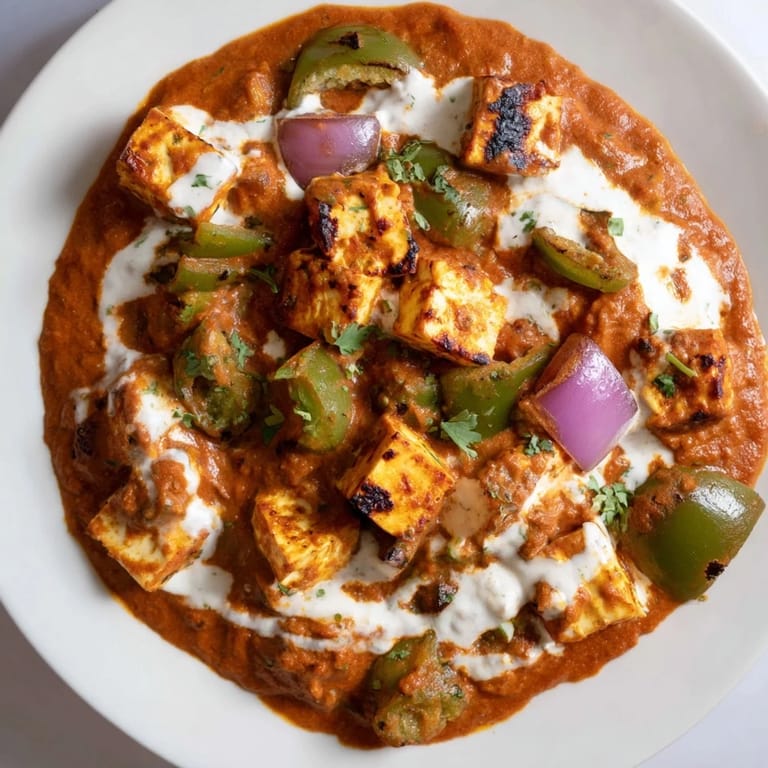
 The first time I served this to my partner, he went quiet mid-bite in a way that made me nervous until I realized he was just savoring it. That's when I understood this dish is about restraint and balance—it doesn't need to be complicated to be memorable.
The Art of the Marinade
The marinade isn't just about flavor; it's about texture and protection. The gram flour creates a physical barrier that keeps moisture in and heat out, while the yogurt and spices infuse the paneer from the outside. I've learned that the 30-minute wait isn't arbitrary—shorter and the paneer tastes like it's wearing spices; longer and it all starts to harmonize. Temperature matters too: if you skip refrigeration, the yogurt won't grip the paneer properly, and the texture suffers.
Grilling vs. Baking: Which Matters More
A grill pan gives you control and beautiful char marks, while an oven is more forgiving and uses less attention. I've done both, and honestly, the difference is smaller than you'd think—what matters more is turning the skewers halfway and not walking away. The charm marks aren't just cosmetic; they add a slight bitterness that rounds out the sweetness in the sauce, creating a more complete flavor profile.
The Sauce: Building Layers
This sauce is really three things happening in sequence: a caramelized onion base that adds sweetness and depth, a tomato mixture that brings acidity and body, and finally cream that softens and enriches. Rushing any of these steps means the sauce tastes flat or one-dimensional. I've noticed that when I simmer the tomato base for the full 15 minutes, it transforms from red liquid to something more cohesive and velvety.
- The onion needs to turn a deep golden brown, not just pale and soft—that's where the sweetness comes from.
- If your sauce tastes too acidic even after simmering, add a pinch more sugar; if it's too sweet, a squeeze of lemon juice recalibrates it instantly.
- Taste the sauce before adding cream and adjust seasoning then—once cream is in, it mutes spices slightly.
 Save to Pinterest
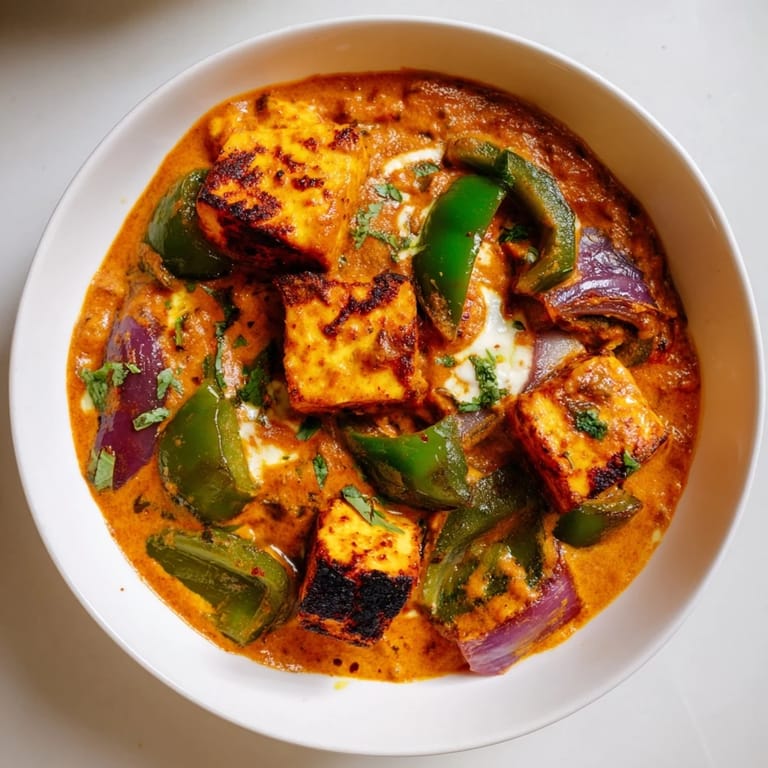
 This dish is a conversation between heat and cream, char and softness, spice and richness. Make it and you'll understand why it shows up on tables everywhere.
Recipe FAQs
- → How long should the paneer marinate?
Marinate the paneer and vegetables for at least 30 minutes to absorb the spices well.
- → Can I grill the paneer instead of baking?
Yes, grilling on medium-high heat for 10–12 minutes works well to achieve a slight char.
- → What spices give the dish its flavor?
Key spices include cumin, coriander, garam masala, turmeric, and Kashmiri chili powder for warmth and aroma.
- → How is the creamy tomato sauce prepared?
Onions and ginger-garlic paste are sautéed, followed by crushed tomatoes and spices, then finished with cream for richness.
- → What are good accompaniments for this dish?
Steamed basmati rice, fresh cilantro, lemon wedges, and optionally naan or roti can be served alongside.