 Save to Pinterest
 Last Tuesday, I was scrolling through my phone between meetings when a coworker mentioned she'd been living on sad desk salads for weeks. Something about that complaint stuck with me—not because I judged her choices, but because I remembered feeling exactly that way until I discovered how to build a bowl that actually satisfies. That afternoon, I threw together roasted chickpeas, vegetables, and a peanut sauce that tasted like it belonged in a restaurant, and suddenly lunch became something I looked forward to. This bowl changed how I think about weekday eating.
I brought this bowl to a potluck where someone had brought an elaborate meat dish, and I kept catching people going back for seconds of mine instead. There was this quiet moment when my friend Sarah asked for the recipe, and I realized I'd made something that stood on its own—not as a substitute for anything, but as genuinely delicious food.
Ingredients
- Canned chickpeas (two 15 oz cans): Buy them rinsed if your grocery store carries them, or rinse them thoroughly yourself—this removes the starchy liquid that can make them mushy instead of crispy.
- Olive oil: Use something you'd actually taste, not the cheapest bottle on the shelf.
- Smoked paprika, ground cumin, garlic powder: These three spices are the reason your roasted chickpeas taste intentional rather than plain.
- Brown rice or quinoa (2 cups cooked): Cook extra and refrigerate it; this bowl comes together twice as fast if your grain is already ready.
- Fresh vegetables: The color matters here—red cabbage and orange carrots aren't just pretty, they mean you're eating a variety of nutrients.
- Creamy peanut butter: The kind that's just peanuts and maybe salt, not the kind loaded with added sugar or oil.
- Soy sauce or tamari: Tamari is genuinely better if you're gluten-free, not a compromise option.
- Maple syrup or honey: This balances the salt and vinegar so the sauce tastes rich rather than harsh.
- Rice vinegar: It's milder than regular vinegar and won't overpower the peanut butter.
- Sriracha (optional): Add it if you want heat, skip it if you're cooking for people who don't like spice.
- Fresh cilantro: Or skip it entirely if you're one of those people who thinks it tastes like soap—I won't judge.
Tired of Takeout? 🥡
Get 10 meals you can make faster than delivery arrives. Seriously.
One email. No spam. Unsubscribe anytime.
Instructions
- Get your oven ready and prep the chickpeas:
- Preheat to 425°F and line a baking sheet with parchment paper. In a bowl, toss your drained chickpeas with olive oil, smoked paprika, cumin, garlic powder, salt, and pepper until every one is coated. Spread them out on the baking sheet in a single layer so they'll actually crisp up instead of steam.
- Roast until they're golden and crunchy:
- Pop them in the oven for 20 to 25 minutes, shaking the pan halfway through so they brown evenly. You'll know they're ready when they smell nutty and some of them are starting to look a little darker at the edges.
- Make the peanut sauce while everything roasts:
- Whisk together peanut butter, soy sauce, maple syrup, rice vinegar, minced garlic, and 2 tablespoons of warm water. Start with 2 tablespoons of water and add more slowly until you get the consistency you want—thick enough to cling to vegetables but pourable enough that it's not a blob.
- Prepare your vegetables and grains:
- If your rice or quinoa isn't already cooked, this is the time to start it. Wash your vegetables, shred the cabbage, julienne the carrots, slice the cucumber, and halve the tomatoes. Setting these up while everything else cooks means assembly becomes almost meditative.
- Build your bowls:
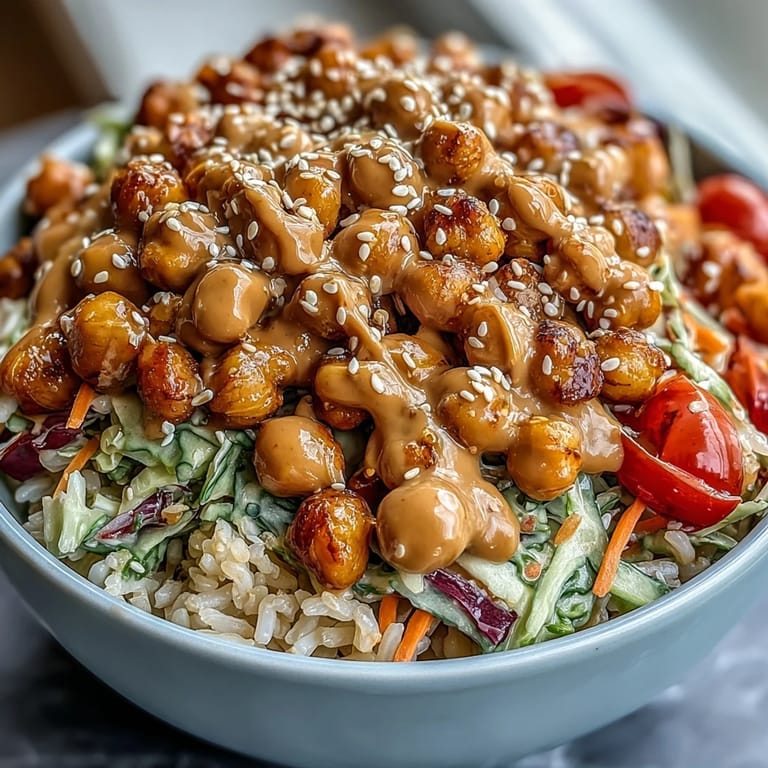
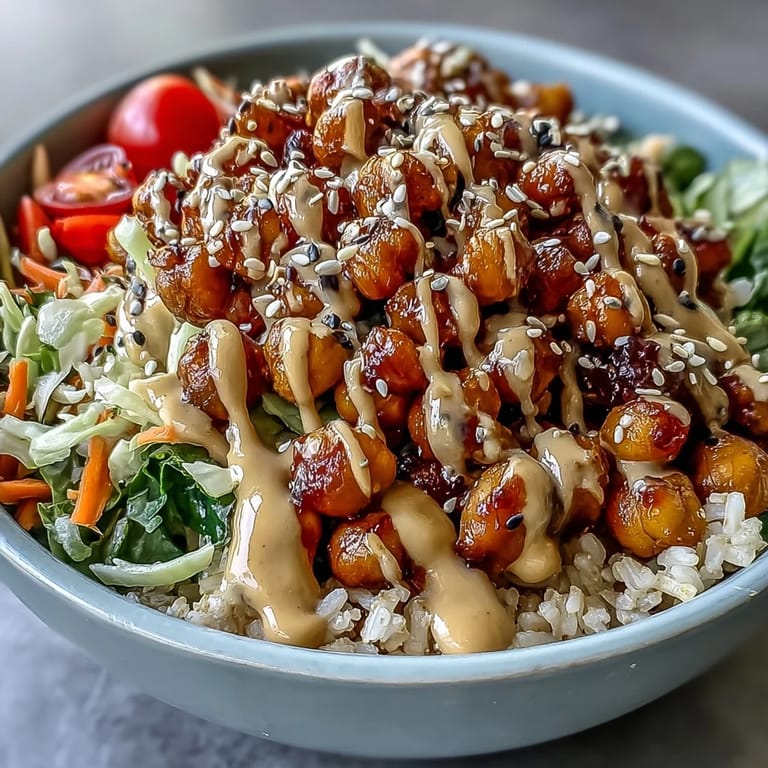
- Divide your cooked grain among four bowls as the base. Top each with a portion of the roasted chickpeas, then arrange the vegetables and edamame around the bowl so it actually looks like something you want to eat.
- Bring it all together:
- Drizzle the peanut sauce generously over everything—don't be shy, it's the star. Sprinkle with chopped peanuts, sesame seeds if you're using them, and serve with lime wedges on the side so people can squeeze brightness over their bowl.
 Save to Pinterest
 My partner tasted this for the first time and said it tasted like it came from somewhere—not just something I threw together on a random evening. That's when I understood that taking a few extra minutes to roast the chickpeas instead of just warming them, and actually making the sauce instead of buying bottled, transforms this from a healthy lunch into something that feels like you cooked.
Building Your Perfect Bowl
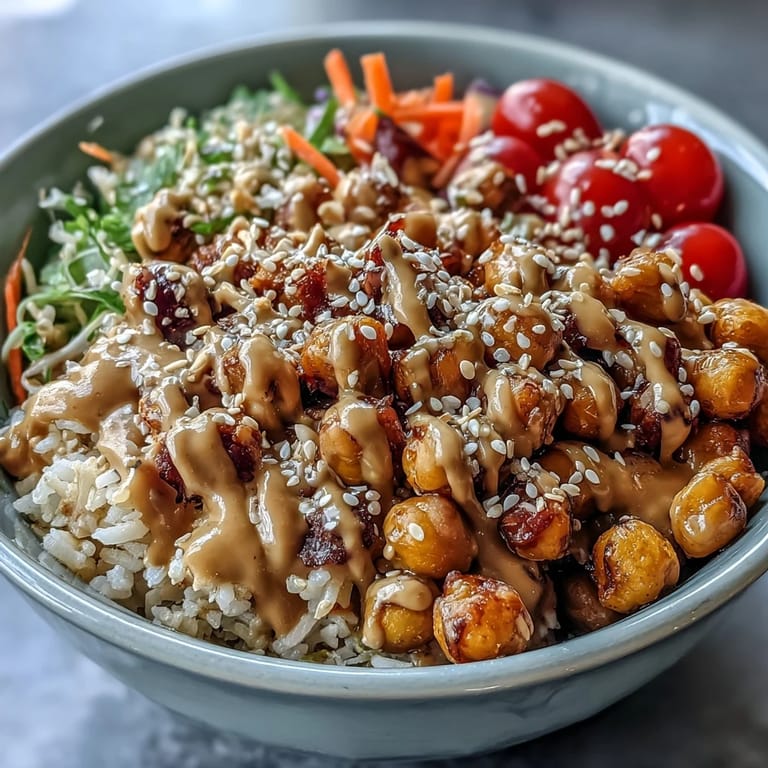
The magic of this bowl isn't any single ingredient—it's the balance between textures and temperatures. Warm grain, crispy roasted chickpeas, cool fresh vegetables, and that creamy-tangy sauce that ties everything together makes every spoonful interesting. I've started thinking about bowls the way some people think about flavor profiles: you need something soft, something crunchy, something fresh, and something rich, and suddenly a simple lunch feels intentional.
Making It Your Own
The skeleton of this bowl is forgiving enough that you can change almost everything except the roasted chickpeas and the peanut sauce and still end up with something delicious. In summer, I pile on fresh herbs and raw vegetables. In winter, I roast the vegetables alongside the chickpeas and add leafy greens that wilt slightly from the heat. I've made it with tofu crumbled and seasoned the same way as the chickpeas, with coconut rice instead of brown rice, with store-bought rotisserie chicken for days when I wanted protein without the roasting step.
Storage and Make-Ahead Tips
This bowl is actually better as a make-ahead than you'd think. Keep the components separate—grain, roasted chickpeas, raw vegetables, and sauce each in their own container—and assemble only what you're eating that day. The chickpeas stay crispy and the vegetables stay fresh, and you get to experience the whole thing exactly as intended rather than as a soggy mess by Thursday. If you must combine them, wait until just before eating to add the sauce and crunchy toppings.
- Roasted chickpeas will stay crispy in an airtight container for three days, perfect for grab-and-go lunches.
- The peanut sauce keeps for a week in the fridge and actually tastes better the next day after flavors settle.
- Raw vegetables last longest when prepped and stored in separate containers with a paper towel to absorb excess moisture.
 Save to Pinterest
 This bowl taught me that vegetarian eating doesn't have to mean sacrifice—it means paying attention to textures, building layers of flavor, and understanding that good food is about intention. Make it once and it becomes a weeknight standard; make it twice and you'll start improvising.
Recipe FAQs
- → Can I make this bowl ahead of time?
Yes, you can prep components in advance. Roast chickpeas and store up to 3 days. Keep vegetables chopped and sauce separate. Assemble just before serving to maintain texture and freshness.
- → Is the peanut sauce spicy?
The sauce has mild heat from optional sriracha. Adjust spice level by adding more or less chili sauce, or omit entirely for a milder flavor profile that still delivers rich peanut taste.
- → What can I substitute for peanut butter?
Try almond butter, cashew butter, or sunflower seed butter for nut-free alternatives. Each offers slightly different flavor notes while maintaining creamy texture and protein content.
- → How do I store leftovers?
Store components separately in airtight containers. Roasted chickpeas stay crisp for 2-3 days. Keep sauce refrigerated and vegetables crisp. Reheat grains if desired and assemble when ready to eat.
- → Can I use dried chickpeas instead of canned?
Absolutely. Cook dried chickpeas until tender, then pat thoroughly dry before roasting. This ensures they become crispy rather than steamed during the roasting process.
- → Is this bowl gluten-free?
Make it gluten-free by using tamari instead of soy sauce in the peanut sauce. Choose certified gluten-free grains if needed, and verify all ingredients meet your dietary requirements.