 Save to Pinterest
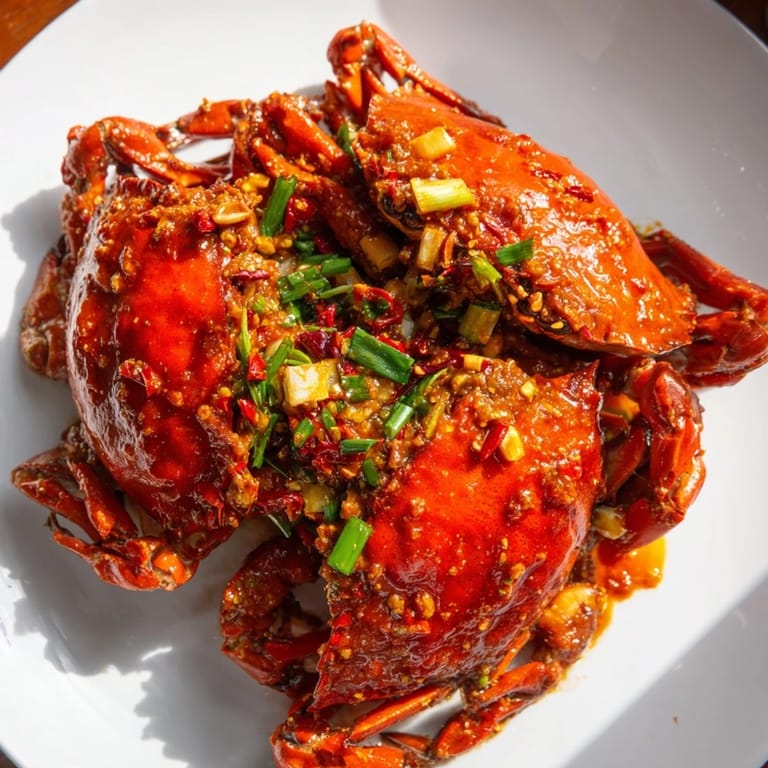
 The first time I tasted proper chili crab, my hands were completely covered in sauce and I didn't care one bit. A friend had ordered it at a hawker stall in Singapore, and I watched as she cracked open each piece with the confidence of someone who'd done this a hundred times while I fumbled with the shell. By the end of that meal, I understood why locals queue for hours for a plate of this—it's the kind of dish that demands your full attention and rewards you with every messy, delicious bite.
I made this for a dinner party once, and honestly, the best part wasn't the taste—though it was incredible—it was watching everyone abandon their manners the moment the wok hit the table. People who usually sit politely started passing dishes with their hands, licking fingers, calling for more buns, asking for extra napkins before they'd even taken a bite. That's when I realized chili crab isn't just food; it's permission to be unrestrained.
Ingredients
- 2 whole live mud crabs (about 1.5 kg total), cleaned and cut into pieces: Live crabs guarantee sweet, tender meat and a fresher flavor that frozen simply can't match; ask your fishmonger to clean and cut them for you if handling live crabs makes you nervous.
- 3 tbsp vegetable oil: Use something neutral that won't overpower the aromatics; peanut oil works beautifully too if you have it.
- 1 medium onion, finely chopped: This builds the savory foundation and turns golden and sweet as it cooks.
- 5 cloves garlic, minced: Garlic becomes mellow and almost caramelized in the sauce, not sharp.
- 3 red chilies, deseeded and chopped: Deseeding removes some heat while keeping the fruity flavor intact.
- 2 birds eye chilies, chopped (adjust to taste): These tiny ones pack genuine fire; start with one if you're unsure.
- 2 cm piece fresh ginger, peeled and minced: Fresh ginger adds a warm bite that powdered can't replicate.
- 250 ml tomato ketchup: This might sound casual, but it's the secret weapon—ketchup brings acidity and a hint of sweetness that bottled chili sauce alone misses.
- 2 tbsp chili sauce (such as Sriracha or sambal oelek): Sambal oelek is closer to the traditional Singaporean approach if you can find it.
- 1 tbsp sugar: Just enough to balance the heat and acidity without making it dessert.
- 1 tbsp soy sauce: This rounds out the umami and deepens the color.
- 1 tsp fish sauce: A small amount lifts everything, adding that ineffable savory quality without tasting fishy.
- 250 ml chicken or seafood stock: Seafood stock is ideal; it keeps the focus on the crab.
- 1 tsp cornstarch mixed with 1 tbsp water: This thickens the sauce just enough to cling to the crab without becoming gluey.
- 2 large eggs, lightly beaten: These create those silky ribbons that catch the sauce beautifully.
- 2 spring onions, sliced: Added at the end for a fresh onion bite and color.
- Fresh cilantro, chopped: Cilantro cuts through the richness with brightness.
- Lime wedges, to serve: A squeeze of lime transforms each bite, waking up all the spice and sweetness.
Tired of Takeout? 🥡
Get 10 meals you can make faster than delivery arrives. Seriously.
One email. No spam. Unsubscribe anytime.
Instructions
- Get your wok ready and build the base:
- Heat the oil over medium heat until it shimmers slightly, then add the onion and let it soften for about 2 minutes—you want it to turn translucent and a little golden at the edges. This is when your kitchen starts to smell like something good is happening.
- Wake up the aromatics:
- Add the garlic, ginger, and both types of chilies all at once, stirring constantly for 2–3 minutes until the whole mixture becomes fragrant and oils are coating everything. If it starts to stick, your heat might be too high—turn it down slightly.
- Introduce the crab:
- Add all the crab pieces and toss them around for 3–4 minutes, letting the shell start to turn that beautiful red-orange color and the meat warm through. Listen for the occasional crack of shell as it cooks.
- Build the sauce and simmer:
- Pour in the ketchup, chili sauce, sugar, soy sauce, fish sauce, and stock, stirring everything together until the crab is submerged and coated. Bring it to a boil, then turn the heat down and let it bubble gently for 10–12 minutes, stirring and turning the crab every few minutes so it cooks evenly all over.
- Thicken with the cornstarch slurry:
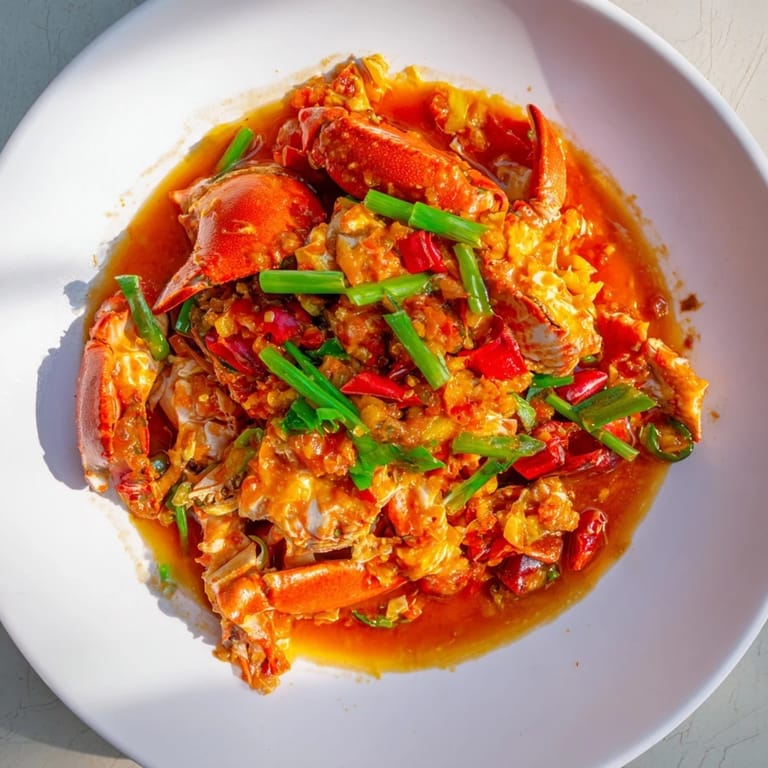
- When the crab meat is cooked through and starting to pull away from the shell slightly, stir in your cornstarch mixture—the sauce should thicken noticeably and become glossy.
- Add the silky egg ribbons:
- Remove the wok from the heat briefly, then turn the heat back to low-medium and drizzle the beaten eggs slowly into the bubbling sauce while stirring gently with a fork or chopstick. The eggs will set into silky ribbons almost immediately.
- Finish and serve:
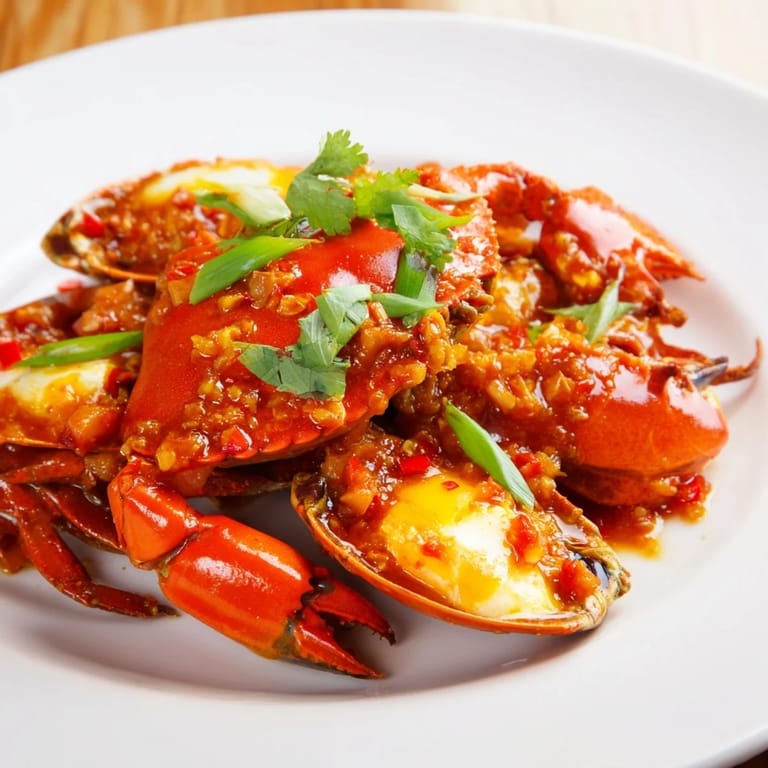
- Remove from heat, scatter the spring onions and cilantro over everything, and transfer to a serving dish. Serve immediately with lime wedges, steamed buns, or rice for soaking up every last drop of sauce.
 Save to Pinterest
 What I love most about making chili crab now isn't the technique—it's how it transforms a dinner into a story people tell later. Everyone always mentions how good it was, but they remember more the laughter, the mess on the table, someone's sister cracking open her first whole crab and whooping when she found the meat inside.
The Sauce Philosophy
This sauce works because it respects the crab instead of drowning it. The tomato ketchup gets a bad reputation, but it's actually genius here—it provides acidity and a touch of sweetness that pure chili sauce alone can't achieve. The fish sauce might seem like a wild addition, but just a teaspoon adds an umami depth that makes people say the sauce tastes incredible without being able to identify why. Think of it as a background vocalist that makes the whole song richer.
Crab Selection and Prep
Mud crabs are the gold standard for this dish because their meat is tender and sweet, with a texture that holds up beautifully to high-heat cooking. If you can't find them, blue swimmer crabs or Dungeness crabs work well too—just ask your fishmonger to clean and cut them for you if you'd rather not handle live crabs. The shells protect the meat during cooking and give you something to hold while you're eating, which is half the fun of the dish anyway.
Serving and Pairing
This dish demands an audience and plenty of napkins—I'm not exaggerating when I say the sauce is deliciously messy. Steamed mantou buns are traditional because they're soft enough to soak up sauce but sturdy enough not to fall apart, though rice works just as well if that's what you have. Serve everything family-style straight from the wok if you can, because part of the joy is everyone reaching in together, and the sauce stays hotter longer.
- Have lime wedges ready at the table because a squeeze of fresh lime over each bite transforms the whole flavor profile.
- Pair with something cold to drink—the heat builds as you eat, and cold beer or icy jasmine tea is the perfect counterbalance.
- Set out small plates for shells and extra napkins before anyone even sits down.
 Save to Pinterest
 There's something about feeding people chili crab that feels generous in a way other dishes don't. You're giving them permission to be messy, to crack things open with their hands, to lick their fingers and ask for more. That's a kind of abundance worth celebrating.
Recipe FAQs
- → What type of crab is best for this dish?
Live mud crabs are traditional, but blue swimmer or Dungeness crab can be used if unavailable.
- → How can I adjust the spiciness level?
Modify the number of birds eye chilies or remove seeds from red chilies to control heat intensity.
- → What side dishes pair well with this crab preparation?
Steamed mantou buns or plain rice complement the flavorful sauce and balance the dish.
- → How is the sauce thickened and given its silky texture?
Cornstarch slurry thickens the sauce, while slowly stirring in beaten eggs creates smooth egg ribbons.
- → Are there any important tools required?
A large wok or deep pan for cooking and a crab cracker or mallet for shelling are essential.