 Save to Pinterest
 Last spring, I was scrambling to put together something for a casual dinner party when I realized I had a crisper drawer overflowing with the season's first vegetables—those impossibly bright radishes, tender peas, and baby carrots that suddenly appear at the market in April. Instead of fussing with a cooked dish, I decided to build a board, and what started as a practical solution became the thing everyone actually wanted to eat. The magic wasn't in complexity; it was in that moment when guests circled around the platter, discovering bright flavors and textures they didn't expect to crave.
I served this board at an outdoor gathering on an unusually warm May afternoon, and watching people graze through it while talking felt like the board itself was part of the conversation. The dip disappeared first, naturally, but then I noticed how guests kept returning for the radishes—the peppery snap seemed to wake something up in the moment, and I realized that sometimes the simplest presentations let good ingredients speak loudest.
Ingredients
- Breakfast radishes: These mild, crisp varieties are the heart of this board, offering peppery sweetness without the bite of larger radishes—halve them lengthwise so they sit flat and pretty.
- Sugar snap peas: Leave these whole or halve them for easier snacking; their natural sweetness and satisfying crunch make them irresistible.
- Fresh peas: Blanch these briefly if using fresh (frozen work beautifully too), which sets their color and keeps them tender without becoming mushy.
- Baby carrots: Their natural sweetness balances the peppery radishes, and peeling them reveals that bright orange that makes a board visually sing.
- Cherry tomatoes: Halving these prevents them from rolling around and exposes their juicy interiors, catching light on the board.
- Cucumber: Keep slices thin so they stay crisp, and consider leaving the skin on for color contrast.
- Greek yogurt: The tangy base that makes this dip taste both rich and light—full-fat versions create better texture than nonfat.
- Mayonnaise: This isn't just fat; it's an emulsifier that makes the dip silky and helps the herbs cling evenly throughout.
- Fresh herbs: Chives, parsley, and dill are the holy trinity here—chop them fine so they distribute evenly rather than collecting in clumps.
- Garlic: One small clove minced fine is enough; too much overpowers the delicate herb balance.
Tired of Takeout? 🥡
Get 10 meals you can make faster than delivery arrives. Seriously.
One email. No spam. Unsubscribe anytime.
Instructions
- Wash and trim everything:
- Give all vegetables a rinse and pat them dry thoroughly—water clinging to the surface makes them look dull and causes dips to slide off. Trim radish stems close to the root, remove sugar snap strings if needed, and peel baby carrots until they glow.
- Arrange with intention:
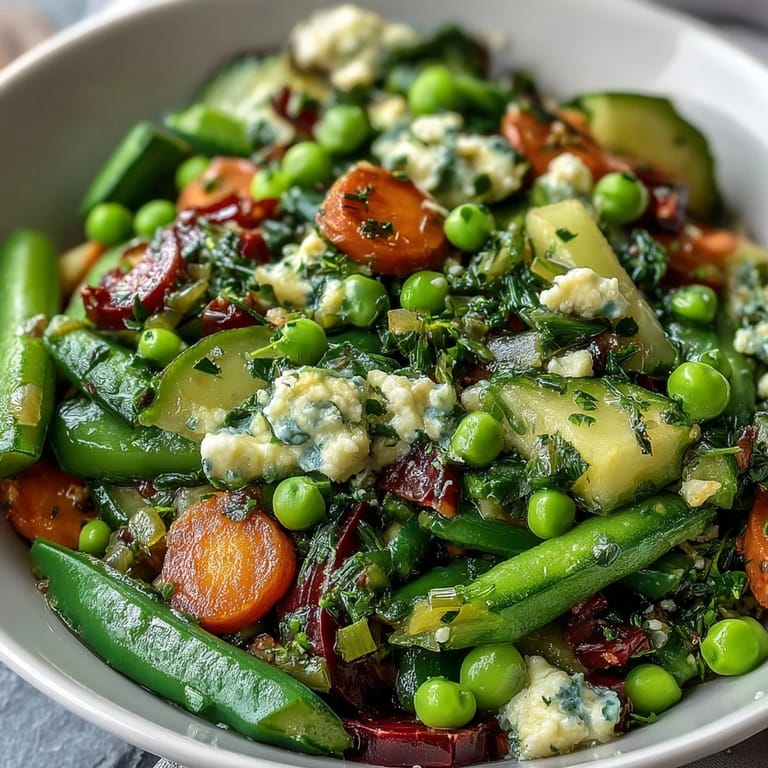
- Place vegetables on your board in small clusters rather than lines, creating natural flow—think about color balance so bright reds and greens scatter across the surface rather than bunching together. Leave room for the dip bowl to nestle in without looking crowded.
- Make the dip while you arrange:
- Combine yogurt and mayonnaise in a bowl, then add lemon juice and whisk until smooth and creamy. Fold in the minced herbs and garlic gently so they stay suspended rather than sinking to the bottom.
- Season with restraint:
- Add salt and pepper slowly, tasting as you go—the vegetables will contribute their own brightness, and you don't want the dip competing with them. A squeeze of fresh lemon juice at the very end lifts everything.
- Position the dip and final touches:
- Transfer the dip to a small bowl and place it on the board where it looks natural, not squeezed in as an afterthought. If using microgreens or feta, scatter these over the vegetables just before serving so they catch light and look fresh.
 Save to Pinterest
 There's a moment in entertaining where you stop thinking about what you're serving and start noticing how people eat it—how they slow down, comment on flavors, actually taste things instead of just consuming. This board does that. It transforms vegetables from background players into the main event.
Why This Works as a Springtime Appetizer
Spring vegetables have a delicate sweetness and crisp texture that fall apart or turn mushy if cooked, so serving them raw honors what makes them special in the first place. A board format removes the anxiety of plating—everyone serves themselves, which means your role shifts from chef to curator. The herb dip adds richness without heaviness, anchoring light vegetables with something creamy and satisfying.
Building a Beautiful Board
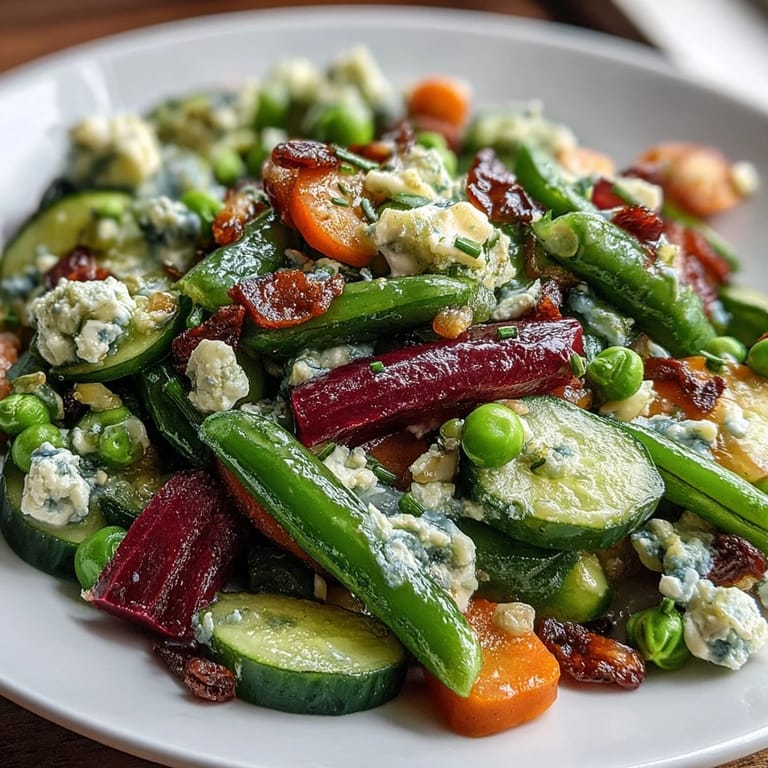
The secret to an inviting board isn't following rules but understanding proportions and color balance. Group similar vegetables loosely so they create visual breaks—place radishes near the darkest items, let carrots sit opposite tomatoes, keep peas clustered so their round shapes offer contrast to longer cucumber slices. Odd numbers feel more natural than even, and leaving slight gaps makes everything look abundant rather than cramped.
Make It Your Own
This is a template, not a mandate. Swap radishes for thinly sliced fennel if you want something more delicate, add blanched asparagus tips for elegance, or include shredded purple cabbage for earthiness. The dip is equally flexible—try swapping parsley for tarragon, add a pinch of smoked paprika, or whisper in some horseradish for unexpected depth.
- Prepare everything up to four hours ahead, storing vegetables in containers covered with damp paper towels so they stay crisp without absorbing excess moisture.
- If making this vegan, use dairy-free yogurt and mayo, then taste carefully since the flavor profile shifts slightly without the tang of Greek yogurt.
- Set out small plates and forks so guests aren't awkwardly balancing vegetables and dip in napkins.
 Save to Pinterest
 Spring boards are as much about rhythm as recipe—they're an excuse to gather people around something beautiful and let conversation happen naturally. Make this once, and you'll understand why it becomes the thing you return to when you want to feel like an effortless host.
Recipe FAQs
- → What vegetables are used in this spring platter?
It includes radishes, sugar snap peas, shelled peas, baby carrots, cherry tomatoes, and cucumber slices for a fresh, crisp variety.
- → How is the herb dip prepared?
The dip combines Greek yogurt, mayonnaise, lemon juice, finely chopped chives, parsley, dill, minced garlic, sea salt, and black pepper for a creamy, flavorful complement.
- → Can this board be made ahead of time?
The herb dip can be prepared up to two days in advance and kept refrigerated, while the vegetables are best arranged just before serving.
- → Are there any suggested garnishes?
Optional garnishes include microgreens and crumbled feta cheese to enhance both flavor and presentation.
- → Is this suitable for special diets?
Yes, it accommodates vegetarian and gluten-free diets. Greek yogurt can be swapped with plant-based alternatives for vegan preferences.
- → What tools are needed to prepare this board?
A large serving platter or board, a small bowl for the dip, a sharp knife, and a cutting board are recommended for easy preparation.