 Save to Pinterest
 I discovered this salad by accident on a Tuesday when my fridge was nearly empty and I had exactly two cans of tuna staring back at me. Instead of making the same sad tuna sandwich, I grabbed a can of chickpeas and started chopping whatever vegetables I could find, thinking maybe something good would happen. It did. The brightness of the lemon dressing transformed everything into something that felt intentional, even though it was born from pure necessity. Now I make it constantly, and people ask for the recipe like I've been holding out on them.
I brought this to a potluck once when I wasn't sure what to make, and three people came back asking if I'd open a restaurant. That's when I realized it wasn't luck—it was the combination of textures, the way the dressing actually clung to everything instead of pooling at the bottom, and the fact that it felt sophisticated without being fussy. It became the dish I'd make whenever I wanted to feed people without stress.
Ingredients
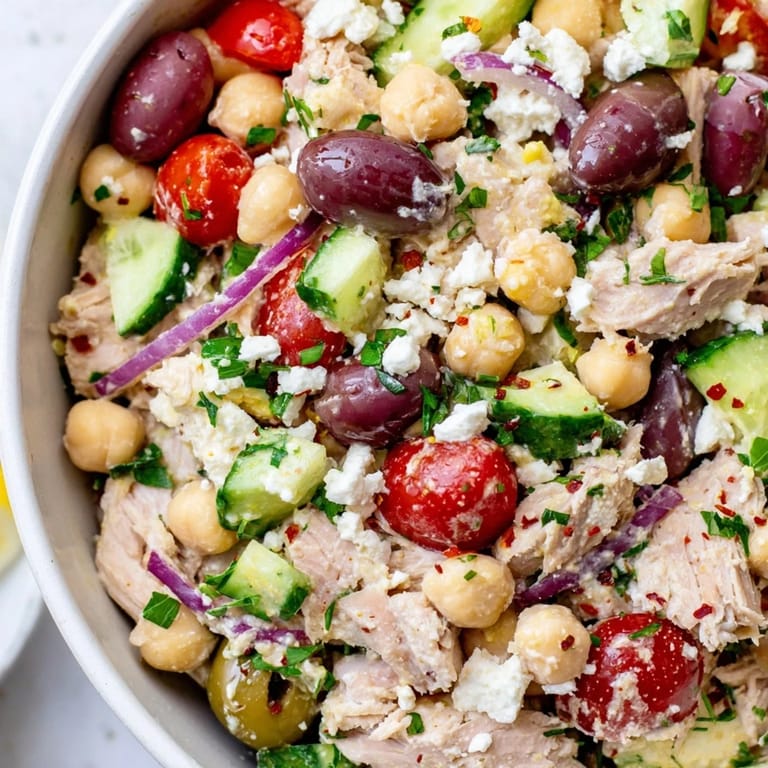
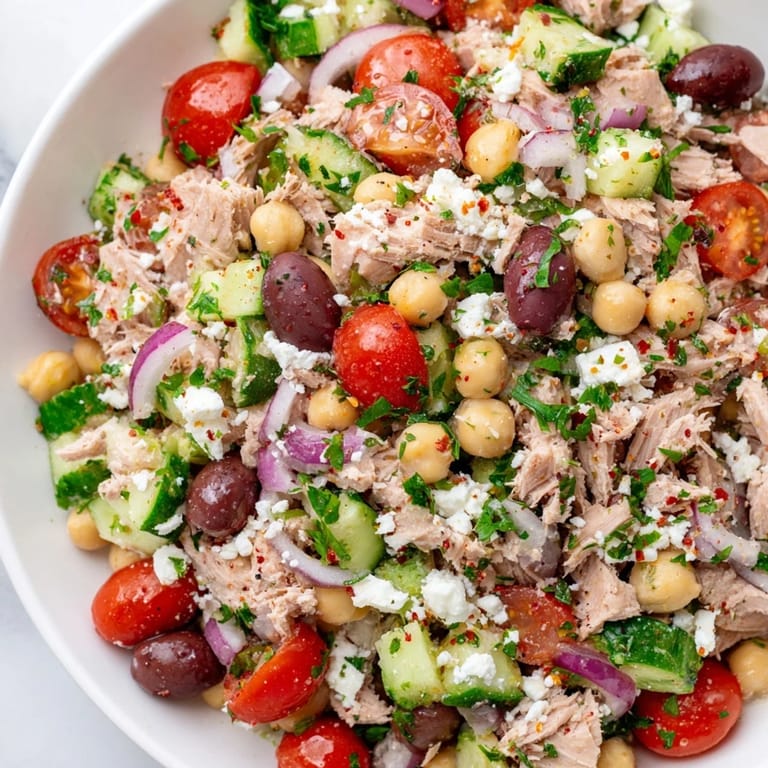
- Chickpeas: These aren't just filler—they give you substance and a creamy contrast to the crisp vegetables, plus they're packed with fiber that actually keeps you satisfied.
- Tuna in water: Drain it really well or your salad turns watery; the fish brings umami that makes everything taste richer than it has any right to be.
- Cherry tomatoes: Halve them so they soak up the dressing and burst when you bite them instead of rolling away on your plate.
- Cucumber: Dice it small so it distributes evenly; you want a cucumber surprise in every bite, not just the last mouthful.
- Red onion: The bite mellows as it sits in the dressing, which is why this tastes better after an hour than it does right after mixing.
- Fresh parsley: This is the unsung hero that adds brightness; don't skip it thinking it's just garnish.
- Kalamata olives: Optional but I never skip them—they add a salty, briny note that ties everything together.
- Extra virgin olive oil: This is worth spending a bit on because you taste it directly in the dressing.
- Fresh lemon juice: Always fresh; bottled tastes tired and misses the point entirely.
- Dijon mustard: Just one teaspoon emulsifies the dressing so it clings instead of separating.
- Garlic: Minced small so it dissolves into the dressing rather than giving you sharp bits.
Tired of Takeout? 🥡
Get 10 meals you can make faster than delivery arrives. Seriously.
One email. No spam. Unsubscribe anytime.
Instructions
- Combine the foundation:
- Drain your chickpeas and tuna really thoroughly—I usually give them a gentle squeeze with paper towels to make sure they're not waterlogged. Toss them into a large bowl with the tomatoes, cucumber, red onion, parsley, and olives, and just let them sit for a moment while you make the dressing.
- Build the dressing:
- In a small bowl, whisk the olive oil with lemon juice first—you'll see it start to emulsify almost immediately. Add the mustard, minced garlic, salt, and pepper, and whisk until everything looks creamy and cohesive; this is where the magic happens.
- Marry the salad and dressing:
- Pour the dressing over everything and toss gently but thoroughly so every ingredient gets coated. Taste it and adjust—if it needs more brightness, squeeze in a tiny bit more lemon; if it needs more salt, go easy because the olives are already salty.
- Finish and rest:
- Top with feta and red pepper flakes if you're using them, then serve right away or cover and refrigerate. Honestly, it tastes better after it's had some time to sit because the flavors all get to know each other.
 Save to Pinterest
 There was a moment when I realized this salad had become more than just lunch—it was the thing I'd make to celebrate not having to cook, to feed friends on a hot day, to prove to myself that feeding people well doesn't require turning on the oven. It shifted from accident to staple without me even noticing.
Why This Salad Works for Everyone
The genius of this dish is its flexibility. You're working with a strong enough foundation—the tuna and chickpeas are your anchors—that you can swap vegetables without losing the soul of it. I've made it with diced bell pepper instead of cucumber on days when that's what I had. I've doubled the parsley because I was in a fresh herb mood. The structure is solid enough that it survives your improvisation.
The Meal Prep Reality
Unlike salads that wilt and suffer in the fridge, this one actually improves over a day or two because the vegetables soften slightly and everything marries together. I keep the dressing separate if I'm packing it for lunch, then combine it right before eating so there's still some textural contrast. It sits in my office fridge as the envy of everyone else's sad desk lunches.
Small Tweaks That Make a Difference
The difference between a good salad and one you'll actually want to eat is usually in the dressing ratio and the way you prepare your vegetables. Uniform cutting means everything marinates evenly. The emulsification of oil and lemon juice means the dressing coats rather than pools. These tiny things compound into something that tastes intentional rather than lazy.
- If you don't have Dijon mustard, skip it rather than substituting—the salad is still great without it, but a different mustard changes the whole flavor profile.
- Red onion gets milder the longer it sits in acid, so if you're sensitive to raw onion bite, make this ahead and let it mellow.
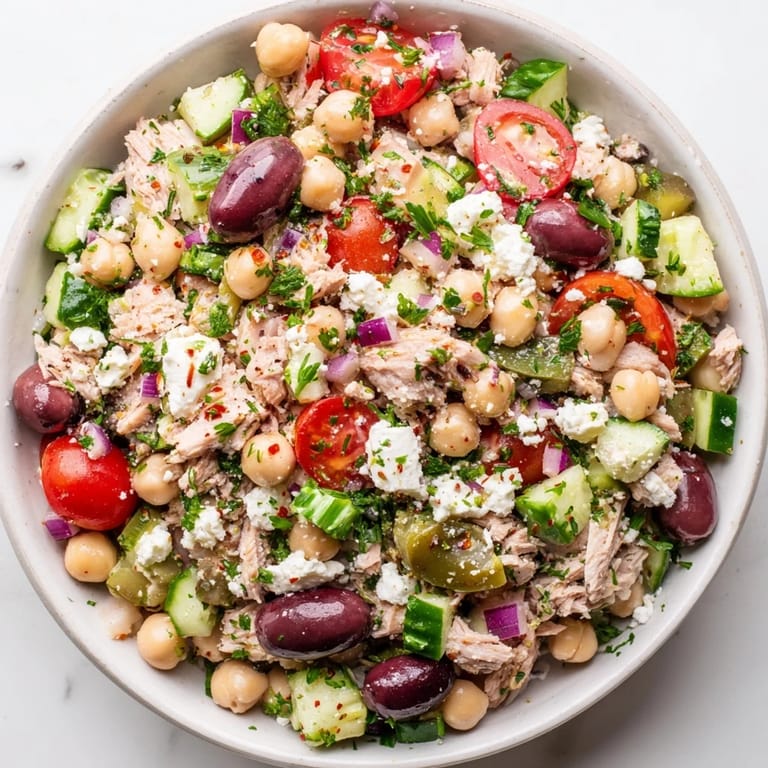
- Feta is optional but it does elevate the whole thing into territory that feels almost fancy for no real effort.
 Save to Pinterest
 This salad became my answer to "what can I bring" or "what should I eat for lunch" because it's genuinely nourishing, never boring, and somehow always tastes like you tried harder than you actually did. That's the whole recipe right there.