 Save to Pinterest
 I'll never forget the first time I arranged a platter like this at a summer gathering—watching people's faces light up as they discovered the pockets of color and flavor, the way conversation flowed around the board instead of a heavy meal. It was then I realized that sometimes the most memorable dishes aren't cooked at all, but thoughtfully assembled. This Vegan Global Gardener Platter became my answer to every potluck invitation, every casual dinner, every moment when I wanted to celebrate fresh ingredients without apology.
My neighbor once brought a platter like this to a neighborhood potluck, and I watched three different dietary stories—someone avoiding dairy, another gluten-free by necessity, a friend trying plant-based eating—all find themselves in one beautiful spread. That's when I understood: this isn't just a platter, it's a quiet way of saying you thought about everyone.
Ingredients
- Rainbow carrots: 1 cup sliced—they're not just prettier than orange, they bring earthiness and natural sweetness that anchors the whole platter
- Baby cucumbers: 1 cup sliced or quartered—cooling and crisp, they're the palate cleanser between dips
- Cherry tomatoes in assorted colors: 1 cup—choose the tiniest ones you can find, they burst with concentrated flavor instead of water
- Radishes: 1 cup thinly sliced—they bring a peppery snap that wakes up your mouth, and their pink edges add visual drama
- Baby bell peppers: 1 cup sliced—sweeter than their adult cousins and infinitely more elegant
- Snap peas: 1 cup whole or halved—they're the bridge between raw and substantial, almost sweet
- Mixed color grapes: 1 cup seedless—texture surprise, they cleanse the palate between savory dips
- Strawberries: 1 cup halved—their sweetness complements the earthiness of the vegetables in the most unexpected way
- Pineapple chunks: 1 cup—bring a tropical brightness and subtle acidity that ties everything together
- Kiwi slices: 1 cup peeled—their vivid green and tart-sweet flavor feel celebratory
- Classic hummus: 1 cup—the familiar anchor everyone reaches for first
- Beetroot hummus: 1 cup—earthy, slightly sweet, it's the dip that surprises people in the best way
- Guacamole: 1 cup—creamy richness that makes everything feel more indulgent than it is
- Cashew tzatziki: 1 cup—cool, herby, it mimics the dairy version so convincingly that no one will notice the difference
- Pomegranate seeds: 1/4 cup—jewel-like bursts of tartness and visual magic
- Fresh herbs: 1/4 cup mint, basil, and parsley—scattered like confetti, they say this was made with care
- Edible flowers: optional—nasturtiums, violas, or borage if you're feeling generous
- Gluten-free crackers or pita chips: 1 cup—the vehicle for the dips, choose ones with character
Tired of Takeout? 🥡
Get 10 meals you can make faster than delivery arrives. Seriously.
One email. No spam. Unsubscribe anytime.
Instructions
- Prepare with intention:
- Wash and thoroughly dry every vegetable and fruit—wet produce will weep onto your platter and blur your colors. Pat them dry with a clean kitchen towel like you're handling something precious, because you are. Slice everything while your knife is sharp and your attention is full. Vegetables cut with intention look like love; rushed cuts look rushed.
- Choose your canvas:
- Select a large platter or board that will hold everything without crowding. I prefer natural wood or slate for contrast, but a clean white plate works beautifully too. The board is your stage; make it one you're proud of.
- Position your anchors:
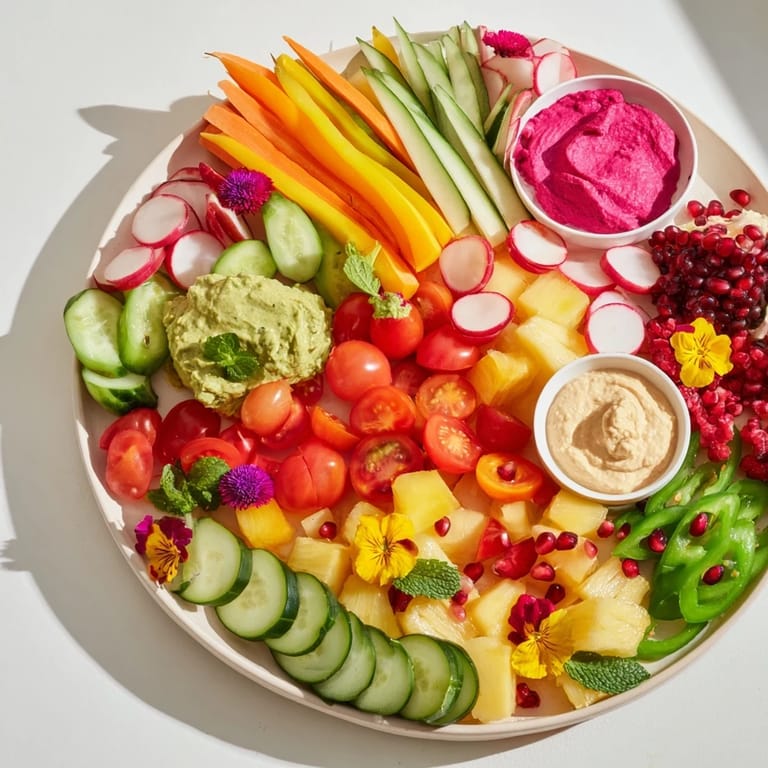
- Arrange the four dips in small bowls positioned at different points around the platter—think of them like the cardinal directions. This creates natural traffic patterns and prevents everyone from converging on one corner at once.
- Build in color sections:
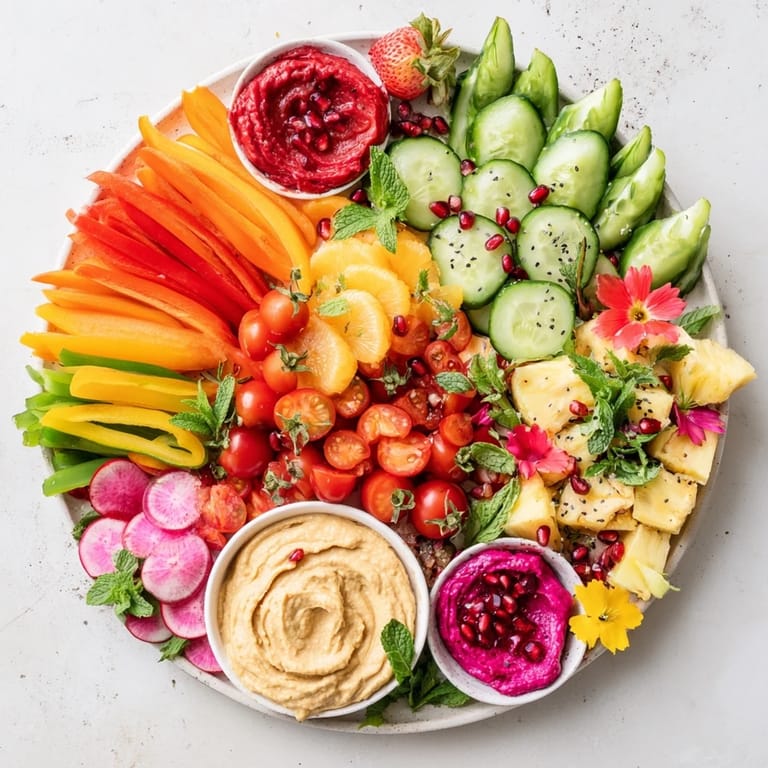
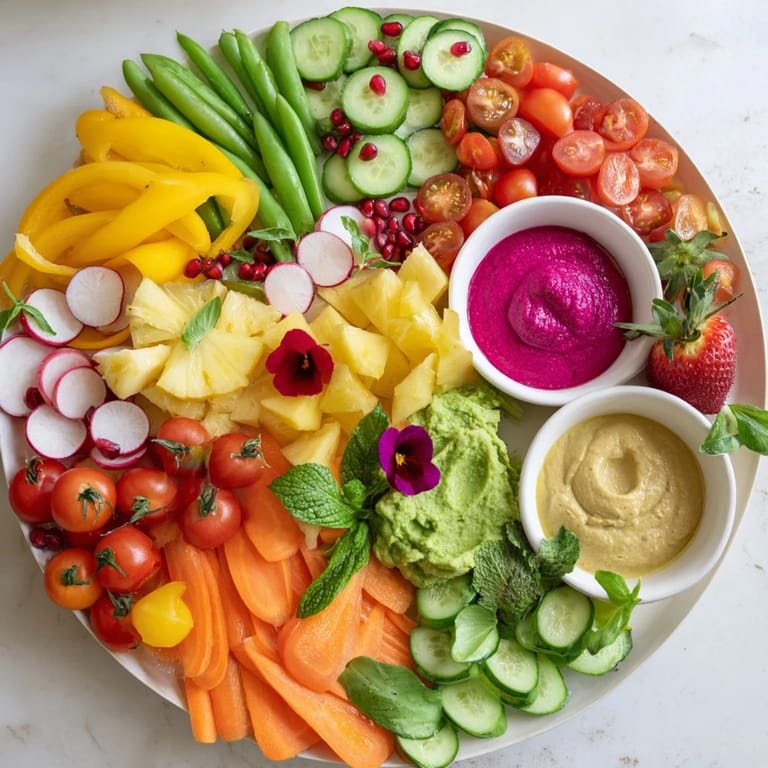
- Now comes the artful part. Group each vegetable or fruit together, creating blocks of color that make your eye want to travel around the board. Put the purple radishes next to the orange carrots next to the red tomatoes. Let the natural colors do the composition work for you. Alternate textures—crisp next to soft, smooth next to bumpy.
- Fill the gaps with generosity:
- The spaces between your main elements are just as important as the elements themselves. Scatter pomegranate seeds like tiny jewels, tuck fresh herbs between the vegetables, add edible flowers if you're feeling it. Layer the crackers in one section. These gaps prevent the platter from looking sparse and give people permission to take the first piece without feeling guilty about leaving a hole.
- Serve at the moment of readiness:
- Bring the platter to the table immediately while everything is at peak crispness and color. If you must wait, loosely cover it with plastic wrap and refrigerate—but know that the magic happens when vegetables are at their coldest and freshest.
 Save to Pinterest
 There's a particular magic that happens when someone who thinks they don't like vegetables reaches across a platter like this and tries a radish they never would have ordered. I've watched skeptics become converts, one thin slice at a time. That moment—when someone discovers they actually like something they thought they didn't—is worth every careful arrangement.
The Art of Arrangement
Platters are about visual rhythm. Think of the colors you love and let them dance across the board. I always start with my dips, then build the vegetables around them like I'm creating a painting. The vegetables should lead the eye on a journey, not sit in a jumbled pile. Warm colors (oranges, reds, yellows) naturally draw attention, so place them where you want people to look first. Cool colors (purples, greens, blues) recede slightly, creating depth. After a few attempts, you'll develop an intuition for what feels balanced.
Pairing for Perfect Moments
This platter is humble enough for a casual afternoon and elegant enough for an unexpected guest. I've served it at book clubs where it sparked conversation, at picnics where it handled the summer heat beautifully, and at celebrations where it held its own next to fancier dishes. The key is understanding that its simplicity is its strength—it gets out of the way and lets people connect.
Variations and Personal Touches
Once you master the basic structure, the platter becomes a canvas for your seasonal creativity and what's growing around you. Winter calls for roasted root vegetables and pomegranate, spring wants asparagus and fresh herbs, summer celebrates berries and stone fruits, fall asks for roasted chickpeas and darker greens. I've learned that the best platters are built from what makes you excited to eat, not from a rigid recipe. You'll know you've found your version when you stop thinking about it as a dish and start thinking of it as an expression of what's happening in your kitchen right now.
- Roasted chickpeas or marinated olives add heartiness and salty complexity
- A drizzle of good olive oil and sea salt elevates everything the moment before serving
- Pairing with a crisp white wine, sparkling water with citrus, or a simple herbal tea completes the experience
 Save to Pinterest
 This platter reminds me why I cook—not because the food is complicated, but because moments around simple, beautiful food matter. Make this for someone you want to celebrate, or make it for yourself on a day when you need to remember that nourishment and joy live in the same space.
Recipe FAQs
- → What vegetables are included in the platter?
The platter includes rainbow carrots, baby cucumbers, cherry tomatoes, radishes, baby bell peppers, and snap peas, all fresh and sliced for easy enjoyment.
- → Which fruits complement this dish?
Fresh seedless grapes in mixed colors, halved strawberries, pineapple chunks, and sliced kiwi are featured for a sweet and tangy contrast.
- → What types of dips are served with the platter?
Plant-based dips include classic hummus, beetroot hummus, guacamole, and cashew tzatziki, offering a variety of creamy and flavorful options.
- → Can I customize the vegetable or fruit selection?
Yes, seasonal vegetables and fruits can be swapped in for variety and freshness based on availability and preference.
- → Are there any common allergens to be aware of?
The cashew tzatziki contains nuts and hummus may include sesame tahini; gluten-free crackers should be checked for gluten. Always verify individual ingredients for allergens.
- → What is the ideal serving occasion for this platter?
This colorful and fresh platter is perfect as an appetizer or snack for gatherings, parties, or healthy social occasions.