 Save to Pinterest
 There's something magical about assembling a bowl that looks like it belongs in a wellness magazine, yet tastes nothing like deprivation. I stumbled onto this combination while cleaning out my fridge one Tuesday evening, finding a lonely container of quinoa and a handful of vegetables that needed rescuing. What started as a practical dinner solution turned into something I now make weekly, each time discovering a new vegetable variation or finding myself standing at the counter, inhaling the aroma of roasting peppers and caramelizing onions while humming along to whatever's playing. This bowl became my answer to the eternal question of what to eat when you want something that feels both indulgent and genuinely good for you.
My partner took one bite and asked if I'd secretly enrolled in culinary school, which made me laugh while standing in our small kitchen surrounded by dirty cutting boards. That moment crystallized why I keep making this bowl—it's nourishing enough to feel like self-care, shareable enough to impress someone without pretense, and honest enough to feel like you're actually taking care of yourself rather than performing wellness. Since then, it's become our go-to meal for when we want to feel grounded and energized without spending hours cooking.
Ingredients
- Quinoa: Rinsing removes the bitter coating and ensures those fluffy, tender grains that make the whole bowl satisfying.
- Red bell pepper: The sweetness deepens when roasted, creating pockets of concentrated flavor that balance the earthiness of everything else.
- Zucchini: It caramelizes beautifully at high heat and absorbs the olive oil and oregano like a flavor sponge.
- Carrot: Slicing rather than dicing lets them develop crispy edges while staying tender inside.
- Red onion: The wedges get jammy and sweet after roasting, transforming from sharp to mellow.
- Cherry tomatoes: Halving them exposes more surface area for caramelization and concentrates their natural sweetness.
- Olive oil: Use good quality for roasting and reserve your best extra virgin for the vinaigrette where you'll actually taste it.
- Black beans or chickpeas: Either works beautifully—beans add earthiness while chickpeas bring a slight nuttiness and firmer texture.
- Almonds or walnuts: Roasted nuts add texture and healthy fats that make the bowl feel complete rather than just virtuous.
- Pumpkin seeds: These add a subtle sweetness and visual interest that you don't expect from seeds.
- Lemon vinaigrette: The mustard acts as an emulsifier while the maple syrup balances acidity with just enough sweetness to tie everything together.
Tired of Takeout? 🥡
Get 10 meals you can make faster than delivery arrives. Seriously.
One email. No spam. Unsubscribe anytime.
Instructions
- Heat your oven and prep your vegetables:
- Get the oven to 425°F and while it's warming, cut everything into pieces that look roughly the same size so they cook evenly. You want them small enough to roast through in twenty-five minutes but substantial enough that they don't shrivel into whispers.
- Season and spread:
- Toss your vegetables with olive oil, oregano, salt, and pepper right on the baking sheet—this is your mise en place and your cooking vessel combined. Make sure everything is in a single layer with room to breathe, not piled on top of itself.
- Roast with intention:
- Pop them in the oven and stir once halfway through. You're looking for caramelization at the edges and tender insides, which takes about twenty to twenty-five minutes depending on how hot your oven runs.
- Start your quinoa:
- While vegetables roast, bring quinoa and water to a boil in a saucepan, then reduce the heat and cover. The cooking happens quietly for fifteen minutes—this is your time to clean up or simply stand there daydreaming.
- Let quinoa rest:
- After fifteen minutes, turn off the heat and leave it covered for five more minutes. This allows the grains to finish absorbing moisture and become truly fluffy when you fluff it with a fork.
- Build your vinaigrette:
- Whisk together olive oil, lemon juice, mustard, maple syrup, and minced garlic in a small bowl. Taste it and adjust—this is where your bowl gets personality, so don't be timid with the lemon or garlic.
- Assemble with care:
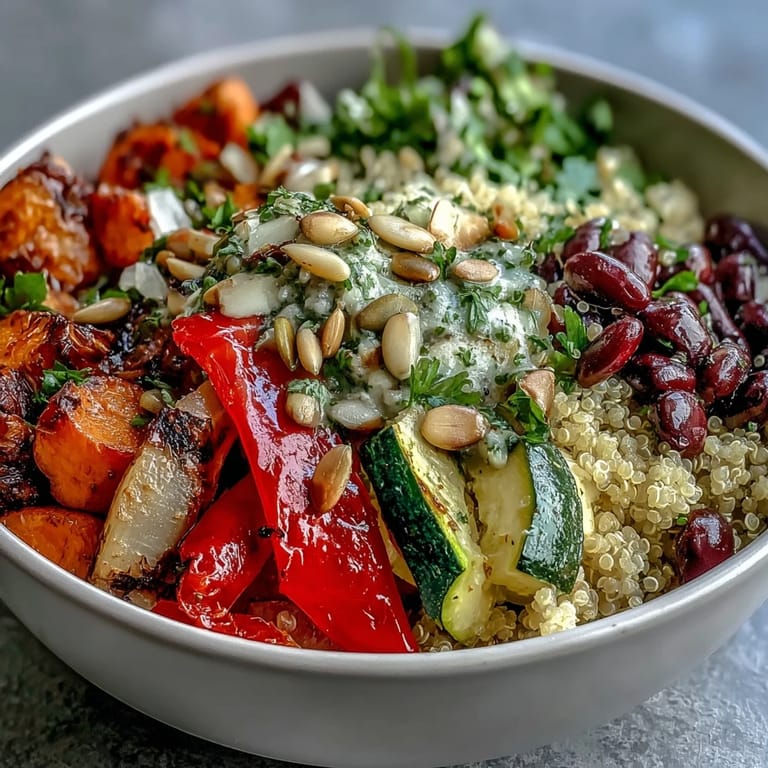
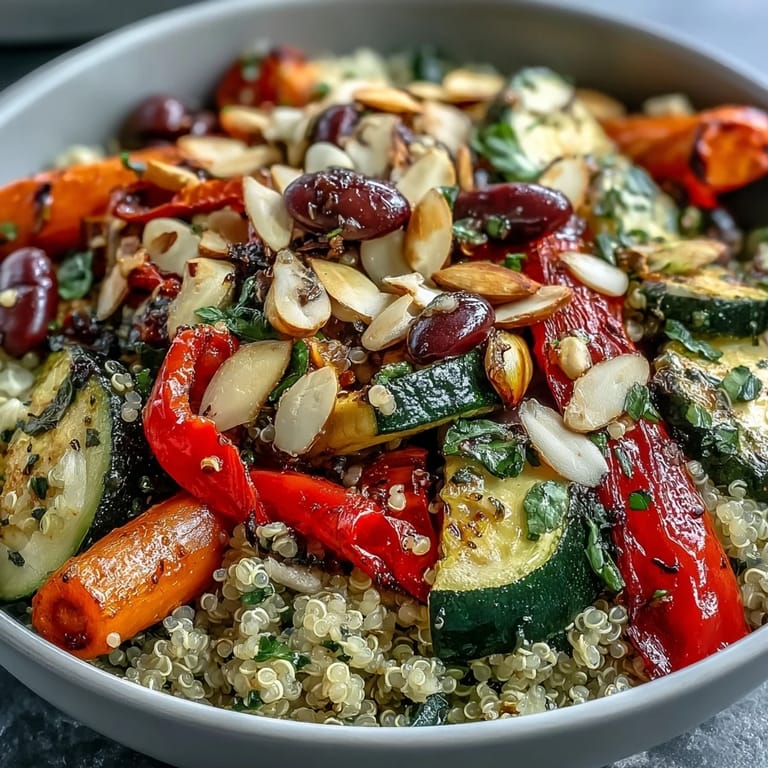
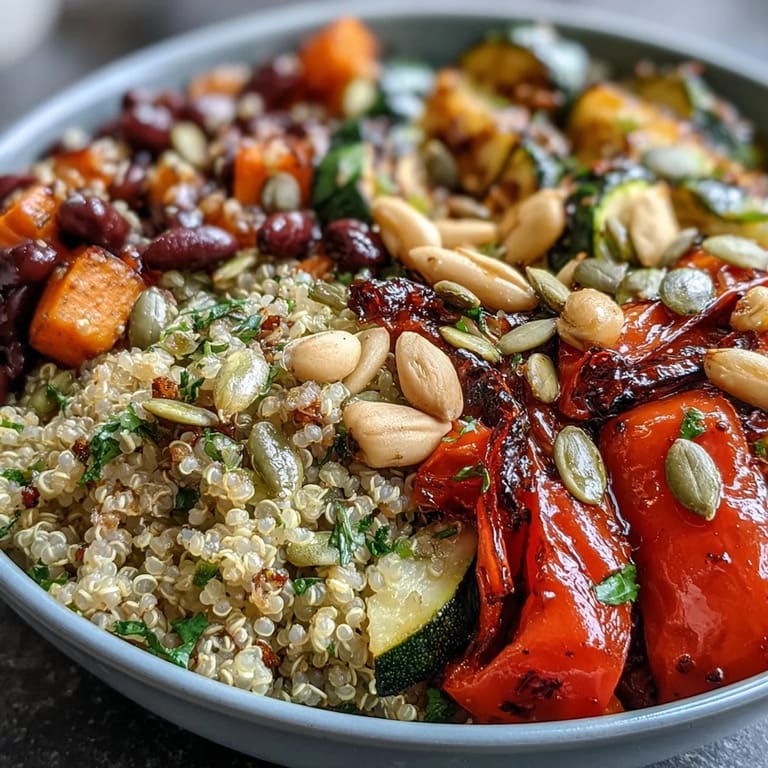
- Divide quinoa among bowls, then arrange roasted vegetables, beans, nuts, and seeds on top like you're creating something intentional. Drizzle the vinaigrette over everything and watch it soak into the warm grains.
 Save to Pinterest
 I'll never forget the moment I realized this bowl could be eaten warm or cold, which suddenly meant I could meal prep on Sunday and eat like I was cooking fresh all week. That small discovery transformed how I thought about weeknight dinners entirely.
Seasonal Vegetable Swaps That Actually Work
The beauty of this bowl is its flexibility, which means you can follow the season without following a recipe. In autumn, roasted sweet potato and Brussels sprouts bring caramelized sweetness, while spring calls for asparagus and peas. Summer demands everything your garden can offer—zucchini, eggplant, and snap peas all behave beautifully at high heat. Winter squash, broccoli, and cauliflower roast just as well, though you may need to extend cooking time by five minutes for denser vegetables.
Making It More Substantial
This bowl stands on its own as a complete meal, but sometimes you want it heartier or more protein-forward. A poached egg on top transforms it into something almost brunch-like, with the yolk creating an extra sauce for the quinoa. Crumbled feta cheese adds creaminess and tang that somehow makes everything taste more intentional, while grilled tofu brings substance for when you want maximum plant-based protein without any apology.
Storage and Make-Ahead Strategies
This bowl was designed with weeknight sanity in mind, which means every component can be prepared in advance and assembled when hunger strikes. Roasted vegetables keep for three days refrigerated and actually taste better as the flavors meld, while the vinaigrette can be made a full week ahead in a glass jar. The only component I'd suggest not preparing too early is the quinoa—while it keeps for five days, fluffing it fresh right before serving makes a noticeable textural difference.
- Store roasted vegetables and dressing separately from the quinoa to prevent sogginess.
- Toast nuts and seeds on the day you eat them so they stay crispy rather than absorbing moisture.
- Keep canned beans rinsed and in an airtight container for quick assembly at any moment.
 Save to Pinterest
 This bowl represents something I've come to cherish—a meal that doesn't require sacrifice, negotiation, or pretense. Make it once and it becomes yours to reinvent infinitely.
Recipe FAQs
- → Can I make this bowl ahead of time?
Yes, this bowl is excellent for meal prep. Store cooked quinoa, roasted vegetables, and vinaigrette separately in airtight containers for up to 4 days. Assemble when ready to eat.
- → What vegetables work best for roasting?
Red bell pepper, zucchini, carrots, red onion, and cherry tomatoes roast beautifully. You can also use sweet potato, broccoli, cauliflower, or Brussels sprouts based on season and preference.
- → How do I prevent the quinoa from becoming mushy?
Rinse quinoa thoroughly before cooking to remove bitter coating. Use the correct 1:2 ratio of quinoa to liquid, simmer gently, and let it rest covered for 5 minutes off the heat before fluffing.
- → Can I use a different grain instead of quinoa?
Absolutely. Brown rice, farro, wheat berries, or cauliflower rice work well. Adjust cooking time according to the grain you choose.
- → Is this suitable for vegan diets?
Simply substitute maple syrup for the honey in the vinaigrette to make it entirely vegan. All other ingredients are naturally plant-based.
- → What protein additions can I include?
Grilled tofu, poached eggs, shredded chicken, or roasted chickpeas are excellent protein boosters. Feta cheese adds both protein and tangy flavor if you eat dairy.