 Save to Pinterest
 One weeknight, I was craving the deep, warming comfort of pho but didn't have hours to coax flavors from scratch. That's when I discovered that a really good pho doesn't need to simmer all day—just enough time to let the spices do their magic. Now this quick version is my go-to when hunger wins over patience, and somehow it tastes just as soul-satisfying as the real thing.
I made this for a friend who'd just moved to town and didn't know where the good Vietnamese place was yet. Watching her eyes light up as she squeezed lime into her bowl and mixed it all together—that was the moment I knew this recipe belonged in regular rotation.
Ingredients
- Low-sodium beef or chicken broth, 8 cups: The foundation that tastes clean and lets the spices shine without competing noise.
- Fresh ginger, 2-inch piece, sliced: Don't use jarred; the fibrous, bright heat of fresh ginger is what makes your nose tingle in the best way.
- Star anise, cinnamon stick, whole cloves: These three are the holy trinity—they create that warm, slightly sweet depth that makes pho unmistakable.
- Fish sauce and soy sauce: Two tablespoons total of umami that anchor everything and make people say, 'What is that amazing flavor?'
- Beef sirloin or eye round, 300g, thinly sliced: Sliced thin enough that it cooks in seconds when the broth hits it, turning tender and perfect without overcooking.
- Dried or fresh flat rice noodles: Fresh noodles cook faster and have a silkier texture, but dried work beautifully too—just follow the package time.
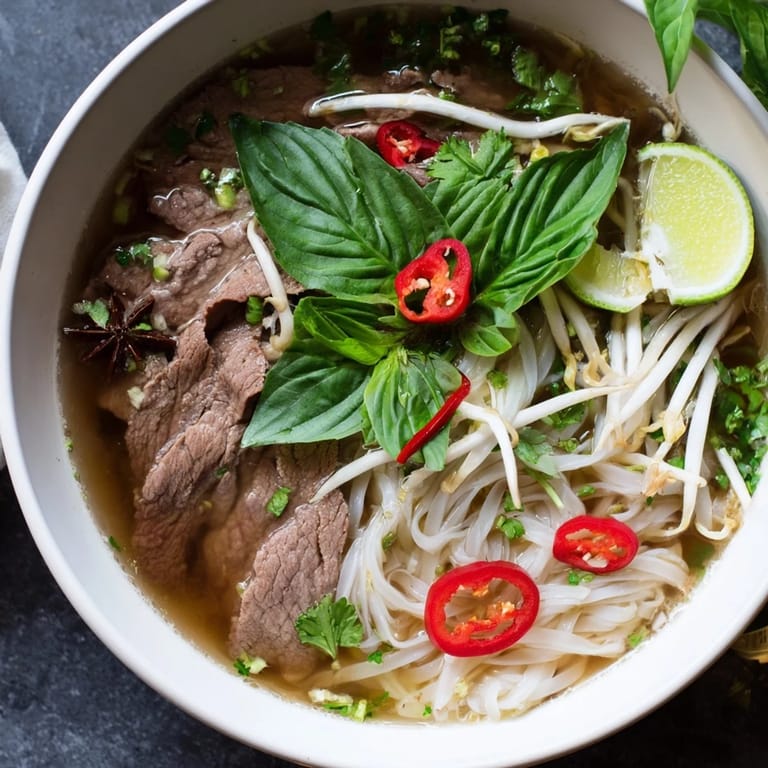
- Bean sprouts, Thai basil, cilantro, scallions: The herbs are where pho becomes alive; skip them and you've lost half the magic.
- Lime wedges, hoisin sauce, Sriracha: These are your flavor adjusters at the table—let everyone build their own perfect bowl.
Tired of Takeout? 🥡
Get 10 meals you can make faster than delivery arrives. Seriously.
One email. No spam. Unsubscribe anytime.
Instructions
- Build Your Aromatic Base:
- Combine broth with onion, ginger slices, and the whole spices in a large pot. Bring to a rolling boil, then lower the heat so it simmers gently—you want a few bubbles breaking the surface, not an aggressive boil that drives off the delicate perfume. Let it bubble away for 20 minutes, and your kitchen will start smelling like a proper Vietnamese restaurant.
- Season and Strain:
- Add fish sauce, soy sauce, sugar, and salt, then simmer 5 more minutes to let the seasonings meld. Pour the broth through a fine-mesh strainer into a clean pot, discarding the solids—you want clear, golden broth. Keep it hot over low heat so it's ready to do its magic.
- Cook Your Noodles:
- While the broth simmers, follow package directions for your rice noodles. They cook quickly, so watch them—when they're tender but still have a little resistance, drain them and divide among four large bowls.
- Arrange the Beef:
- Scatter the thinly sliced beef over the warm noodles in each bowl. This is where the real moment happens—the meat is raw and ready.
- The Magic Pour:
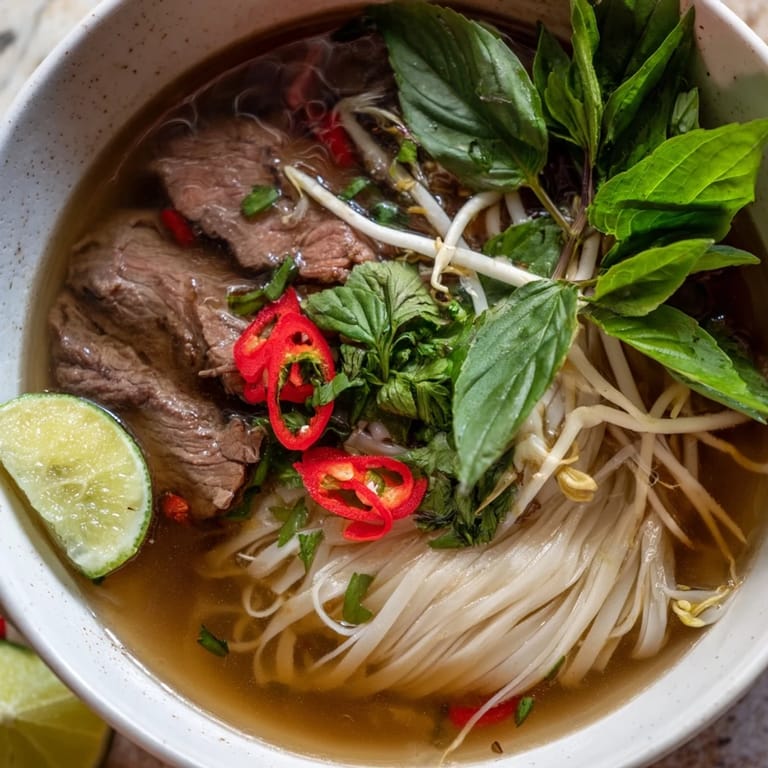
- Carefully ladle the hot broth directly over the beef and noodles. Watch as the broth hits the cold meat and starts cooking it right before your eyes, turning from deep red to a perfect soft gray in seconds.
- Top and Serve:
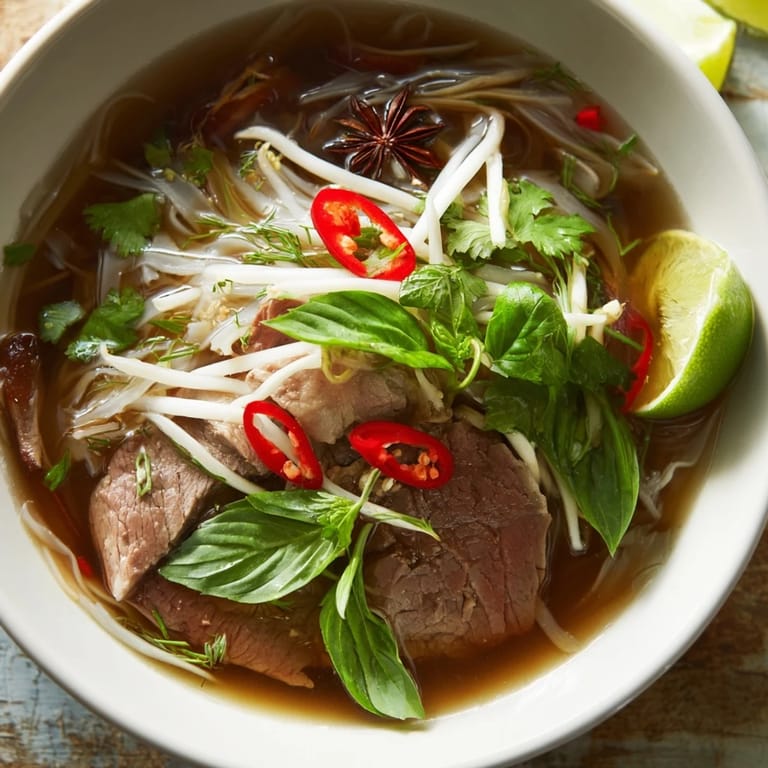
- Pile on the bean sprouts, basil, cilantro, scallions, and chili slices. Set out lime wedges, hoisin, and Sriracha so everyone can adjust the broth to their taste—this is where personal preference becomes part of the meal.
 Save to Pinterest
 I once made this for someone who'd grown up eating pho in Saigon, and I was nervous about the simplified broth. But they closed their eyes after that first sip and said, 'You got it.' That's when I stopped apologizing for the shortcut and started celebrating it.
The Spice Game
Star anise is the voice that carries; cinnamon adds warmth; cloves provide depth. Together they're not loud—they're sophisticated, inviting you into that warm bowl. If you're nervous about them, start with just two star anise and one cinnamon stick, then adjust next time based on what you tasted.
Making It Your Own
Vegetarian friends? Swap the broth for vegetable broth and pile on extra mushrooms and tofu instead of beef. Add mint, fried shallots, or a splash of dark sesame oil if your kitchen calls for it. The beauty of pho is that it's a canvas—the broth is just the framework for whatever you're craving in that moment.
Small Tricks That Matter
Some cooks char the onion and ginger over a flame before adding them to the broth, deepening the flavor into something almost caramelized and smoky. It takes an extra two minutes but lifts the whole bowl to something more complex. Your fresh herbs should be added last and fresh, never pre-prepared—they're the final breath of brightness.
- A squeeze of lime into the broth transforms it from warm and aromatic into bright and alive.
- Slice your beef the night before and keep it in the coldest part of your fridge so it stays firm and slices cleanly.
- Serve immediately so each component arrives at the table with its personality intact—warm broth, barely cooked beef, crisp herbs.
 Save to Pinterest
 This is the kind of meal that brings people together without fuss—everyone gets exactly what they want, and the whole thing comes together faster than the craving started. That's the real gift of this recipe.
Recipe FAQs
- → What type of meat works best for this dish?
Thinly sliced beef sirloin or eye round is traditional and cooks quickly in the hot broth. Chicken breast can be used as a lighter alternative.
- → Can I make this dish vegetarian?
Yes, substitute vegetable broth for the base and use firm tofu instead of meat. Enhance flavor with charred onion and ginger.
- → How do I achieve the aromatic broth flavor?
Simmer star anise, cinnamon, cloves, ginger, and onion gently to release their fragrances, then strain for a clear, light broth.
- → What garnishes complement this meal?
Fresh Thai basil, cilantro, scallions, bean sprouts, and optional thinly sliced red chili add freshness and texture.
- → Is it necessary to cook the meat separately?
No, thin meat slices cook quickly when ladled with hot broth, ensuring a tender bite and infused flavor.