 Save to Pinterest
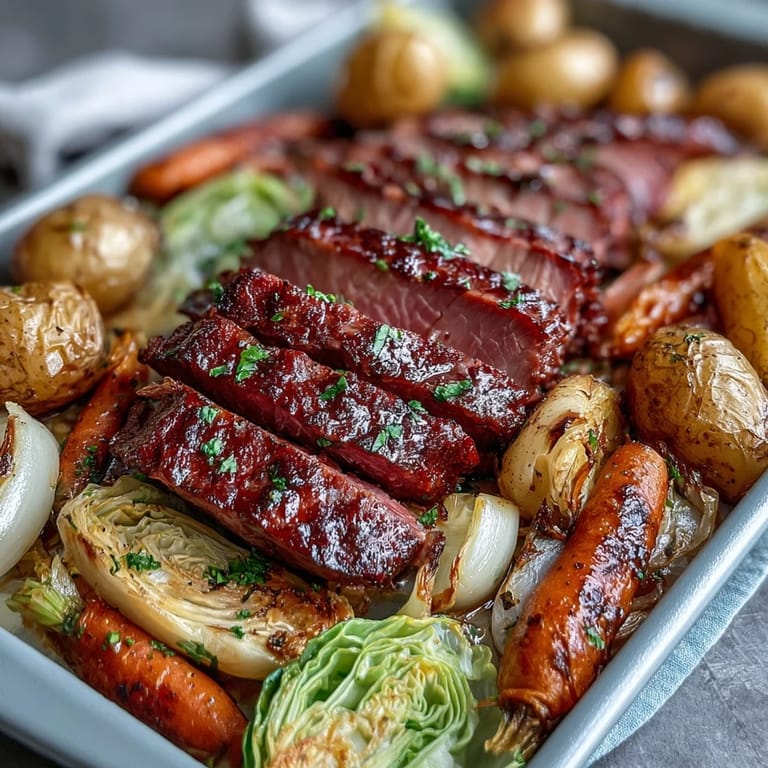
 My neighbor stopped by one Tuesday evening with a tired sigh and a question: what could she throw together for dinner that wouldn't involve hours of fussing? I'd just discovered this sheet pan version of corned beef and cabbage, and honestly, it felt like the answer to a problem I didn't know I had. There's something beautifully practical about roasting everything together, watching the cabbage turn golden and crispy while the potatoes get tender underneath. It's the kind of dish that tastes like you've been cooking all afternoon, but really, you've just been reading on the couch.
I made this for St. Patrick's Day last year when my teenage son announced he'd brought three friends home unexpectedly. Instead of panicking, I threw together a double batch on two sheet pans, and watching those four kids actually eat seconds of cabbage—cabbage!—without complaining was oddly touching. It became the kind of meal that gets mentioned at the dinner table months later, not because it was fancy, but because it was exactly what everyone needed in that moment.
Ingredients
- Cooked corned beef: Using pre-cooked corned beef saves enormous amounts of time; just make sure it's sliced thick enough that it doesn't fall apart during roasting, and don't skip this step because thin slices will dry out.
- Green cabbage: Cut into wedges rather than shredding—the pieces stay intact and develop those gorgeous caramelized edges that make you forget you're eating vegetables.
- Baby potatoes: Halving them ensures they cook through in the time the vegetables need; smaller pieces are your friend here.
- Carrots: Cut into similar-sized chunks so everything finishes at the same time, and peel them because the texture difference between skin and flesh matters more than you'd think.
- Yellow onion: Thick wedges keep their structure while roasting and become sweet and almost candy-like by the end.
- Olive oil: This is where flavor starts; don't skimp or substitute with something flavorless because the oil carries the seasonings directly to every vegetable.
- Kosher salt and black pepper: The foundation of everything, and freshly ground pepper makes a noticeable difference in brightness.
- Dried thyme, parsley, and garlic powder: These dried herbs work beautifully here because heat actually intensifies them rather than destroying their flavor like it does fresh herbs.
- Whole grain mustard: Completely optional, but it adds a sharp contrast that makes people ask what you did differently.
Tired of Takeout? 🥡
Get 10 meals you can make faster than delivery arrives. Seriously.
One email. No spam. Unsubscribe anytime.
Instructions
- Get your oven ready and prep your pan:
- Preheat to 220°C (425°F) and line your largest sheet pan with parchment paper—this prevents sticking and makes cleanup genuinely easy, not just promised-easy. A large pan is crucial because crowded vegetables steam instead of roast.
- Season and coat the vegetables:
- Toss everything except the corned beef in a large bowl with oil and seasonings until every piece glistens. This step determines whether your vegetables taste like cardboard or like something you'd choose to eat, so don't rush it.
- Give the vegetables a head start:
- Spread them in a single layer and roast for 25 minutes, stirring halfway through so they brown evenly. You'll start smelling the thyme and caramelizing onions, which is your signal things are happening.
- Nestle in the corned beef:
- Pull the pan out, push vegetables aside gently, and tuck the corned beef slices among them. This way it gets heated through without overcooking on its own.
- Finish strong:
- Return to the oven for another 15 minutes until everything is tender and the corned beef edges look slightly crisped and golden. The vegetables should be fork-tender, not mushy—there's a difference.
- Plate and serve:
- Transfer everything to a platter while it's still steaming, and set mustard on the side for anyone who wants that sharp kick. The whole pan smells incredible at this point.
 Save to Pinterest
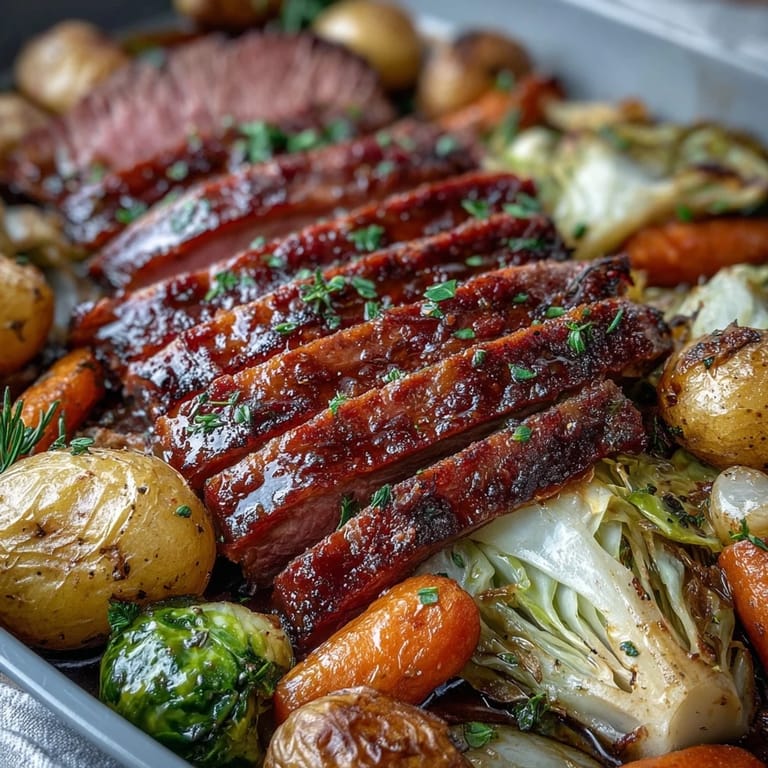
 There's a particular magic in a sheet pan dinner that goes beyond convenience—it's about simplicity being its own kind of elegance. My dad, who usually just ate what was put in front of him without comment, actually asked me to make this again, which in his language meant it genuinely meant something to him.
How Roasting Changes Everything
Traditional boiled corned beef and cabbage is wonderful, but roasting transforms it into something with texture and depth. The cabbage caramelizes and develops crispy edges, the potatoes turn golden and creamy inside, and the carrots concentrate their natural sweetness. I realized years ago that roasting isn't just a cooking method—it's a flavor amplifier that makes humble vegetables taste like you've been tending a garden all season.
Timing and Temperature Matter
425°F is the sweet spot where vegetables brown without drying out, and the 25-minute initial roast before adding corned beef ensures nothing is raw. I once turned the oven down to 400°F because I was worried things would burn, and everything turned out pale and steamed instead of roasted—lesson learned. Temperature consistency in your oven matters too; if yours runs hot, watch carefully starting at minute 23.
Building Flavor at Every Step
The seasoning blend of thyme, parsley, and garlic powder creates an herbaceous backbone that ties everything together without feeling like you've made something complicated. I learned this approach from watching an older cook at a restaurant, who taught me that layering flavors early means every component tastes intentional rather than like it's just coasting on the meat. The mustard on the side is there for people who want brightness, but honestly, even without it, this dish stands completely on its own.
- Consider making a double batch on Sunday and using leftovers for hash all week—just chop everything and crisp it in a skillet with a fried egg on top.
- If you're meal prepping, let the finished dish cool completely before storing so the vegetables don't get mushy in the fridge.
- This freezes beautifully too; just thaw overnight and reheat gently in a 350°F oven for about 15 minutes until warmed through.
 Save to Pinterest
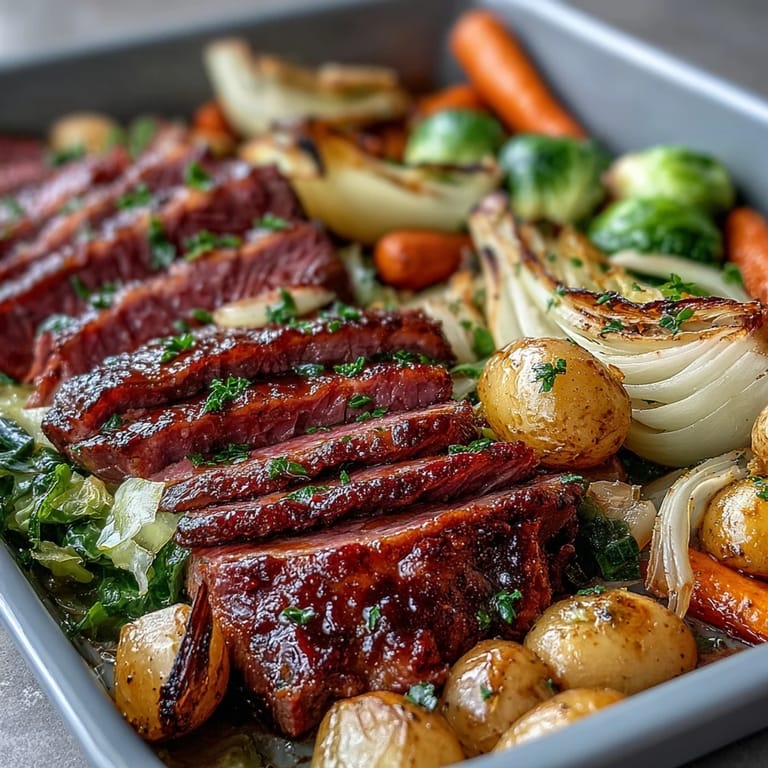
 Sheet pan dinners taught me that good cooking isn't about complexity or fancy ingredients—it's about understanding what a technique can do for you. This version of corned beef and cabbage proves that sometimes the most satisfying meals come from the simplest choices.
Recipe FAQs
- → Can I substitute sweet potatoes for baby potatoes?
Yes, sweet potatoes can be used instead of baby potatoes to add a sweeter flavor and a different texture to the dish.
- → How do I ensure the corned beef stays tender?
Slicing the corned beef about half an inch thick and roasting it gently among the vegetables helps keep it tender and slightly crisp at the edges without drying out.
- → What seasoning enhances the flavor best?
The combination of thyme, parsley, garlic powder, salt, and pepper creates a balanced and aromatic seasoning that complements the corned beef and vegetables well.
- → Is it possible to prepare this meal ahead of time?
You can prep the vegetables and slice the beef in advance, then toss everything together right before roasting to save time on cooking day.
- → What can I serve with this sheet pan meal?
Whole grain mustard is a classic accompaniment, adding a tangy depth that pairs well with the savory elements of the dish.
- → Can I make this gluten-free?
Yes, this meal is naturally gluten-free. Just ensure any added mustard or packaged ingredients are gluten-free.