 Save to Pinterest
 My sourdough starter had been bubbling away for weeks when I decided to stop hoarding it for bread and finally attempt croissants. The irony wasn't lost on me—using a wild yeast culture for something traditionally leavened with commercial yeast—but the tangy depth it added to those butter layers felt like discovering a secret ingredient I'd been missing. That first batch, golden and flaky on the outside with an almost creamy crumb inside, made me understand why people lose sleep over laminated dough.
I made these for a Saturday farmer's market pop-up, and watching someone's face when they bit into one still warm, butter literally glistening—that was the moment I realized this recipe deserved repeating. My neighbor came by that morning asking what smelled so impossibly good, and I sent her home with two, which probably wasn't the best business decision but felt right anyway.
Ingredients
- Bread flour (500 g): Use bread flour, not all-purpose, because you need that extra protein to build structure that can handle all the folding without tearing.
- Granulated sugar (60 g): This feeds your sourdough starter and adds subtle sweetness—don't skip it thinking you'll reduce it later.
- Fine sea salt (10 g): Fine sea salt dissolves evenly through the dough; kosher salt can create unexpectedly salty pockets.
- Cold whole milk (240 ml): Cold is non-negotiable here because warm milk will start activating the dough before you're ready to control the fermentation.
- Active sourdough starter at 100% hydration (100 g): Your starter should be bubbly and fed a few hours before—not fresh from the fridge, but not at peak either, since you want some activity without aggression.
- Unsalted butter, softened (30 g): The softened butter in the dough adds richness; the cold butter block creates your layers, so keep these roles separate.
- Cold unsalted butter block (250 g): This must be cold enough to pound without shattering but not rock-hard, or it'll crack when you fold.
- Large egg plus milk for egg wash: Egg wash gives you that sheen and helps the croissants brown evenly—brush lightly or you'll end up with patchy color.
Tired of Takeout? 🥡
Get 10 meals you can make faster than delivery arrives. Seriously.
One email. No spam. Unsubscribe anytime.
Instructions
- Mix your dough foundation:
- Combine flour, sugar, and salt in a large bowl, then add cold milk, your bubbly sourdough starter, and softened butter. Mix until everything is shaggy and comes together, then knead for about 8 minutes until the dough feels smooth and slightly elastic. You're building gluten structure here, so don't rush it.
- Give dough its first rest:
- Shape the dough into a rough rectangle, wrap it well in plastic, and slide it into the fridge for at least 2 hours. This relaxes the gluten and chills everything down so you're ready for butter incorporation.
- Prepare your butter block:
- Place 250 g of cold butter between two sheets of parchment paper and pound it with a rolling pin until it's flexible but still cold—aim for a rectangle about 20 x 15 cm. This takes some elbow grease, but you'll know it's right when it bends without shattering.
- Execute your first lamination:
- Roll your chilled dough into a 40 x 20 cm rectangle on a lightly floured surface, then place your butter block on one half of the dough. Fold the uncovered half over the butter, press the edges to seal, and give it a gentle roll to distribute the butter slightly.
- Begin your fold sequence:
- Turn the dough 90 degrees and roll it into a 60 x 20 cm rectangle. Fold it into thirds like a letter (one short end to center, other end on top), wrap it, and chill for 1 hour. This creates distinct layers.
- Repeat the rolling and folding:
- Do the same rolling and folding process two more times, with 1 hour of chilling between each turn. By the third fold, you're creating the signature lamination with visible butter streaks.
- Give it the overnight transformation:
- After your final fold, wrap the dough and refrigerate for 8 to 12 hours. This long rest is where the sourdough flavor develops—your starter keeps working slowly in the cold, creating that tangy complexity.
- Shape your croissants:
- The next morning, roll your dough into a 60 x 30 cm rectangle about 5 mm thick. Cut it into 12 long triangles using a sharp knife, making clean cuts so layers don't seal shut.
- Roll and rest:
- Starting from the wide end, roll each triangle tightly toward the point, then bend it gently into a crescent shape with the tip tucked underneath. Arrange them on parchment-lined baking sheets with a little space between.
- Let them proof and puff:
- Cover the croissants loosely with plastic or a kitchen towel and let them rise at room temperature for 2 to 3 hours until they've roughly doubled in size. You want them puffy but still holding their shape.
- Prepare for baking:
- Preheat your oven to 200°C (400°F) about 15 minutes before baking. Whisk together 1 egg with 1 tablespoon of milk and brush this egg wash gently over each croissant—don't oversaturate or they'll brown too fast.
- Bake until golden:
- Bake for 18 to 22 minutes until the croissants are deeply golden and sound crisp when tapped on the bottom. The aroma at this point is almost overwhelming in the best way.
- Cool and enjoy:
- Let them rest for a few minutes on the baking sheet before transferring to a wire rack. They're best eaten while still warm, when the butter is most tender.
 Save to Pinterest
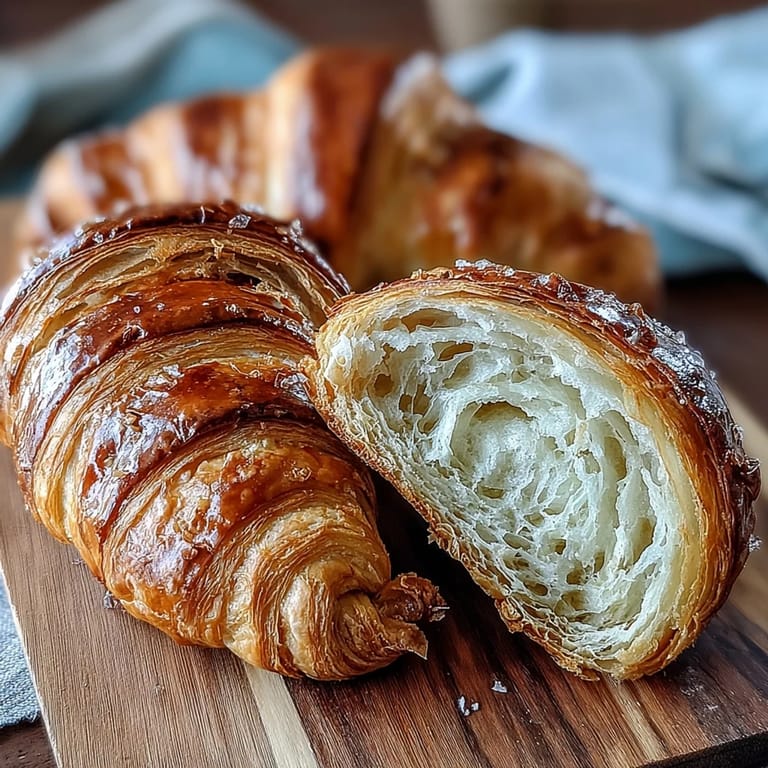
 One morning I pulled a batch out of the oven while a friend was visiting, and we stood in the kitchen just staring at them for a second before tearing one apart. Steam rose off those butter layers, and she looked at me like I'd performed actual magic—all I'd really done was be patient and fold dough methodically, but somehow that felt like enough.
Understanding Lamination
Lamination is just controlled chaos—you're trapping cold butter between layers of dough so that when they bake, the butter releases steam that puffs everything apart into those distinct flaky layers. The key is keeping butter cold enough that it doesn't merge with the dough too early, but flexible enough that it spreads when you roll. After my first attempt (where I let the dough get warm and everything turned into a greasy blob), I learned that temperature control matters more than any fancy technique.
Why Sourdough Starter Works Here
Using sourdough starter instead of commercial yeast means you're working with a slower, more complex fermentation that builds flavor gradually. The wild yeast and bacteria in your starter create acids that give croissants that subtle tanginess you can't achieve with instant yeast alone. I was skeptical the first time I tried it, worried the fermentation would be unpredictable, but the extended timeline actually gave me more control—the slow overnight rise meant I could shape everything fresh the next morning without stress.
Storage and Variations
Fresh croissants peak within a few hours of baking, when the layers are still crisp and butter is at its most tender. If you need to make them ahead, freeze the shaped, proofed croissants before baking and add an extra 3 to 4 minutes to the bake time directly from frozen. You can also split a warm croissant and fill it with chocolate, almond paste, or ham and cheese before serving—the pastry is sturdy enough to handle it once baked.
- For a chocolate variation, place a bar of dark chocolate inside each triangle before rolling it up, and watch it melt into luxurious pockets during baking.
- Savory croissants work beautifully with a thin layer of good mustard, sliced ham, and Gruyère tucked in before rolling.
- Day-old croissants can be split and toasted gently to restore some crispness, making them perfect for breakfast sandwiches.
 Save to Pinterest
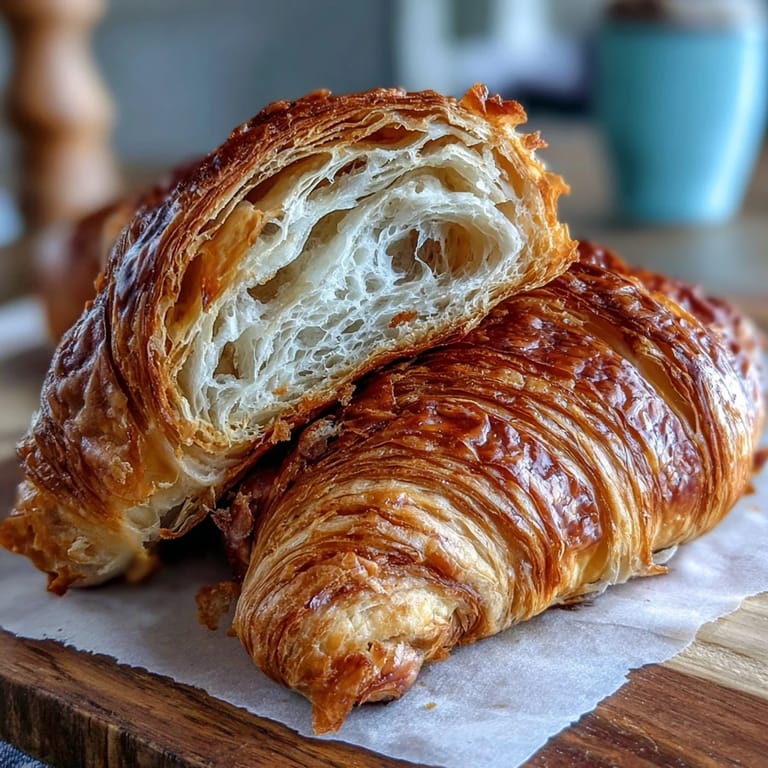
 These croissants proved to me that patience and precision in the kitchen aren't boring—they're the bridge between wanting something delicious and actually making it happen. Every crescent that comes out golden and flaky is a small triumph you can eat warm with coffee, which feels like enough of a reason to keep making them.
Recipe FAQs
- → How does sourdough affect the croissant's flavor?
Sourdough adds a subtle tang and depth, enriching the buttery layers while enhancing texture through natural fermentation.
- → Why is the dough chilled overnight?
Chilling allows fermentation to develop flavor and relaxes the dough, making it easier to roll and creating flaky layers.
- → What is the purpose of the butter block?
The cold butter block is layered into the dough through folds, forming the croissant’s signature flaky, buttery texture.
- → Can I make croissants without a stand mixer?
Yes, mixing and kneading by hand is possible; just ensure the dough becomes smooth and elastic for best results.
- → How do I know when croissants are fully baked?
They should turn a golden brown with a crisp exterior and sound hollow when tapped on the bottom.
- → Can I add fillings before shaping croissants?
Yes, adding fillings like cheese or ham before rolling can add savory notes without compromising the layers.