 Save to Pinterest
 Last January, I came home from a walk feeling like my bones had turned to ice. My neighbor had pressed a jar of homemade miso into my hands the week before, mentioning something about ginger being good for winter. I sliced ginger without measuring, let it simmer with garlic until the whole kitchen smelled warm, and stirred in that miso until the broth turned cloudy and golden. Something about that first sip—earthy, slightly salty, with ginger’s gentle heat at the back of my throat—felt like being wrapped in a blanket. Now whenever the wind howls against the windows, this is what I make.
My friend Maria came over for lunch last February, still recovering from the flu that had been making the rounds. I served her this soup, watching her shoulders drop as the steam rose from her bowl. She asked for the recipe before she’d even finished half, and now she texts me every time she makes it, usually when the temperature dips below freezing. It has become one of those recipes I pass along like a secret—simple, restorative, and somehow exactly what you need when you did not know you needed anything at all.
Ingredients
- Water or vegetable broth: I prefer low-sodium broth as a base, but water works beautifully since miso brings plenty of depth on its own
- Fresh ginger: Slice it thin rather than grating it so you can fish out the pieces later if you prefer a cleaner broth
- Garlic cloves: Thin slices release flavor more gently than minced garlic, which can turn bitter in long simmers
- White or yellow miso paste: White miso is milder and sweeter, while yellow miso has a deeper, more pronounced umami character
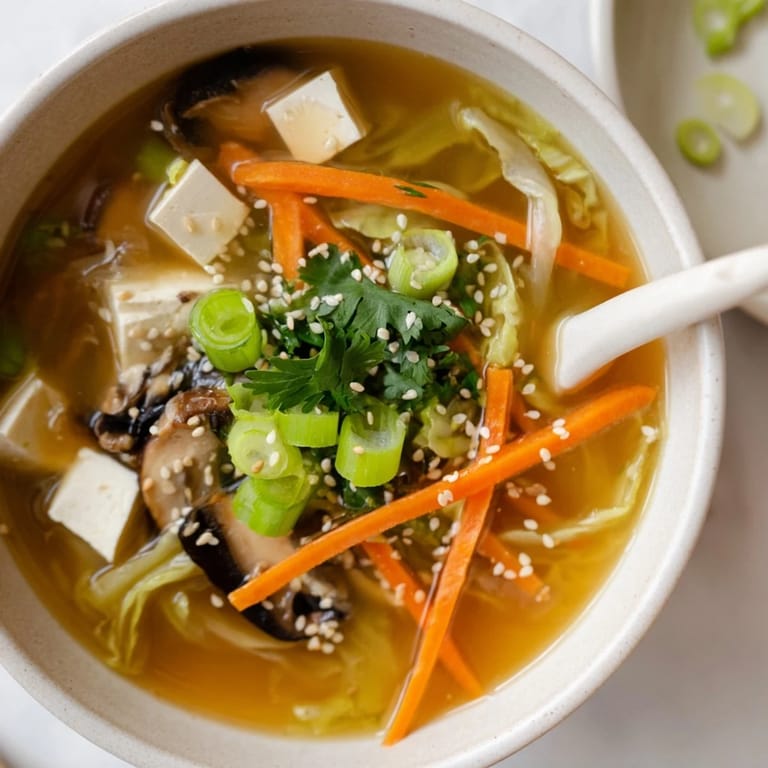
- Napa cabbage: Adds sweetness and silkiness, holding up better in hot broth than delicate greens like spinach
- Shiitake mushrooms: Their meaty texture and earthy flavor make this soup feel substantial without being heavy
- Sesame seeds: Toast them just before serving to wake up their nutty aroma—this small step makes a surprising difference
Tired of Takeout? 🥡
Get 10 meals you can make faster than delivery arrives. Seriously.
One email. No spam. Unsubscribe anytime.
Instructions
- Build your aromatic broth:
- Bring your liquid to a gentle bubble and drop in the ginger and garlic slices. Let them simmer together for about ten minutes, until the broth smells like warmth itself.
- Add the vegetables:
- Toss in the cabbage, carrots, and shiitakes. Simmer until the vegetables are tender but still have some bite, usually five to seven minutes.
- Temper the miso:
- Whisk the miso paste into a small bowl with a ladleful of hot broth until completely smooth, then stir it back into the pot. Keeping the heat gentle preserves those beneficial probiotics.
- Finish and serve:
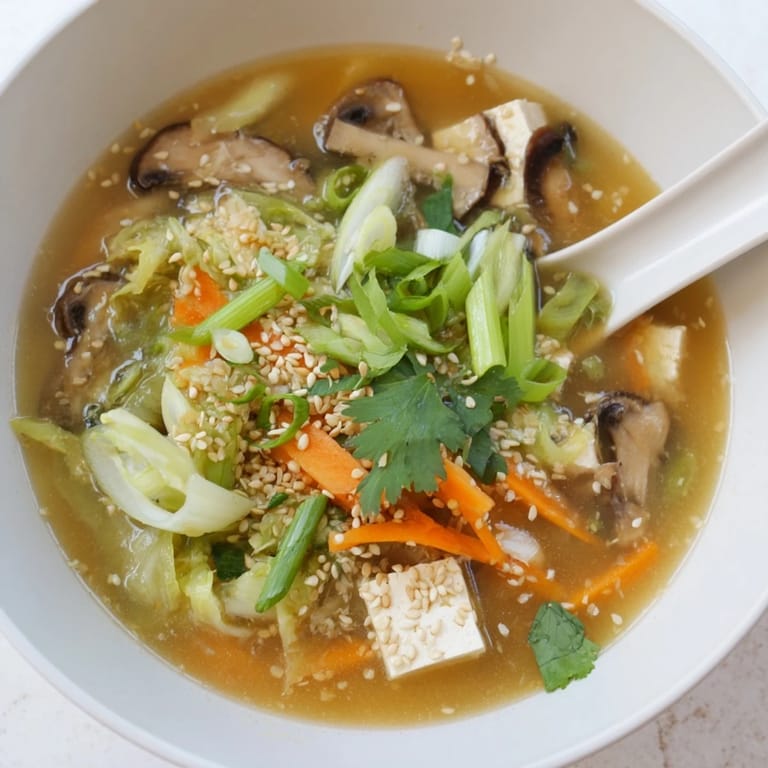
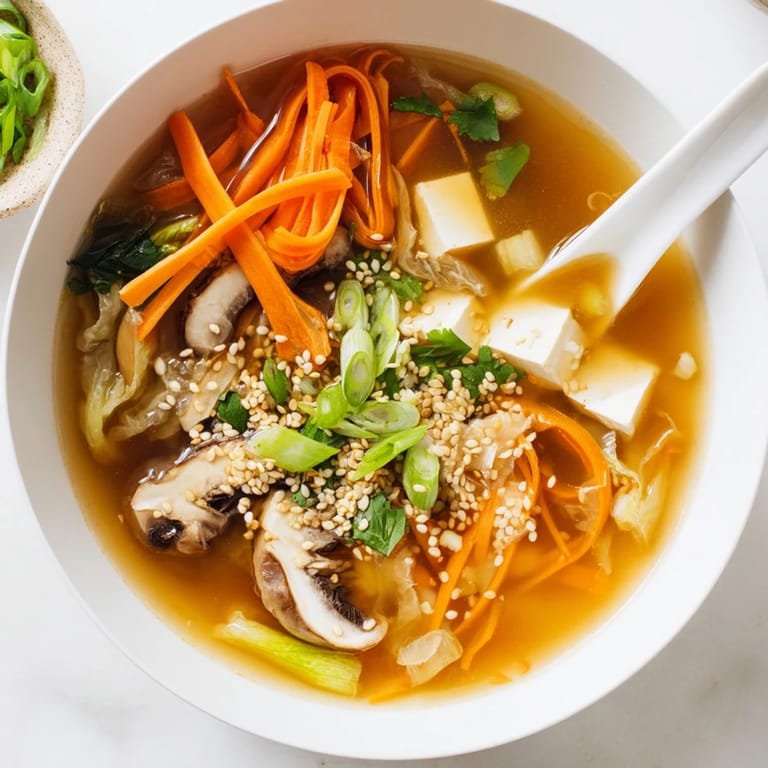
- Add tofu or noodles if you are using them, let them warm through for a couple of minutes, then ladle into bowls and shower with scallions, sesame seeds, and whatever else calls to you.
 Save to Pinterest
 My mother-in-law, who grew up in Hokkaido, told me that Japanese home cooks often judge a miso soup by its clarity—cloudy means well-dissolved miso, skimming carefully means patience. I think about her whenever I ladle this into bowls, the steam fogging up my glasses, the house quiet except for the sound of someone blowing on a spoonful that is still too hot to swallow.
Making It Your Own
Once you have the basic broth down, this soup welcomes improvisation. I have added bok choy when that is what arrived in my farm box, spinach during those weeks it seems to multiply in the crisper, even ribbons of kale when I needed something more substantial. Daikon radish adds lovely sweetness and a tender crunch, while a splash of soy sauce or a drizzle of sesame oil at the end rounds everything out. The ginger-miso foundation remains constant, but the vegetables change with the seasons and my mood.
Serving Suggestions
This soup makes a complete meal on its own when you add tofu or noodles, but I also love serving it alongside something crisp and bright. A simple cucumber salad dressed with rice vinegar helps cut through the richness, or you might serve it with steamed dumplings if you want something more filling. In summer, when the idea of hot soup feels impossible, I still make this broth and serve it at room temperature over cold soba noodles—a reminder that good flavors do not care about the weather.
Perfecting The Broth
The difference between an adequate bowl and an exceptional one comes down to patience with the aromatics. Letting ginger and garlic simmer at the gentlest bubble extracts their flavor without any harshness, creating a broth that tastes complex and considered. I have learned to start testing after eight minutes—a sip should taste warm and rounded, with the ginger present but not overpowering. If it seems too mild, give it another two minutes. Broth rewards the slow approach.
- Start with cold liquid when building your broth—it extracts flavor more evenly than adding aromatics to already-hot liquid
- Keep the miso paste refrigerated and use a clean spoon each time to prevent contamination
- Toast sesame seeds in a dry pan over medium heat, shaking constantly, until they smell fragrant and start to golden
 Save to Pinterest
 Soup, like so many good things, improves when made for someone else. Even when I am cooking for one, I make the full recipe and pack the rest into jars, imagining the pleasure of pulling homemade soup from the refrigerator on a Tuesday when I have no energy left to cook. There is something profoundly comforting about knowing you have made something good, something that will be waiting for you.
Recipe FAQs
- → Can I use red miso instead of white?
White miso is preferred for its lighter, sweeter flavor that complements the delicate broth. Red miso has a stronger, more intense taste that may overpower the ginger and vegetables.
- → Is this soup freezer-friendly?
The soup freezes well without the miso added. Add the miso after reheating to preserve probiotics and prevent flavor changes. Freezing may slightly alter the texture of the vegetables.
- → Can I make this gluten-free?
Yes, use vegetable broth, gluten-free miso (check labels as some contain barley), and skip soba noodles or use rice noodles. Most components are naturally gluten-free.
- → Why add miso off the heat?
High heat destroys the beneficial probiotics in miso and can make it taste bitter or grainy. Dissolving in warm broth preserves both the live cultures and smooth texture.
- → What vegetables work best?
Napa cabbage, carrots, and shiitakes are traditional, but bok choy, spinach, daikon radish, or kale also work beautifully. Use quick-cooking vegetables that retain some texture.