 Save to Pinterest
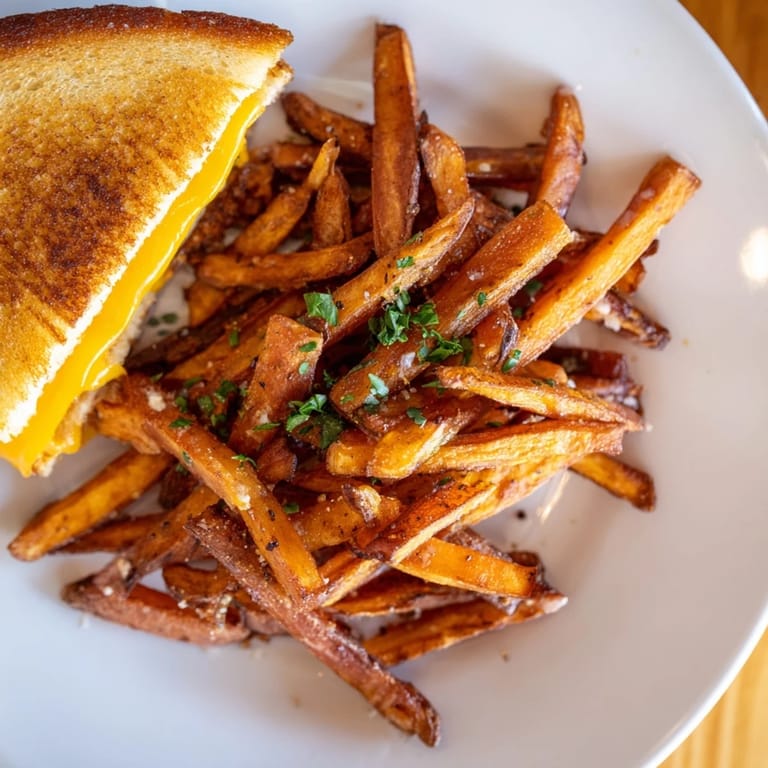
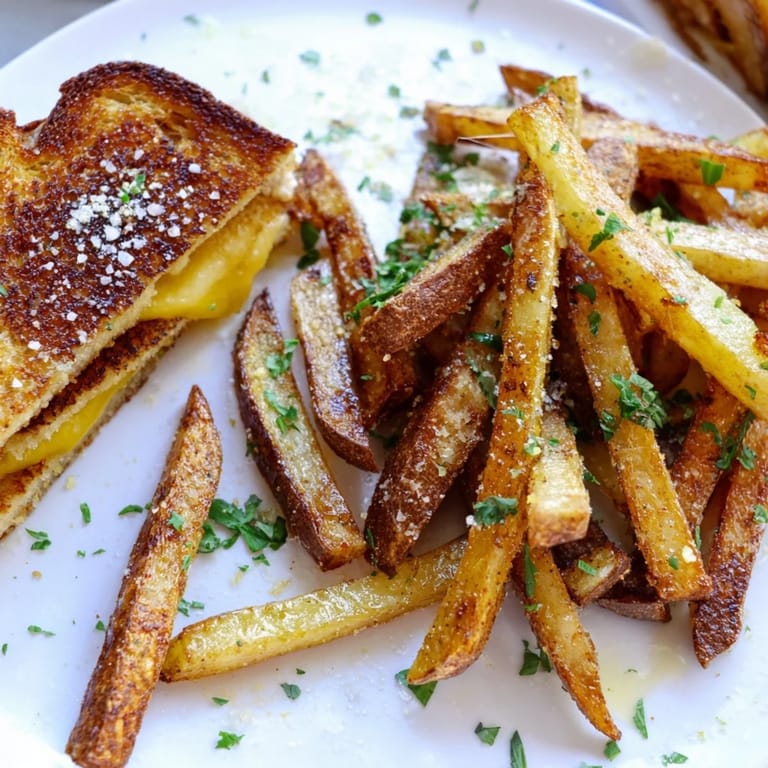
 There's something almost ceremonial about the sizzle of beef tallow in a cast-iron skillet, that deep golden smell that fills your kitchen and makes you understand why this fat was the gold standard before vegetable oil took over. I discovered beef tallow fries by accident when a butcher friend handed me a container and said, "Try this the way they used to make them," and suddenly everything clicked—the crispy exterior, the tender inside, the flavor that made me forget every frozen fry I'd ever eaten. Paired with a grilled cheese that's been kissed to golden perfection, it became the kind of meal that reminds you why comfort food exists.
I made this for my sister on a rainy Sunday when she showed up unexpectedly, and the moment she bit into a fry while the cheese was still melting off the sandwich, she just closed her eyes and said nothing for a while. That quiet appreciation meant more than any compliment—it's the kind of food that stops conversation, at least for the first few bites.
Ingredients
- Russet potatoes: The starch content matters here; russets have the right balance to fry up crispy while staying fluffy inside, so don't substitute.
- Beef tallow: This is the heart of the recipe, and it's worth seeking out from a quality butcher—the fat has a higher smoke point and a savory depth that transforms the fries completely.
- Kosher salt: Coarser grains adhere better and give you a more intentional seasoning experience than table salt.
- Sharp cheddar cheese: Sharp varieties melt smoothly and have enough flavor to stand up to rich beef tallow without tasting one-note.
- Sourdough bread: The slight tang balances the richness, and it holds up to the heat without falling apart or becoming soggy.
- Unsalted butter: Gives you control over salt levels and creates that even, golden crust you're after.
- Mayonnaise: A small secret that adds richness and helps achieve an even crispier exterior—use it if you want to go a step further.
Tired of Takeout? 🥡
Get 10 meals you can make faster than delivery arrives. Seriously.
One email. No spam. Unsubscribe anytime.
Instructions
- Soak and dry the potatoes:
- Cut your potatoes into even ¼-inch sticks and soak them in cold water for at least 30 minutes—this removes the excess starch that would otherwise make them gummy. Pat them bone-dry with paper towels; moisture is the enemy of crispiness, so don't skip this step.
- First fry at lower temperature:
- Heat beef tallow to 325°F and fry the potatoes in batches for 4 to 5 minutes until they're tender but pale—you're essentially cooking them through without any color. This two-temperature approach is what separates restaurant-quality fries from mediocre ones.
- Second fry for crispiness:
- Raise the heat to 375°F and fry again for 2 to 3 minutes until they're golden and have that audible crunch. The second fry crisps the exterior while the inside stays tender.
- Prepare the bread:
- Spread softened butter (and mayonnaise if you're using it) on one side of each bread slice, making sure you reach the edges—unbuttered spots will brown unevenly.
- Assemble and grill:
- Layer cheese between two buttered slices with the butter facing out, then cook on a medium-heat skillet or griddle for 3 to 4 minutes per side, pressing gently with a spatula so the heat distributes evenly and the cheese melts all the way through.
- Plate and serve:
- Bring everything to the table while it's hot—the fries are best enjoyed immediately, before they start to give up their crispness.
 Save to Pinterest
 The best moment came when my daughter asked if we could make this "the fancy way" again, not realizing that she was asking for beef tallow fries and grilled cheese—the least fancy-sounding meal imaginable. But she understood something real: that care and intention transform simple ingredients into something worth remembering.
The History Behind Beef Tallow
Beef tallow powered restaurant kitchens for over a century before vegetable oils took over in the latter half of the 1900s, and professional chefs never stopped knowing that the original was better. It's more stable at high temperatures, has a higher smoke point, and imparts a subtle savory richness that you literally cannot replicate with neutral oils. The resurgence of tallow in fine dining is partly nostalgia, but mostly it's because the results are undeniable.
Why This Pairing Works
Grilled cheese and fries might seem obvious, but the specific versions matter enormously. When you're working with beef tallow—a fat that carries savory, almost umami-forward flavors—you need cheese bold enough to match, which is why sharp cheddar is non-negotiable here. The slight tang of sourdough bridges them both, and the butter brings everything together into something cohesive rather than just two good things on the same plate.
Elevating the Basics
This is a meal that doesn't need apologies or explanations—it's straightforward food executed well, which is actually harder to do than adding ten unnecessary techniques. The only real elevation here is using real beef fat, which your body recognizes as actual food, and paying attention to temperature and timing rather than eyeballing it. Everything else flows from those foundational decisions.
- Fresh parsley on the fries is optional, but it adds a bright, herbaceous note that cuts through the richness beautifully.
- Serve with something acidic on the side—ketchup, aioli, or even a small bowl of vinegar—because acid is the perfect counterpoint to all that savory fat.
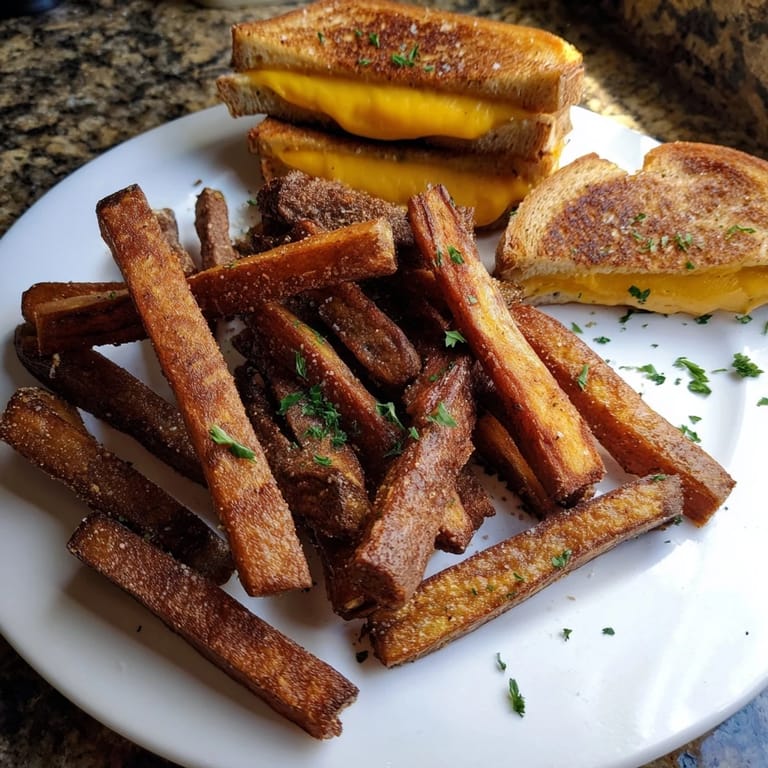
- Make sure everyone knows these are best eaten immediately; there's a narrow window where the fries are crispy and the cheese is still warm and flowing.
 Save to Pinterest
 This is the kind of meal that doesn't pretend to be something it isn't, but doesn't apologize for being exactly what it is. Make it when you want to remind someone—or yourself—why simple food done right is still the most satisfying thing a kitchen can produce.
Recipe FAQs
- → Why use beef tallow for frying the fries?
Beef tallow provides a high smoke point and imparts a rich, savory flavor that enhances the crispness and taste of the fries compared to vegetable oils.
- → How do you achieve ultra-crispy fries?
Soaking the potatoes removes excess starch, and frying them twice at different temperatures ensures a crispy exterior with a tender interior.
- → Can different cheeses be used for the grilled sandwich?
Yes, cheeses like Gruyère or mozzarella can replace or be added to sharp cheddar for varied flavor and meltiness.
- → What is the purpose of spreading mayonnaise on the bread?
Mayonnaise adds extra crispness and moisture to the grilled sandwich crust, complementing the buttery texture.
- → Are there vegetarian options for cooking the fries?
Using vegetable oil instead of beef tallow allows for a vegetarian-friendly cooking approach without sacrificing overall texture.