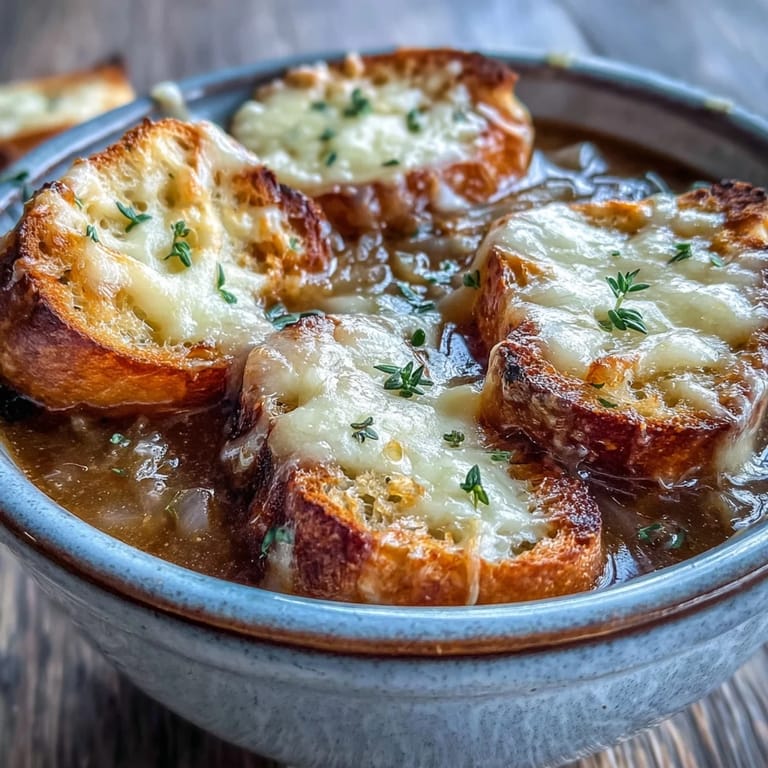
 Save to Pinterest
 The smell of caramelizing onions in a Dutch oven has a way of stopping you mid-afternoon, pulling you into the kitchen with the promise of something warm and deeply satisfying. My neighbor once described watching me make this soup as witnessing controlled patience, which made me laugh because honestly, those forty-five minutes of stirring onions are when my mind wanders to everything except what I'm doing. But then something magic happens—they transform from sharp and raw into something sweet and golden, and suddenly the whole effort feels worthwhile. This French onion soup taught me that the best comfort foods aren't rushed; they're built one quiet moment at a time.
I made this for my sister after she'd had a terrible day at work, and watching her spoon through that golden broth with the crispy bread and pooling cheese somehow made the whole afternoon shift in her favor. There's something about handing someone a bowl of this soup that feels like saying 'I know things are hard right now, but let me take care of you for a moment.' She still texts me asking for it when she's stressed, which means more to me than any compliment about the food itself.
Ingredients
- 5 large yellow onions, thinly sliced: Yellow onions caramelize beautifully because of their natural sugar content; don't substitute red onions here as they're more assertive and won't develop that silky sweetness you're after.
- 3 tablespoons unsalted butter and 2 tablespoons olive oil: The combination gives you enough fat to keep onions from sticking while the butter brings that rich, nutty flavor; using both prevents browning too quickly.
- 2 garlic cloves, minced: This small amount is intentional—you want the garlic to support the onions, not announce itself loudly.
- 1 teaspoon sugar: A tiny pinch that speeds up the caramelization process and highlights the onions' natural sweetness without making anything taste sugary.
- 8 cups beef broth: Quality matters here because this is the foundation; if your broth tastes thin or overly salty, the whole soup suffers—taste yours before committing to quantities.
- 1/2 cup dry white wine: The acidity cuts through the richness and adds complexity; if you don't drink wine, skip it rather than substituting with something sweet.
- 2 teaspoons fresh thyme leaves (or 1 teaspoon dried): Fresh thyme is noticeably brighter, so if you only have dried, use half and add it earlier so the flavor develops over time.
- 2 bay leaves: These anchor the broth with subtle herbal notes; remove them before serving or your guests might encounter one, which is never pleasant.
- 1 tablespoon Worcestershire sauce: This brings umami depth that transforms the soup from pleasant to crave-worthy; taste first if you're sensitive to strong flavors.
- 1 baguette, sliced 1/2-inch thick: Thick slices hold up under the weight of cheese and won't disintegrate into the broth; a day-old baguette actually toasts better than fresh.
- 2 cups Gruyère cheese, grated: Gruyère melts smoothly and has a nutty complexity that sharp cheddar can't match; freshly grated melts faster and more evenly than pre-shredded.
- 1/2 cup Parmesan cheese, grated (optional): This adds a salty, crystalline bite that makes people sit up and pay attention; it's optional but honestly transforms the final bowl.
Tired of Takeout? 🥡
Get 10 meals you can make faster than delivery arrives. Seriously.
One email. No spam. Unsubscribe anytime.
Instructions
- Melt butter and oil, then add onions:
- Heat your Dutch oven over medium, letting the butter foam slightly before adding those thin onion slices and that pinch of sugar. You'll hear them sizzle and eventually soften, filling your kitchen with a smell that gets better every five minutes.
- Stir frequently for forty to forty-five minutes:
- This is the long, beautiful part where patience becomes flavor—the onions gradually turn from pale to golden to deep amber brown. Stir every few minutes, scraping the bottom where the sweetness concentrates, and resist the urge to crank up the heat thinking it'll speed things along.
- Add garlic and cook briefly:
- Once your onions are soft and caramelized, scatter the minced garlic over top and let it cook for just a minute until fragrant. You're building layers of flavor here, not trying to brown the garlic itself.
- Deglaze with wine:
- Pour in that white wine and use a wooden spoon to scrape up all the browned bits stuck to the bottom—that's concentrated flavor you don't want to waste. The wine will bubble and reduce slightly, which takes about two to three minutes.
- Add broth and seasonings:
- Pour in your beef broth, add the thyme and bay leaves, then stir in the Worcestershire sauce until everything is combined. Bring it to a gentle simmer, then reduce heat and let it bubble quietly for twenty to thirty minutes so the flavors marry together.
- Season and remove bay leaves:
- Taste as you go—the broth might already have salt from your stock, so be careful not to over-season. Once it tastes right, fish out those bay leaves with a spoon or small tongs.
- Toast the baguette slices:
- While soup simmers, arrange your baguette rounds on a baking sheet and position them under the broiler, toasting about a minute per side until they're golden and slightly crispy but not hard as rocks. Watch them closely because broilers are aggressive and one minute of distraction means burnt bread.
- Assemble bowls:
- Ladle steaming soup into oven-safe bowls, set a toasted baguette slice on top, then pile on generous handfuls of Gruyère and a little Parmesan if you're using it. The hot soup will start melting the cheese immediately.
- Final broil until bubbly:
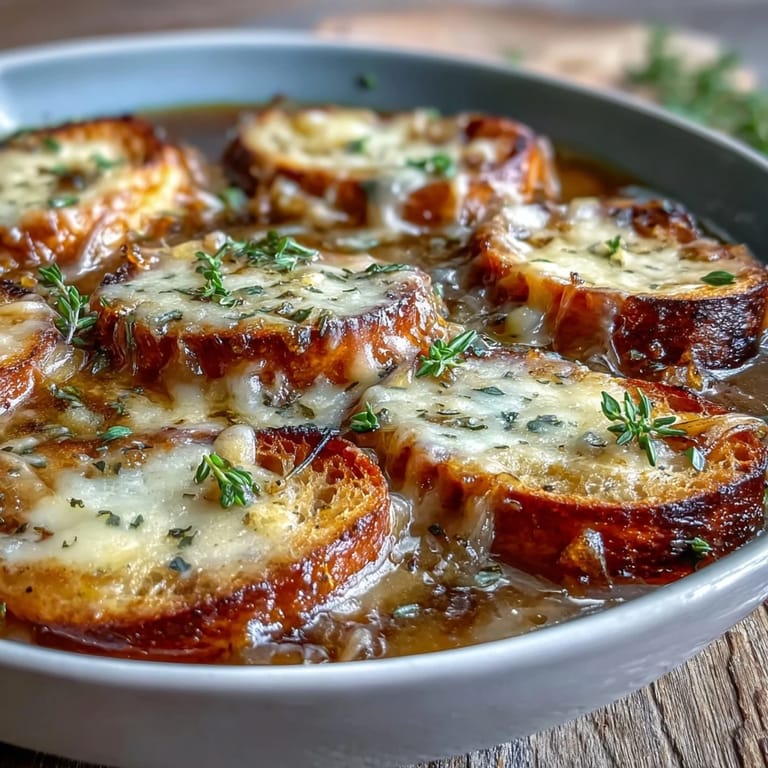
- Place your loaded bowls on a baking sheet and slide them under the broiler for two to four minutes until the cheese is melted, bubbling, and getting a few golden spots. Pull them out carefully because everything is extremely hot—a kitchen towel or oven mitts are essential here.
- Serve and enjoy:
- Let the bowls sit for one minute so you don't burn your mouth on the molten cheese, then serve with maybe a tiny sprig of fresh thyme on top if you're feeling fancy.
 Save to Pinterest
 There's a moment about halfway through serving this soup to friends when someone takes that first spoonful with the cheese still dripping, and their eyes go quiet for a second like they're tasting something that matters. That's when I know the caramelizing and stirring and careful attention paid off—not because the recipe is complicated, but because it's built on patience and intention.
The Long Caramelize
Those forty to forty-five minutes of cooking onions down feel long the first time you make this, like you're standing around waiting for something to happen. But this time is actually where all the magic happens—the onions' natural sugars concentrate and brown, developing hundreds of flavor compounds that make the final soup taste like it's been simmering for hours. The key is stirring frequently but not frantically, letting the onions rest against the hot bottom of the pot where they brown gently, then scraping those browned bits back into the mix. A friend once asked if she could use a higher heat to cut the time in half, and I had to explain that high heat doesn't caramelize; it just browns the outside while the insides stay raw.
Cheese Choices and Substitutions
Gruyère is traditional because it melts into that silky, luxurious layer without becoming greasy or separating, but I understand sometimes you need alternatives. Swiss cheese works beautifully and melts just as smoothly, while Emmental has a slightly sweeter, nuttier character that some people actually prefer. The one thing I'd avoid is pre-sliced American cheese or anything overly processed—those won't give you that sophisticated, melty result that makes French onion soup special. If you're making a vegetarian version and using vegetable broth instead of beef, the cheese becomes even more important because it carries more of the flavor load, so splurge on something good.
Serving and Pairing Ideas
This soup is substantial enough to be a meal on its own, especially if you serve a crisp green salad alongside it with a sharp vinaigrette to cut through all that richness. A glass of white Burgundy or even a light Pinot Noir works beautifully, or if you're not drinking wine, crisp sparkling water with lemon keeps your palate fresh between spoonfuls. Some people like to serve it as a first course before a simple roasted chicken or fish, which works too, though I find the soup is the star and doesn't need much company beyond bread and maybe that salad. The one pairing I'd suggest skipping is anything else cheese-heavy—let the Gruyère on top be the dairy moment of your meal.
- Make the soup up to the point of toasting bread the day before, then finish assembly just before serving for the crispiest bread experience.
- If you're doubling the recipe for a crowd, the caramelized onions can be frozen for up to three months, so you can skip the longest part next time.
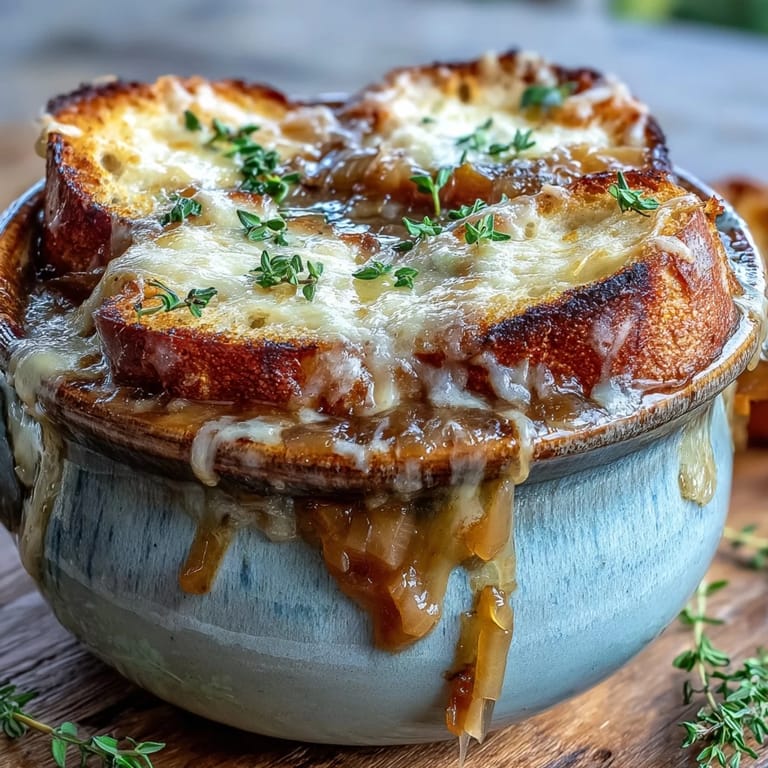
- Oven-safe bowls without plastic handles and high sides keep cheese from dripping onto your oven floor—ceramic or cast iron works beautifully.
 Save to Pinterest
 This soup has a way of becoming more than just dinner—it's the meal you make when you want to say 'I'm thinking of you' without the fuss of a full dinner party. Every time someone asks for the recipe, I know they're not just hungry; they're looking to create that same moment of comfort in their own kitchen.
Recipe FAQs
- → Why does caramelizing onions take so long?
Caramelizing onions slowly draws out their natural sugars and transforms them into golden-brown, deeply flavorful strands. This process cannot be rushed—higher heat will burn rather than caramelize. The 45-minute cooking time develops the rich, sweet base that makes this dish exceptional.
- → Can I make this vegetarian?
Absolutely. Simply substitute vegetable broth for beef broth and either omit the Worcestershire sauce or use a vegetarian-friendly brand. The result remains just as delicious and satisfying.
- → What cheese works best for the topping?
Gruyère is traditional for its excellent melting properties and nutty flavor. Swiss or Emmental make great alternatives. Some cooks blend Gruyère with Parmesan for extra depth. Any good melting cheese with robust flavor will work beautifully.
- → Can I prepare this in advance?
The soup base actually improves after resting in the refrigerator for 1-2 days. Prepare through step 4, cool completely, and store. Reheat gently before proceeding with the bread and cheese topping. Add the final broiling step just before serving.
- → Why use both butter and olive oil?
Butter provides rich flavor while olive oil prevents the butter from burning during the long caramelization process. This combination ensures the onions cook evenly without scorching while developing that perfect golden color.
- → What type of onions work best?
Yellow onions are ideal—they balance sweetness and pungency perfectly. Red onions can be too strong, while sweet onions may lack depth. Stick with large yellow onions for authentic flavor.