 Save to Pinterest
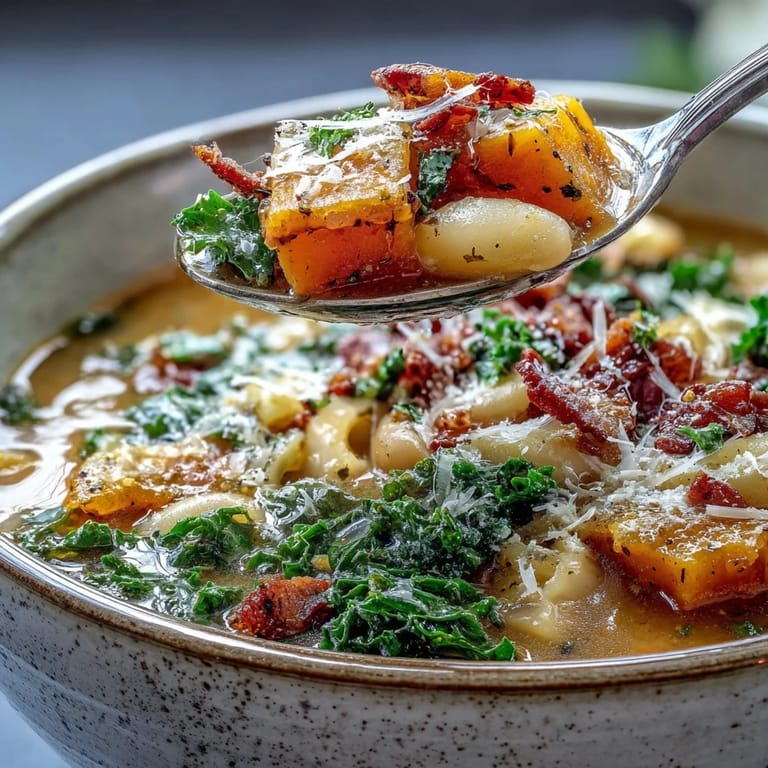
 There's something about October that makes me crave a soup you can actually sink your spoon into, one that feels less like a starter and more like a meal that knows what it's doing. This fall minestrone emerged from a particularly chilly afternoon when I had butternut squash sitting on my counter and a craving for something that tasted like it had been simmering all day, even though it comes together in an hour. The pancetta adds this savory backbone that transforms what could be a simple vegetable soup into something genuinely craveable, and the way the kale softens into those creamy white beans—well, that's when you know a recipe has earned its place in rotation.
I served this to my sister last November when she showed up unannounced on a gray afternoon, and she stood by the stove while it simmered, just breathing in the smell of it, not even talking. When we finally sat down, she asked for seconds before finishing her first bowl, and that's when I knew this recipe had actually worked—it had done that quiet thing good food does where it makes people feel taken care of.
Ingredients
- Pancetta, diced: This isn't just a garnish—render it first to create a fat base that carries flavor through the entire pot, and save those crispy pieces to scatter on top for texture.
- Olive oil: Use something decent here because you're not cooking it hot enough to hide mediocre oil.
- Yellow onion, carrot, and celery: The holy trinity that makes soup taste intentional, and yes, the texture matters as much as the flavor.
- Butternut squash: Cut it into small cubes so it softens evenly and doesn't leave you with hard chunks in some bites and mush in others.
- Garlic: Mince it fine and add it after the squash so it blooms in that rendered fat without browning into bitterness.
- Kale: Remove every bit of stem or your spoon will hit woody resistance, and add it near the end so it stays bright green and tender.
- Diced tomatoes with juice: Canned is perfect here—they're picked at peak ripeness and the juice becomes part of your broth.
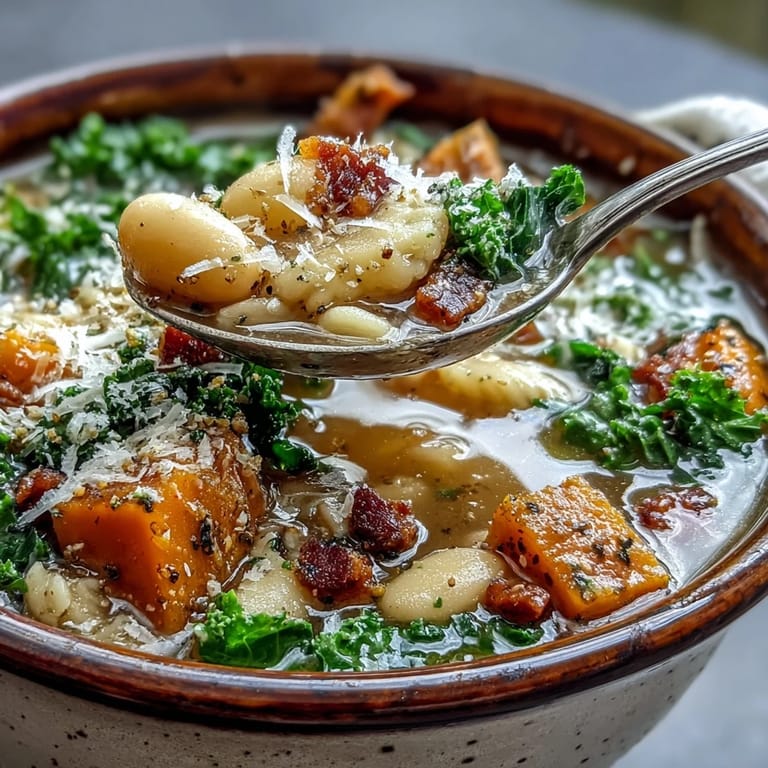
- White beans: Drain and rinse them to remove that starchy liquid, but save a few to mash into the pot at the end if you want the broth to thicken naturally.
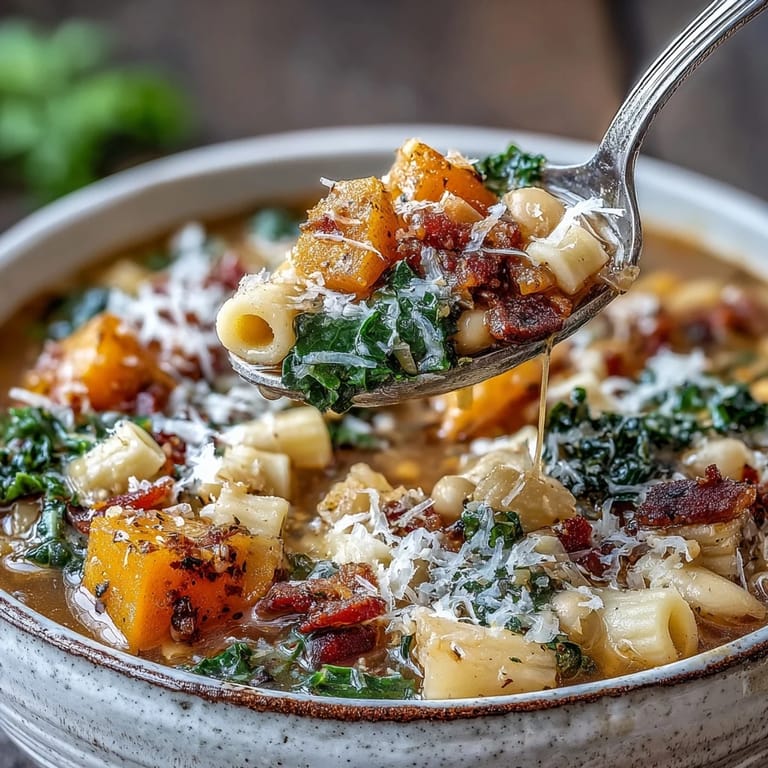
- Ditalini pasta: This small tube pasta catches broth in every bite, but any small shape works—adjust timing based on your package.
- Chicken or vegetable broth: The quality here matters more than you'd think, so taste it plain before it goes in the pot.
- Thyme, bay leaf, salt, and pepper: Fresh thyme is worth seeking out because dried thyme tastes like the inside of a cabinet by comparison.
- Parmesan and fresh parsley: These are your finishing touches that turn a good soup into one people remember.
Tired of Takeout? 🥡
Get 10 meals you can make faster than delivery arrives. Seriously.
One email. No spam. Unsubscribe anytime.
Instructions
- Render the pancetta:
- Heat olive oil in your pot over medium heat and add the diced pancetta, letting it slowly release its fat until the edges turn crispy and bronze—this should take about five minutes and your kitchen will smell incredible. Remove it with a slotted spoon and set it aside on a paper towel, but leave every drop of that rendered fat in the pot because that's your flavor foundation.
- Build your base:
- Into that pancetta fat, add your onion, carrots, and celery, stirring occasionally until the edges start to soften and everything becomes translucent—about five minutes of gentle cooking. You're not trying to brown anything here, just coaxing out sweetness and tenderness.
- Wake up the squash:
- Stir in your cubed butternut squash and minced garlic, cooking for just two minutes until the garlic perfumes the pot and the raw edge disappears. The squash will start to release its sweetness into the fat.
- Add your liquids:
- Pour in the diced tomatoes with their juice, the drained white beans, your broth, and the thyme and bay leaf, then season with salt and pepper. Bring everything to a simmer—you'll see small bubbles breaking the surface but nothing dramatic.
- Simmer until the squash yields:
- Cover the pot and let it sit for about twenty minutes, until the butternut squash cubes are completely tender and collapse if you press them gently with a spoon. This is the moment the soup starts tasting like it's been cooking all day.
- Add the greens and pasta:
- Stir in your chopped kale and the ditalini, leaving the lid off so you can watch it, and simmer for eight to ten minutes until the pasta is just tender and the kale has surrendered into the broth. Taste a piece of pasta—it should have no resistance when you bite it.
- Final adjustments:
- Fish out that bay leaf, taste the soup, and add more salt or pepper if it needs it—remember that the Parmesan at the end will add saltiness, so don't overdo it now.
- Serve with intention:
- Ladle the soup into bowls and top each one with some of that reserved pancetta, a scatter of fresh parsley, and a generous handful of grated Parmesan so people can finish it exactly how they like it.
 Save to Pinterest
 There's a moment in October when everyone suddenly wants soup, and having this recipe in my back pocket means I never have to scramble through recipes at six o'clock. It's become the kind of dish that people text me about weeks later, asking if I remember what I put in it.
Why Fall Vegetables Matter Here
Butternut squash is what transforms this from a regular vegetable soup into something distinctly autumnal—its natural sweetness balances the earthiness of kale and the umami from the pancetta and tomatoes. When you bite into a cube of tender squash, it's almost creamy, which creates texture without needing cream.
The Pasta Question
I tested this with different pasta shapes because I'm the kind of person who overthinks these things, and while ditalini is perfect because those little tubes trap broth, small shells and broken spaghetti work just as well. The point is picking something that doesn't overwhelm the bowl—you want a balance between broth and solids where the pasta serves the soup, not the other way around.
Make It Your Own
Once you understand the structure of this soup, it becomes endlessly flexible, which is exactly why it's stayed relevant in my kitchen rotation for years. The pancetta is easy to remove for vegetarian friends, and the pasta can vanish for anyone tracking carbs. Seasonal vegetables swap in naturally—I've made versions with zucchini in summer, fennel in winter, and whatever looks good at the market.
- If you want extra richness, save a handful of cooked white beans and mash them into a paste before stirring them back in to thicken the broth naturally.
- A pinch of smoked paprika added after you remove the pancetta creates depth for vegetarian versions without tasting like you're trying to replace the meat.
- Pair this with good crusty bread and a glass of light red wine—Pinot Noir works beautifully because it doesn't compete with the soup's subtle flavors.
 Save to Pinterest
 This soup has become my answer to the question of what to cook when someone needs feeding but time is short. It's the kind of recipe that proves you don't need complicated technique or exotic ingredients to make something people genuinely want to eat.
Recipe FAQs
- → Can I make this vegetarian?
Absolutely. Simply omit the pancetta and use vegetable broth instead of chicken broth. Add a pinch of smoked paprika to maintain that savory depth typically provided by the pork.
- → What pasta works best?
Ditalini, shells, or small macaroni hold up beautifully in soups. For gluten-free needs, substitute with GF pasta or add extra white beans for more substance.
- → How should I store leftovers?
Cool completely and refrigerate in an airtight container for up to 4 days. The pasta will absorb more broth over time—simply add a splash of water or broth when reheating.
- → Can I freeze this minestrone?
Yes, though it's best to freeze without the pasta. Cook pasta separately when reheating, or freeze fully assembled knowing the texture will be more like a thick stew.
- → What can I substitute for butternut squash?
Acorn squash, delicata, or sweet potato work wonderfully. Adjust cooking time slightly as different squashes tenderize at different rates.
- → How do I prevent the kale from becoming too mushy?
Add the kale during the last 8-10 minutes of simmering, just as you would with the pasta. This keeps it vibrant and tender-crisp rather than overcooked.