 Save to Pinterest
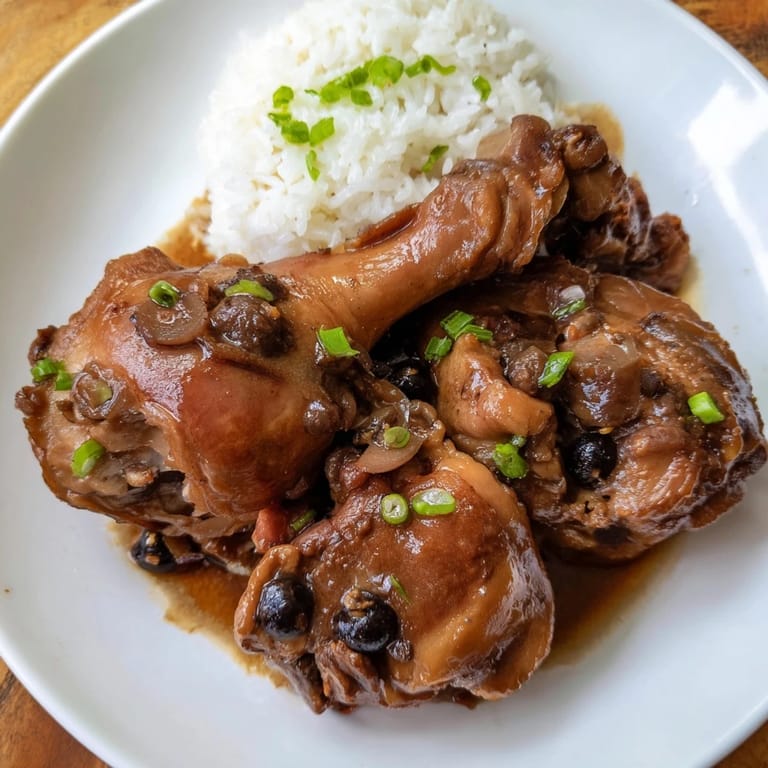
 My tita used to make chicken adobo on Sunday afternoons while my cousins and I played in the yard, the smell of vinegar and garlic pulling us back inside every single time. There was something almost magical about how she transformed simple chicken into something so tender it fell off the bone, the sauce glossy and deeply flavorful in a way that made plain white rice feel like a luxury. Years later, I realized the magic was just patience and the holy trinity of soy, vinegar, and garlic working together in that pot. This is the dish that taught me that the best meals don't need fancy ingredients or complicated techniques. They just need time and a little love.
I made this for my partner on a rainy evening when neither of us wanted to leave the kitchen, and we ended up sitting at the counter for hours just talking while the chicken simmered, stealing bites of the thickening sauce with spoons like we were kids. That night it stopped being just a recipe and became the thing we'd make whenever we needed comfort without fuss.
Ingredients
- Chicken thighs and drumsticks: Bone-in, skin-on pieces are essential here—the bones add body to the sauce and the skin renders down into richness that boneless breasts simply can't give you.
- Soy sauce: This is your umami backbone, so use a quality brand if you can; the difference shows up in every spoonful.
- Cane vinegar: If you can find it, use it—it's mellower than white vinegar and more forgiving, but white vinegar works too if that's what you have.
- Garlic: Smash the cloves gently with the side of your knife; they'll infuse the sauce better and are easier to fish out later if you want.
- Bay leaves: Don't skip these or substitute them carelessly; they add a subtle herbaceousness that ties everything together.
- Black peppercorns: Whole peppercorns toast slightly in the cooking liquid and release more flavor than pre-ground pepper ever could.
- Brown sugar: Optional, but a tablespoon rounds out the sharp edges of the vinegar without making the dish sweet.
Tired of Takeout? 🥡
Get 10 meals you can make faster than delivery arrives. Seriously.
One email. No spam. Unsubscribe anytime.
Instructions
- Marinate the chicken:
- Combine your chicken with the soy sauce, vinegar, garlic, bay leaves, peppercorns, and brown sugar in a large bowl, coating everything evenly. This isn't just for flavor—the acid in the vinegar and the salt in the soy begin breaking down the chicken right away, ensuring it becomes tender. Give it at least 30 minutes at room temperature, or cover it and refrigerate for up to 8 hours if you're planning ahead.
- Brown the chicken:
- Pat the chicken pieces dry with paper towels (this matters—moisture prevents browning), then heat oil in a large skillet over medium-high heat until it shimmers. Lay the chicken skin-side down and resist the urge to move it for 3–4 minutes; you want that skin to turn golden and crispy before you flip and brown the other side for another 3–4 minutes.
- Braise low and slow:
- Pour the reserved marinade and water into the pan, bring everything to a boil, then immediately lower the heat to low, cover the pot, and let it simmer gently for 25 minutes. Turn the chicken over halfway through so it cooks evenly, and listen for that gentle, rhythmic bubbling—too vigorous and you'll toughen the meat.
- Reduce the sauce:
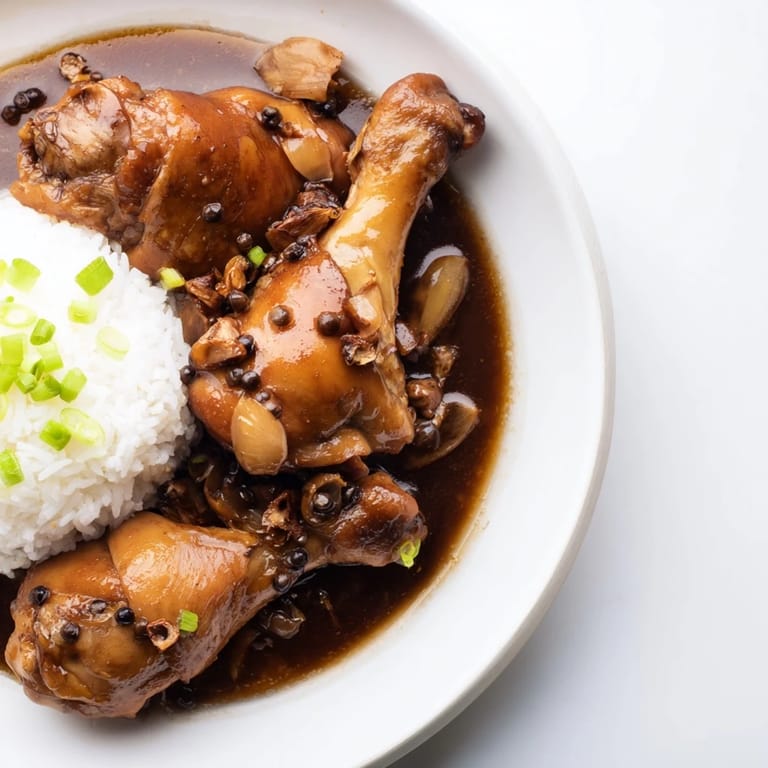
- Uncover the pot and let it simmer for another 10–15 minutes, watching as the liquid reduces and the sauce darkens and thickens into something glossy and rich. If there's a lot of fat floating on top and it bothers you, skim it off with a spoon, but honestly, some of that fat is where the flavor lives.
- Taste and finish:
- Remove the bay leaves, give the sauce a taste, and adjust with a splash more vinegar if you want it brighter, or soy sauce if you want it saltier. Serve the whole thing over steamed white rice, with scallions scattered over the top if you have them.
 Save to Pinterest
 There's a moment near the end of cooking when you lift the lid and the steam clears, and you see the chicken glistening in that dark, reduced sauce, and you just know it's going to be perfect. That's when you stop worrying and just let yourself enjoy what's about to happen.
Why This Dish Matters
Chicken adobo is the kind of dish that travels with people—it shows up at potlucks, family dinners, and in the kitchens of people who want to make something that tastes like home, whether or not it's actually their home. There's no pretense to it, just real flavors built on a foundation of acid, salt, and time. Once you understand how these three things work together, you can apply the principle to almost anything braised in your kitchen.
Flexibility and Swaps
This recipe is forgiving in almost every way—use white vinegar if you don't have cane vinegar, use pork shoulder or beef if chicken doesn't appeal to you, skip the brown sugar entirely if you prefer things sharper. Some people add a splash of coconut milk at the end for richness, or a few dried chilies for heat. The framework is solid enough to accommodate what you have and what you like.
Making It Your Own
The real skill here is learning to taste as you go and trust your instincts about what the sauce needs. Every time you make this, it's slightly different depending on your ingredients, your stove, your preferences, and that's not a flaw—it's the point. This is the kind of cooking that gets better the more you do it, not because you're following the rules more carefully, but because you're learning to bend them just right. Start here, then make it yours by adjusting the balance of soy to vinegar, playing with the cooking time, or adding whatever brings you joy.
- If the sauce reduces too quickly, add a splash of water to slow things down.
- Leftovers taste even better the next day after the flavors have melded overnight.
- This freezes beautifully for up to three months, so make a double batch and thank yourself later.
 Save to Pinterest
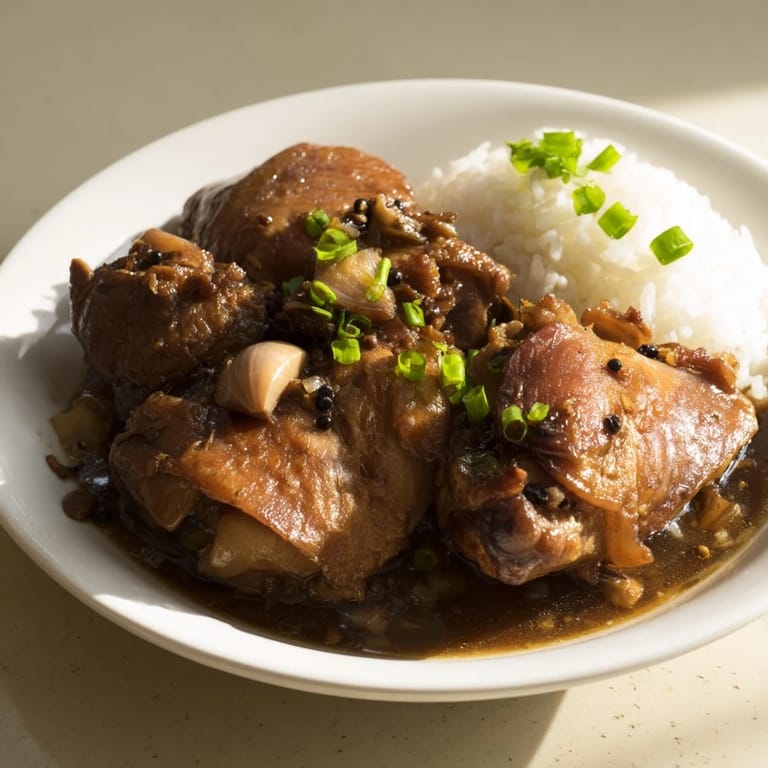
 This is the dish I make when I want my kitchen to smell like comfort and my people to feel taken care of. There's no shortcut to good adobo, and that's exactly what makes it worth making.
Recipe FAQs
- → What cut of chicken works best for this dish?
Bone-in, skin-on thighs and drumsticks are ideal as they stay moist and absorb flavors well during braising.
- → Can I marinate the chicken longer?
Yes, marinating from 30 minutes up to 8 hours enhances the flavor deep into the meat.
- → What can I use instead of cane vinegar?
White vinegar is a suitable substitute without altering the classic tangy profile significantly.
- → How do I achieve a thicker sauce?
Simmer uncovered towards the end to reduce the liquid and concentrate the sauce’s flavors.
- → Are there variations to this classic preparation?
Yes, adding coconut milk softens acidity, and swapping pork for chicken gives a traditional twist.