 Save to Pinterest
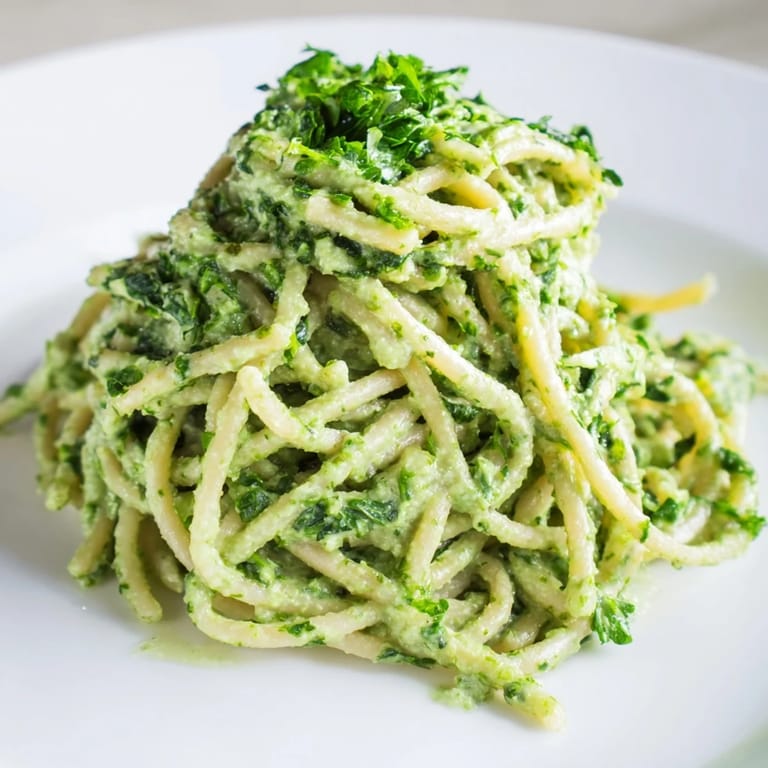
 I was standing at my farmer's market one late spring morning, overwhelmed by a table of impossibly green herbs and fresh vegetables, when I realized I had no idea what to do with half of them. That's when I remembered my grandmother mentioning something about Green Goddess dressing, and it clicked—why not turn that salad concept into something you could actually twirl on a fork? I went home, threw everything into a blender almost recklessly, and what came out was this vibrant, creamy sauce that tasted like spring decided to coat pasta.
I made this for my roommate on a random Tuesday after she'd been complaining about eating the same rotation of sauces for months, and watching her face light up when she took that first bite reminded me why I love cooking for people—it's that moment of genuine surprise when something simple becomes exactly what they didn't know they needed.
Ingredients
- Baby spinach: Two cups packed tight—the tender leaves blend into nothing and give you that grassy depth without any bitter edge.
- Green cabbage: A full cup chopped gives body and a subtle sweetness that balances the herbs beautifully.
- Fresh parsley, basil, and chives: Use whatever looks alive at your market; these are the soul of the sauce and they deserve to be vibrant.
- Fresh tarragon: Optional but worth seeking out—it adds an anise-like whisper that makes people pause and ask what it is.
- Garlic and green onions: Just enough to give the sauce backbone without overpowering the greens.
- Avocado: This is your secret ingredient for creaminess without heavy cream; half a small one melts right in.
- Greek yogurt or sour cream: Use whichever you have; the yogurt is tangier and lighter, the sour cream richer and more forgiving.
- Mayonnaise and Parmesan: They work together to create that luxurious, almost salad-dressing vibe.
- Lemon juice and white wine vinegar: Fresh squeezed lemon makes all the difference here; the vinegar is just a whisper of sharpness to keep things bright.
- Olive oil: Good quality matters because you taste it directly; don't use the cheap bottle.
- Pasta: Long shapes like linguine or spaghetti catch the sauce better than chunky tubes, but honestly use what you love.
Tired of Takeout? 🥡
Get 10 meals you can make faster than delivery arrives. Seriously.
One email. No spam. Unsubscribe anytime.
Instructions
- Boil the pasta like you mean it:
- Get that water rolling, salt it generously so it tastes like the sea, then add your pasta and cook until it's just barely tender—you want it to have a little resistance when you bite it. Before you drain it, grab a mug or measuring cup and scoop out a full half cup of that starchy cooking water; this is liquid gold for adjusting your sauce later.
- Assemble your blender bowl:
- Throw in all your greens, herbs, garlic, green onions, and avocado first, then add the yogurt, mayo, and Parmesan on top. Squeeze in your lemon juice, add the vinegar and olive oil, then season with salt and pepper.
- Blend until completely smooth:
- Start on low if your blender is aggressive, then crank it up and let it go until there are no little green flecks visible and the whole thing looks like silky sauce. Stop and scrape down the sides once or twice if you need to—stubborn parsley hides.
- Thin it to pourable consistency:
- Start with a tablespoon of that reserved pasta water and drizzle it in while the blender is running, checking the thickness as you go. You want it to flow gently off a spoon, not sit like frosting.
- Taste and adjust:
- This is where you get to be the boss; add more salt if it tastes flat, more lemon if you want brightness, more pepper if you like heat. Trust your mouth, not the recipe.
- Toss it all together:
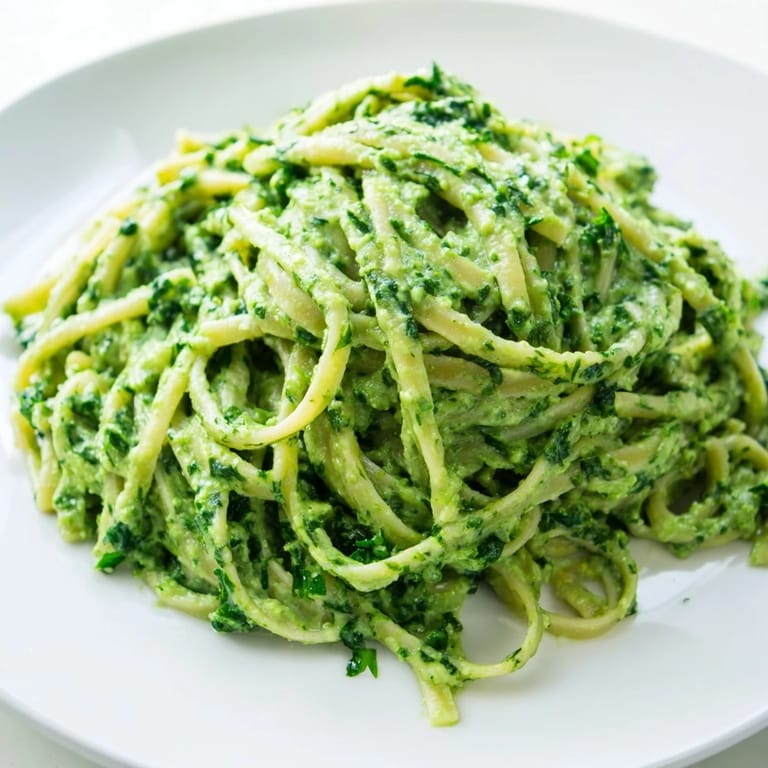
- Pour that beautiful green sauce over your hot drained pasta and toss until every strand gets coated, then taste again because pasta water can change how seasoned it feels. Serve immediately with extra herbs and cheese if you're feeling fancy.
 Save to Pinterest
 My partner came home from a brutal day at work and I wordlessly set down a bowl of this—no explanation, no fanfare—and she took a bite and just closed her eyes for a second, and I realized that sometimes the kindest thing you can do is feed someone something that tastes like hope.
Variations That Actually Work
This sauce is forgiving in the best way, which means you can play with it. Replace half the spinach with arugula if you want more peppery sharpness, or swap basil for cilantro if that's what's calling you. I've added toasted walnuts or pine nuts and felt immediately smarter for it; the crunch changes everything. For a vegan version, just use plant-based yogurt and mayo, skip the Parmesan or find a cashew-based substitute, and honestly it's just as creamy and lovely.
Warm or Cold, It All Works
I made this as a warm sauce the first time, then the next day I draped the leftovers over cold pasta with some roasted vegetables and ate it straight from the container at my desk, and it was somehow even better. The sauce thickens as it cools, which sounds like a problem but isn't—just loosen it with a splash of water or milk if you want pourable sauce. Some people serve it with crisp white wine like Sauvignon Blanc, which is elegant and fine, but honestly it's also the kind of pasta that's perfect with just a cold beer and whatever's happening outside your window.
The Little Details That Matter
Cook your pasta in genuinely salted water—this is not the time to be timid with seasoning—because undersalted pasta will taste flat no matter how good your sauce is. When you're blending, don't rush it; smooth sauce is the difference between elegant and chunky. The reserved pasta water isn't just a thickener; it's an emulsifier that makes everything creamier and helps the flavors marry together.
- Taste as you go, not just at the end, because your palate adjusts and you might season differently than you expect.
- If you're making this ahead, store the sauce separately from the pasta and combine them just before serving so nothing gets soggy.
- Fresh herbs are non-negotiable here; dried ones taste like sadness in comparison, so wait until you can get the good stuff.
 Save to Pinterest
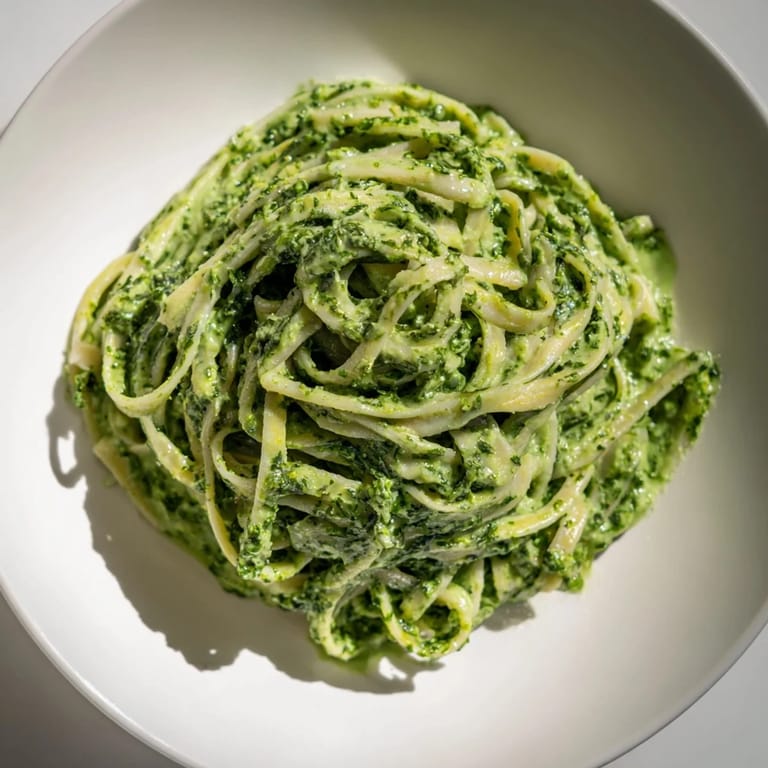
 This sauce proved to me that sometimes the best meals come from standing in front of your refrigerator with no plan and just trusting your instincts. It's become the recipe I make when I want to feed people something that tastes like care.
Recipe FAQs
- → What herbs are used in the green goddess sauce?
Fresh baby spinach, green cabbage, parsley, basil, chives, and optional tarragon create the herbaceous base.
- → How do you achieve the creamy texture?
Blending Greek yogurt, mayonnaise, and avocado with the herbs and lemon juice produces a smooth, creamy consistency.
- → Can this sauce be made vegan?
Yes, by substituting plant-based yogurt, vegan mayonnaise, and omitting or replacing Parmesan with a vegan alternative.
- → How is the sauce thinned for proper coating?
The reserved pasta cooking water can be added gradually until the sauce reaches a pourable and smooth texture suitable for tossing with pasta.
- → What pasta types work best with this sauce?
Long shapes like linguine or spaghetti and short pastas such as penne hold the sauce well and complement its creamy nature.
- → Are there any suggested flavor enhancers?
Toasted nuts like walnuts or pine nuts add richness, and crushed red pepper flakes can provide a subtle spicy kick.