 Save to Pinterest
 My neighbor Marco taught me that minestrone isn't really a recipe so much as a conversation between you and whatever's in your vegetable drawer. One rainy Tuesday, he stopped by with a bag of carrots and celery that were about to turn, and instead of tossing them, he grabbed my largest pot and started chopping without a plan. Two hours later, we were ladling out bowls of the most comforting soup I'd ever tasted, and he told me the secret was never rushing it, never forcing it, just letting the vegetables whisper their flavors into the broth one layer at a time.
The first time I made this for my work potluck, I brought it in a huge thermos and watched people come back for thirds. One colleague, who usually stuck to sandwiches, told me it tasted like home, and I realized minestrone has this strange magic where it can mean different things to different people depending on where they grew up. That's when I understood this soup isn't Italian in some fancy way, it's Italian in the way grandmothers have always cooked: practical, generous, and never the same twice.
Ingredients
- Olive oil: Use good quality extra virgin if you can, because unlike other oils it actually tastes like something when you drizzle it at the end, and that matters here.
- Onion, carrots, and celery: These three form the flavor foundation, and the rule Marco gave me was to let them get properly soft and golden before moving on, about 5 to 6 minutes.
- Garlic: Mince it fine so it disappears into the soup and seasons everything rather than sitting in chunks.
- Zucchini and green beans: These stay bright and don't turn mushy, which is why they go in later than the root vegetables.
- Spinach or kale: Stir it in at the very end so it stays vibrant and wilts from the heat without getting bitter.
- Canned diced tomatoes: The acidity is crucial, it brightens everything, so don't skip it thinking fresh would be better in winter when they're mealy anyway.
- Vegetable broth: Taste yours before you buy it, some brands are salty enough to ruin the balance, and that's a lesson I learned the hard way.
- Oregano, basil, and thyme: These dried herbs are what make it taste unmistakably Italian, and they bloom beautifully as the soup simmers.
- Cannellini and kidney beans: Both together give you different textures, creamy and firm, and together they're more interesting than just one type.
- Small pasta: Ditalini is traditional, but honestly any small shape works because the soup needs to be spoonsful that holds everything together.
Tired of Takeout? 🥡
Get 10 meals you can make faster than delivery arrives. Seriously.
One email. No spam. Unsubscribe anytime.
Instructions
- Begin with your holy trinity:
- Warm the olive oil over medium heat and add your diced onion, carrots, and celery all at once. Let them soften and turn golden, stirring occasionally, which takes about 5 to 6 minutes and fills your kitchen with the smell of Italian kitchens everywhere.
- Build the flavor layers:
- Stir in the minced garlic along with your zucchini and green beans, letting them cook for 3 to 4 minutes until the garlic is fragrant. This is where your kitchen starts smelling like something real is happening.
- Pour in the liquid and seasoning:
- Add the tomatoes, broth, oregano, basil, thyme, and bay leaf all together, then season with salt and pepper to taste. Bring everything to a boil, which should take a few minutes, then immediately turn the heat down to a gentle simmer.
- Let it breathe:
- Cover the pot and let it simmer for 15 minutes while you do something else, resist the urge to peek constantly. The vegetables will soften more than you think possible.
- Add pasta and beans:
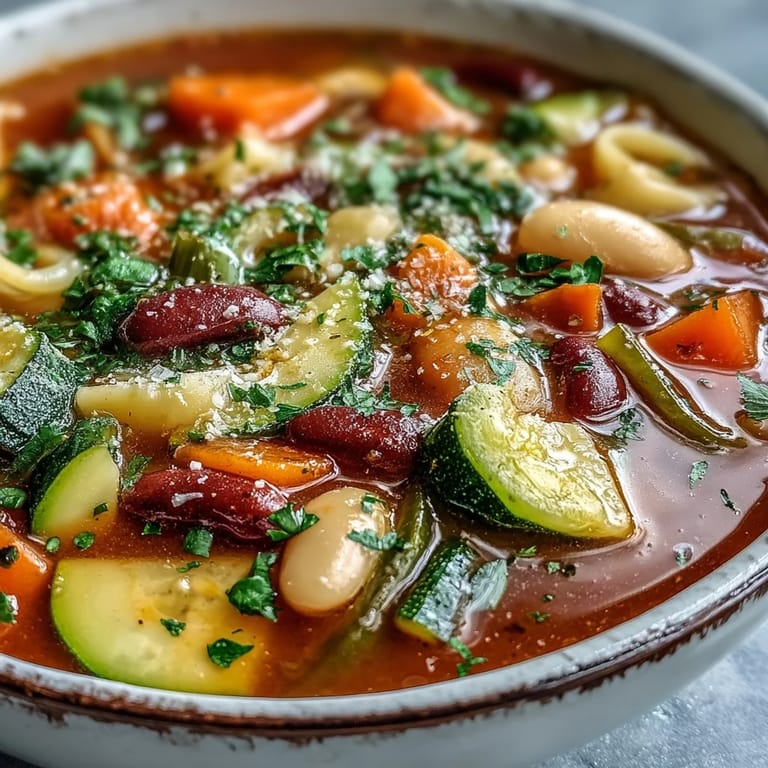
- Stir in the small pasta and both types of drained beans, then let it simmer uncovered for 10 to 12 minutes until the pasta is just tender but still has some resistance when you bite it. This is the point where the soup starts tasting less like separate ingredients and more like one complete thing.
- Finish with greens:
- Toss in your spinach or kale and cook for 2 to 3 minutes just until wilted, then fish out the bay leaf with a spoon. Taste it, adjust salt and pepper if needed, because this is your only chance before serving.
 Save to Pinterest
 My daughter asked me once why I made minestrone so often, and I realized it was because it's one of those dishes that can sit on the stove while life happens around it, getting better as the afternoon goes on. There's something reassuring about cooking something that improves with time instead of demanding your constant attention.
The Vegetable Conversation
The beauty of minestrone is that it's not one specific recipe passed down in stone tablets, it's a structure that changes with seasons and what's available. In summer I add zucchini and fresh tomatoes, in fall I throw in diced potato and a handful of kale, in spring I've even added frozen peas. Marco told me once that in his village they'd make it completely different depending on whether it was harvest time or late winter, and that's how you know a dish is truly alive.
Serving and Pairing
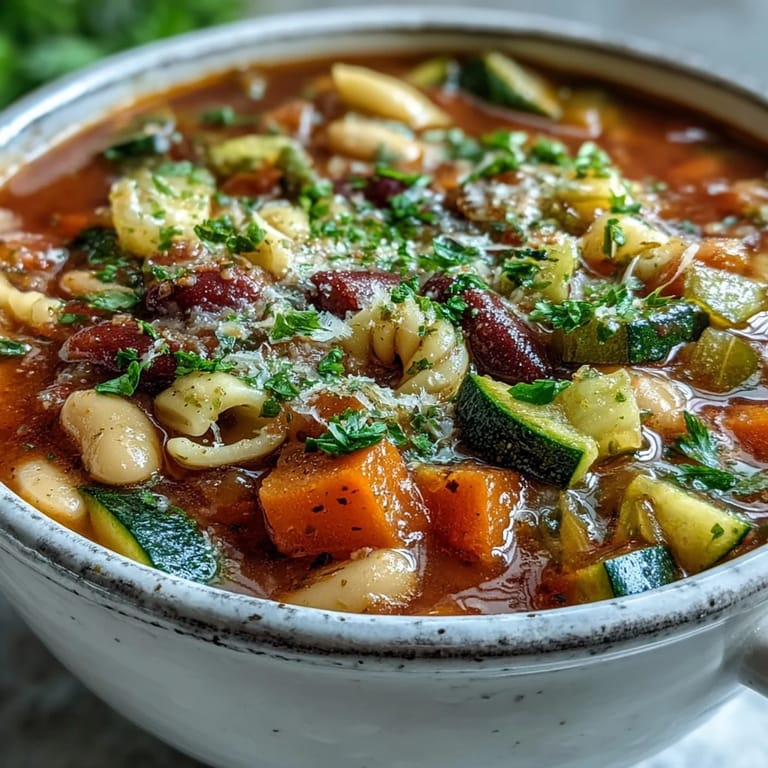
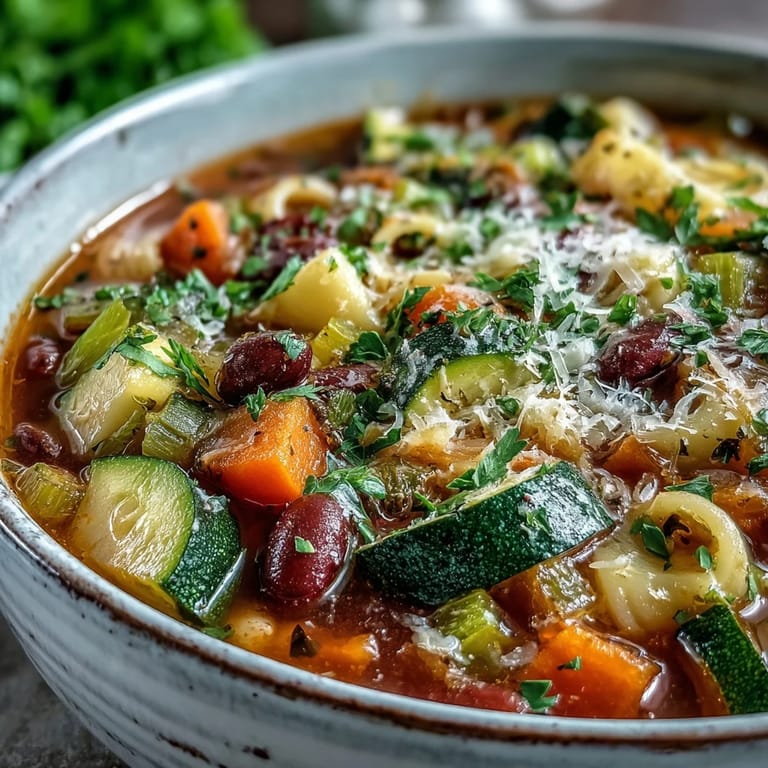
Minestrone is best served hot in deep bowls with a generous handful of freshly grated Parmesan cheese, a sprinkle of chopped parsley if you have it, and a small drizzle of your best olive oil swirled on top. A thick slice of crusty bread on the side, maybe toasted with garlic, turns this into a meal that feels complete. I've also discovered that it's just as good the next day after it's sat overnight and the flavors have gotten to know each other better, which makes it perfect for meal prep or when you want leftovers that actually improve.
Variations That Work
Once you understand the structure, you can play with it endlessly. Add diced potato for earthiness, throw in cabbage for crunch, swap the beans for lentils if that's what you have, use whatever pasta shape is in your pantry. I've made it with roasted red peppers stirred in, with a splash of balsamic vinegar at the end, with a pinch of red pepper flakes if I wanted heat. The only rule is to respect the cooking times so soft vegetables don't break down and pasta doesn't turn to porridge.
- For a creamier version, stir in a splash of heavy cream or coconut milk right at the end, just don't let it boil.
- Make it vegan by skipping the Parmesan and using a high quality olive oil for garnish instead, which honestly tastes just as good.
- Double the batch and freeze half in containers, because this is one of those soups that actually freezes beautifully and tastes almost better from frozen.
 Save to Pinterest
 Minestrone reminds me that some of the best food doesn't come from complicated techniques or expensive ingredients, it comes from paying attention to what you're doing and understanding why each step matters. That's something Marco's rainy Tuesday taught me, and it's why I keep making it.
Recipe FAQs
- → Can I make minestrone soup ahead of time?
Absolutely! This soup actually improves overnight as the flavors develop. Store it in an airtight container in the refrigerator for up to 4 days. The pasta may absorb some liquid, so add a splash of broth when reheating.
- → What vegetables work best in minestrone?
Traditional minestrone uses whatever vegetables are in season. Onions, carrots, celery, zucchini, green beans, and leafy greens like spinach or kale are classic choices. You can also add potatoes, cabbage, or peas based on preference.
- → Is minestrone soup freezer-friendly?
Yes, though it's best to freeze without the pasta. Cook the pasta separately and add it when reheating to prevent it from becoming mushy. Freeze the soup base for up to 3 months in freezer-safe containers.
- → How do I make minestrone vegan?
Simply omit the Parmesan cheese garnish or use a plant-based alternative. The soup base is naturally vegan, using vegetable broth and olive oil instead of butter or meat-based stocks.
- → What pasta shapes are ideal for minestrone?
Small pasta shapes work best as they fit easily on a spoon. Ditalini, elbow macaroni, small shells, or even broken spaghetti are traditional choices. The small size allows the pasta to cook evenly and distribute throughout the soup.
- → Can I use dried beans instead of canned?
Certainly! Soak 1 cup of dried beans overnight, then cook them until tender before adding to the soup. This method takes longer but allows you to control the sodium content and texture of the beans.