 Save to Pinterest
 My neighbor knocked on my door one February morning holding three blood oranges she didn't know what to do with. I had a carton of Greek yogurt about to expire and a sudden craving for something sweet but not heavy. We stood in my kitchen experimenting, and by noon, the whole hallway smelled like citrus and butter. That first slice, still warm with icing barely set, turned into an impromptu afternoon with tea and laughter.
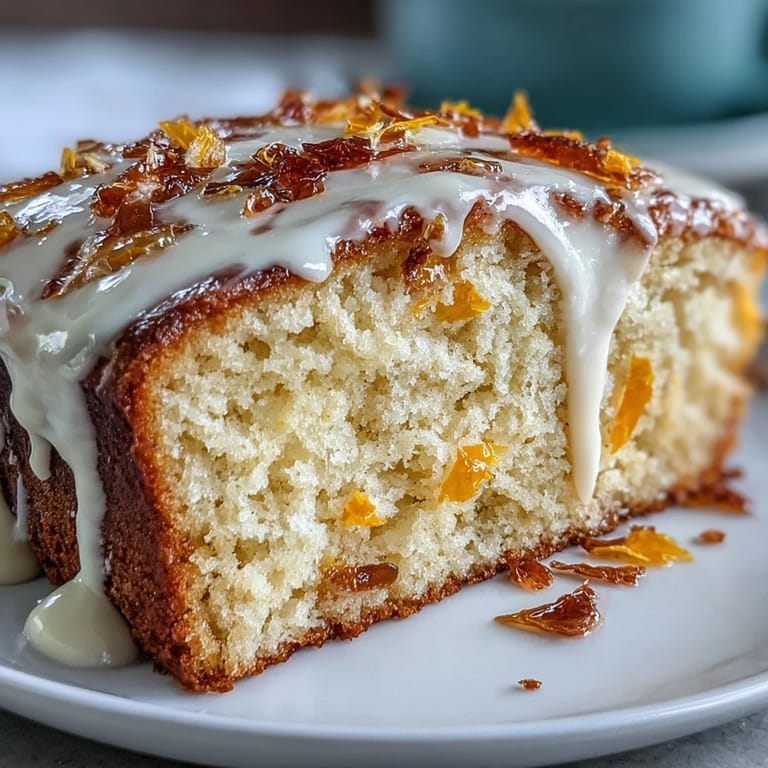
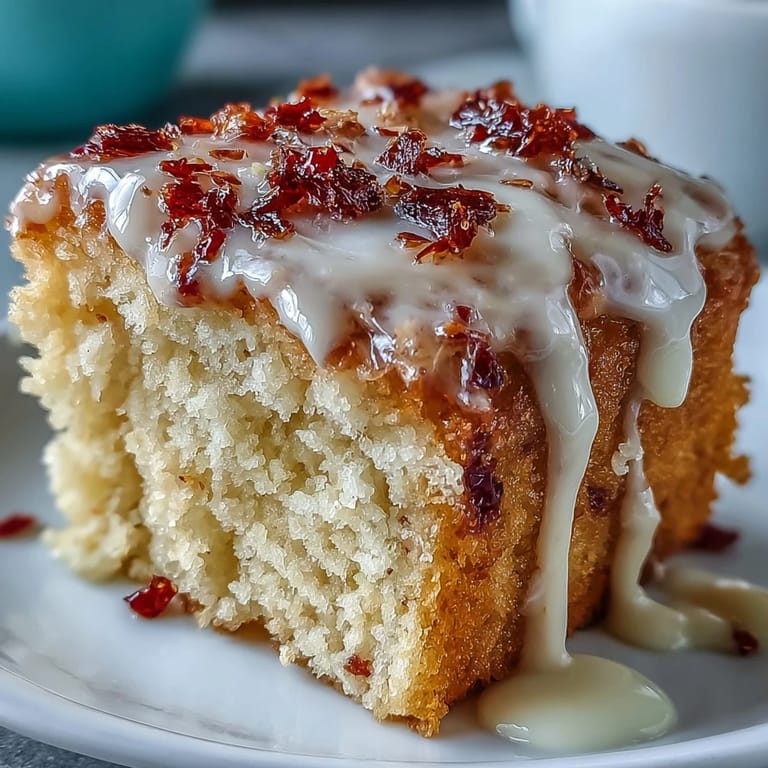
I baked this for a friend's birthday brunch, and she insisted on taking a photo before anyone could cut into it. The icing caught the morning light through the window, all glossy and pale pink. Everyone went quiet after the first bite, then someone asked if I'd been hiding a pastry degree. I hadn't, but I did write the recipe down on a napkin three times that day.
Ingredients
- All-purpose flour: The backbone of the crumb, and measuring by weight makes all the difference in texture.
- Baking powder: Two teaspoons gives just enough lift without turning the cake spongy or dry.
- Salt: A small pinch balances the sweetness and makes the citrus pop.
- Plain Greek yogurt: Full-fat works best for richness, but low-fat still delivers moisture and tang.
- Granulated sugar: Whisked with yogurt until it nearly dissolves, creating a silky base.
- Eggs: Room temperature eggs blend smoothly and help the batter emulsify without curdling.
- Blood orange zest: The oils in the zest carry more flavor than the juice, so don't skip the zesting step.
- Blood orange juice: Freshly squeezed is worth it, the bottled stuff tastes flat by comparison.
- Vanilla extract: Just a teaspoon rounds out the citrus without competing with it.
- Coconut oil: Melted and cooled, it adds a subtle tropical note and keeps the crumb tender for days.
- Powdered sugar: Sifted smooth so the icing doesn't clump or look grainy.
Tired of Takeout? 🥡
Get 10 meals you can make faster than delivery arrives. Seriously.
One email. No spam. Unsubscribe anytime.
Instructions
- Prep the pan:
- Butter every corner of your loaf pan, then dust with flour or line with parchment for easy release. A stuck cake is a heartbreaker.
- Mix the dry base:
- Whisk flour, baking powder, and salt in a medium bowl until evenly combined. Set it aside while you build the wet mixture.
- Blend yogurt and sugar:
- Whisk them together in a large bowl until the sugar starts to dissolve and the mixture looks creamy. This step creates the cake's signature tender crumb.
- Add eggs and citrus:
- Whisk in eggs one at a time, then stir in zest, juice, and vanilla until everything smells bright and sunny. Don't rush this, let the flavors marry.
- Fold in flour:
- Add the dry ingredients gently, folding just until no streaks remain. Overmixing will make the cake tough instead of soft.
- Incorporate the oil:
- Fold in the melted coconut oil slowly, letting it blend without deflating the batter. The batter should look glossy and smooth.
- Fill and smooth:
- Pour into the prepared pan and use a spatula to level the top. This helps it bake evenly without a giant dome.
- Bake until golden:
- Bake for fifty minutes, checking with a toothpick at the center. It should come out clean or with just a few moist crumbs.
- Cool in stages:
- Let it rest in the pan for ten minutes, then turn out onto a wire rack. Cooling completely prevents the icing from melting right off.
- Make the icing:
- Whisk powdered sugar, blood orange juice, and zest until smooth and pourable. Adjust thickness with a few drops of juice or a pinch more sugar.
- Drizzle and set:
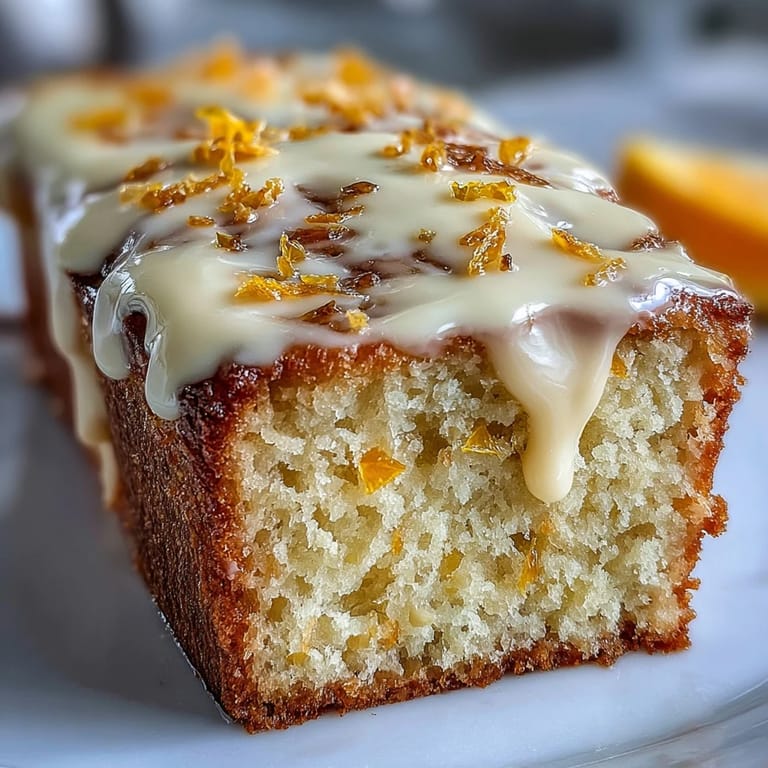
- Pour the icing over the cooled cake, letting it drip naturally down the sides. Wait at least twenty minutes before slicing so it firms up just enough.
 Save to Pinterest
 One winter evening, I made this cake just because the farmers market had blood oranges and I wanted my kitchen to smell alive again. My partner walked in from work, stopped in the doorway, and said it smelled like optimism. We ate two slices each that night, standing at the counter, and didn't bother with plates.
Choosing Your Citrus
Blood oranges show up in late winter and early spring, and their deep red flesh makes this cake special. If you can't find them, Cara Cara oranges work beautifully and bring a similar sweetness with a hint of berry flavor. Regular navel oranges are fine too, just add a teaspoon of lemon zest to brighten things up. Taste your juice before you add it, sometimes citrus varies wildly in tartness. I once used especially sour oranges and had to add an extra tablespoon of sugar to the batter to balance it out.
Storing and Serving
This cake actually gets better on day two as the flavors settle and the crumb softens even more. I keep mine under a cake dome at room temperature for up to two days, then move it to the fridge if there's any left. Cold slices are lovely with morning coffee, almost like a dense, citrusy scone. If you're serving it for a gathering, let it come back to room temperature for the best texture. A handful of fresh raspberries or a small dollop of barely sweetened whipped cream turns it into something that feels fancy without any extra work.
Make It Your Own
I've folded in a handful of poppy seeds for crunch, swapped coconut oil for brown butter when I wanted something nutty, and even replaced half the Greek yogurt with sour cream for extra tang. A friend of mine adds a few drops of almond extract to the icing and says it tastes like an Italian bakery. You can also bake this in a round pan and layer it with mascarpone frosting if you're feeling ambitious.
- Try adding a tablespoon of poppy seeds to the batter for a subtle crunch and classic pairing.
- Brush the warm cake with a simple syrup made from blood orange juice and sugar for extra moisture.
- Garnish with candied orange slices or fresh thyme leaves for a bakery-worthy finish.
 Save to Pinterest
 This cake has become my go-to whenever I need something that feels like a hug but looks like I tried. I hope it fills your kitchen with that same bright, buttery warmth it's brought to mine.
Recipe FAQs
- → Can I use regular oranges instead of blood oranges?
Yes, regular oranges work well as a substitute. The flavor will be slightly less complex and the color less vibrant, but the cake will still be delicious and moist.
- → How do I know when the cake is fully baked?
Insert a toothpick into the center of the cake. If it comes out clean or with just a few moist crumbs, the cake is done. The top should be golden and spring back when lightly touched.
- → Can I make this cake ahead of time?
Absolutely. Bake the cake up to 2 days in advance and store covered at room temperature. Add the icing just before serving for the best presentation and texture.
- → What can I use instead of coconut oil?
Melted unsalted butter is an excellent substitute for coconut oil. Use the same amount and ensure it's cooled slightly before folding into the batter to avoid cooking the eggs.
- → Why is my icing too thick or too thin?
Adjust consistency by adding more powdered sugar to thicken or more blood orange juice (one teaspoon at a time) to thin. The icing should be pourable but not watery.
- → How should I store leftover cake?
Cover the cake tightly and store at room temperature for up to 2 days. For longer storage, refrigerate for up to 5 days. Bring to room temperature before serving for best flavor.