 Save to Pinterest
 I discovered The Midnight Mosaic entirely by accident on a particularly sleepless night, rummaging through my pantry at two in the morning with nothing but curiosity and a half-eaten jar of brined black olives. What started as a desperate attempt to combine leftover chocolate with whatever unusual ingredients I could find transformed into something unexpectedly beautiful, the kind of dish that makes you question why these flavors were ever meant to be strangers. The combination shouldn't work, but it does, creating layers of intrigue with every bite.
I served this to my friend Marcus, who considers himself a dessert fundamentalist and doesn't trust anything that sounds remotely unusual. Watching his skeptical expression shift to genuine delight when he tasted that first piece—the dark chocolate melting against the brininess of the olive, followed by the gentle crunch of hazelnut—was worth every late-night experiment that came before it.
Ingredients
- Dark chocolate (70% cocoa), 200g chopped: The 70% cocoa level gives you enough bittersweet depth to stand up to the olives without becoming harsh or medicinal; cheaper chocolate can taste thin and waxy here.
- Unsalted butter, 60g cubed: Melted with the chocolate, this creates the silky base that holds everything together; salted butter will muddy the careful salt balance you're building.
- Honey, 1 tbsp: A teaspoon of honey smooths the chocolate's intensity and adds a whisper of floral depth without announcing itself.
- Sea salt, pinch: This wakes up the chocolate and makes the olive flavors pop; table salt feels flat by comparison.
- Dried figs, 120g finely sliced: Their natural sweetness and slight chewiness become jewel-like when pressed into the chocolate; soak them briefly in warm water if they feel hard or brittle.
- Pitted black olives, 80g thinly sliced: Oil-cured olives have more personality and funk than water-cured ones, which is exactly what this dessert needs to feel bold and intentional.
- Roasted hazelnuts, 50g chopped: Roasted brings out their buttery depth; raw hazelnuts taste pale and bitter by comparison.
- Cocoa nibs, 30g: They provide texture contrast and a burst of pure chocolate flavor that cuts through the richness without adding melted chocolate overdose.
- Flaky sea salt for garnish: Use something with real flakes—Maldon works beautifully—so you get texture and visual appeal, not just salt dust.
Tired of Takeout? 🥡
Get 10 meals you can make faster than delivery arrives. Seriously.
One email. No spam. Unsubscribe anytime.
Instructions
- Prepare your foundation:
- Line your 20x20 cm square tin with parchment paper, letting the excess drape over the edges like a safety net. This step matters more than it sounds—those parchment handles will become your best friend when you're ready to lift the whole slab out later.
- Melt chocolate and butter together:
- Set a heatproof bowl over barely simmering water, not boiling—aggressively boiling water will make your chocolate seize and turn grainy. Stir the chocolate and butter together until they're completely smooth and glossy, then pull it away from heat, stir in honey and a pinch of salt, and let it cool for about thirty seconds.
- Spread the chocolate base:
- Pour that silky chocolate mixture into your lined tin and use a spatula to spread it into an even layer. The goal is smooth and uniform so your mosaic sits on a stable platform, not a wavy foundation.
- Arrange your mosaic:
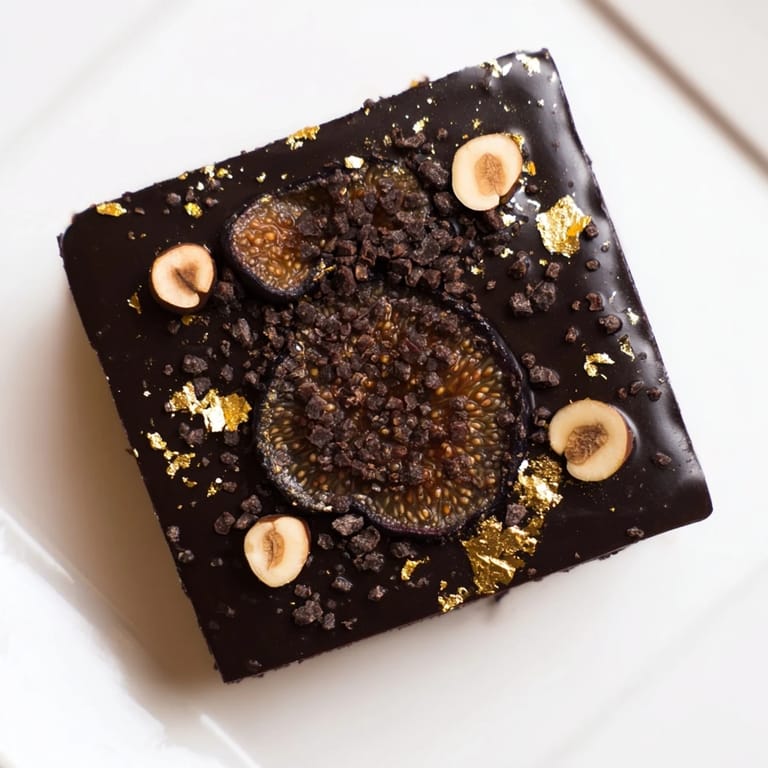
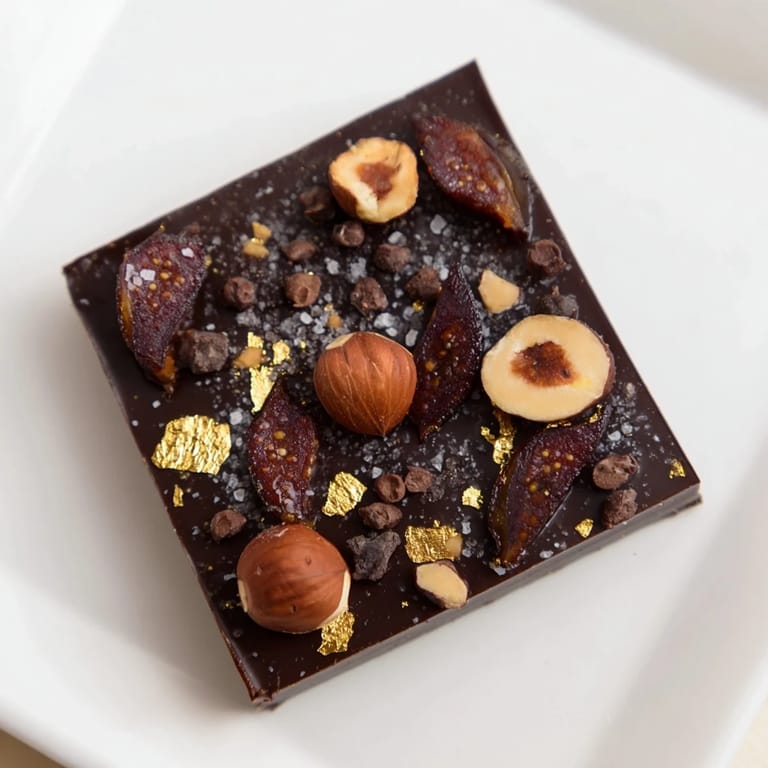
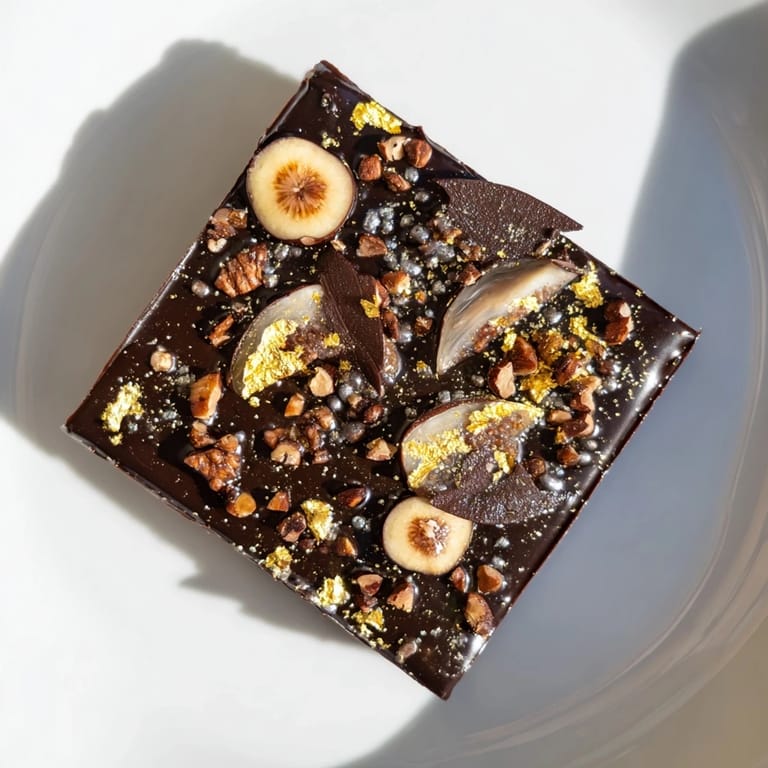
- Scatter the sliced figs, olives, hazelnuts, and cocoa nibs across the chocolate surface in whatever pattern feels natural—there's no right way to do this, but the beauty comes from density and contrast. Gently press everything into the chocolate so nothing sits loose or shifts when you move the tin.
- Add your finishing touches:
- Sprinkle flaky sea salt and edible gold leaf or dried rose petals across the top if you're feeling it. These aren't mandatory, but they transform this from a confection into something that looks like it arrived from an art gallery.
- Chill until set:
- Get it into the refrigerator for at least two hours, though overnight is even better if you have the patience. The chocolate needs time to set firm so slicing becomes clean and intentional, not crumbly and frustrating.
- Slice and serve:
- Use the parchment handles to lift the whole slab out, then use a sharp, warm knife to cut it into small squares. Warm the knife under hot water between cuts for the cleanest lines, and serve chilled or at room temperature depending on whether you want the chocolate firm or slightly yielding.
 Save to Pinterest
 There's a moment right before you slice into it when the whole thing is set and gleaming under the kitchen light, the gold leaf catching the edges, and you realize you've created something genuinely unusual that still somehow feels inevitable. That's the moment this dessert stops being a recipe and becomes a small, edible story.
Why This Flavor Combination Actually Works
The combination sounds reckless until you understand that chocolate and olives have been dancing together in Mediterranean cuisine for centuries—think of chocolate being used in savory mole or olive oil showing up in chocolate truffles. Dark chocolate at 70% cocoa has enough bitterness to complement briny, umami-forward olives instead of competing with them. The figs act as a bridge, their sweetness translating between the two seemingly incompatible flavors and making them feel not just compatible but essential. The moment your palate registers all three at once, something shifts—you understand why someone thought to put them together.
Serving and Pairing Wisdom
Serve this in small, deliberate squares because it's intense and meant to be savored, not devoured. A glass of vintage port or dark-roast espresso doesn't just accompany this dessert; it completes the whole sensory experience, echoing the chocolate's depth and playing off the olive's briny edge. If your guests are adventurous, this becomes a conversation piece; if they're hesitant, cut them a small piece and let the flavor do the convincing. Temperature matters too—straight from the fridge, the chocolate stays firm and the flavors feel distinct; at room temperature, everything softens and melds into something more unified and mysterious.
Variations and Flexibility
This recipe is more flexible than it first appears, and that's part of its quiet confidence. You can swap hazelnuts for almonds or pistachios without losing the fundamental balance, and roasted almonds actually lean slightly sweeter if you want to dial back the intensity. For a vegan version, use plant-based butter and maple syrup instead of honey—maple brings a slightly earthier note that actually suits the olives beautifully. Some people add a tiny pinch of cayenne to the melted chocolate, which sounds wrong until you taste how it amplifies both the chocolate and the olive without announcing itself. The beauty of this dessert is that it's forgiving enough to bend without breaking.
- Oil-cured or brine-packed olives matter infinitely more than other swaps; these olives have flavor and depth that canned black olives simply can't match.
- If your figs feel hard, pour just-boiled water over them and let them sit for five minutes before slicing—they'll become tender and pliable.
- Make this dessert a day ahead; the flavors actually improve as the chocolate and fillings marry overnight in the refrigerator.
 Save to Pinterest
 This dessert taught me that the best recipes aren't always the ones that follow tradition—they're the ones that follow curiosity. It exists because I couldn't sleep and had olives, and somehow that accident became something worth waking people up for.
Recipe FAQs
- → What makes the flavor profile of this dessert unique?
The combination of bittersweet dark chocolate, sweet dried figs, and briny black olives creates a bold, complex taste that's both rich and slightly mysterious.
- → Can I substitute any ingredients for dietary preferences?
Yes, plant-based butter and maple syrup can replace dairy butter and honey to accommodate vegan needs, while hazelnuts may be swapped for almonds or pistachios.
- → How should I serve this dessert for best experience?
Serve chilled or at room temperature, ideally paired with vintage port or dark-roast espresso to complement the rich flavors.
- → What tools are recommended for preparation?
A square baking tin, parchment paper, heatproof bowl, saucepan, spatula, and sharp knife ensure smooth preparation and clean presentation.
- → Are there any common allergens in this dish?
This dish contains tree nuts, dairy, and may carry traces of gluten. Always check ingredient labels if allergen sensitivity is a concern.