 Save to Pinterest
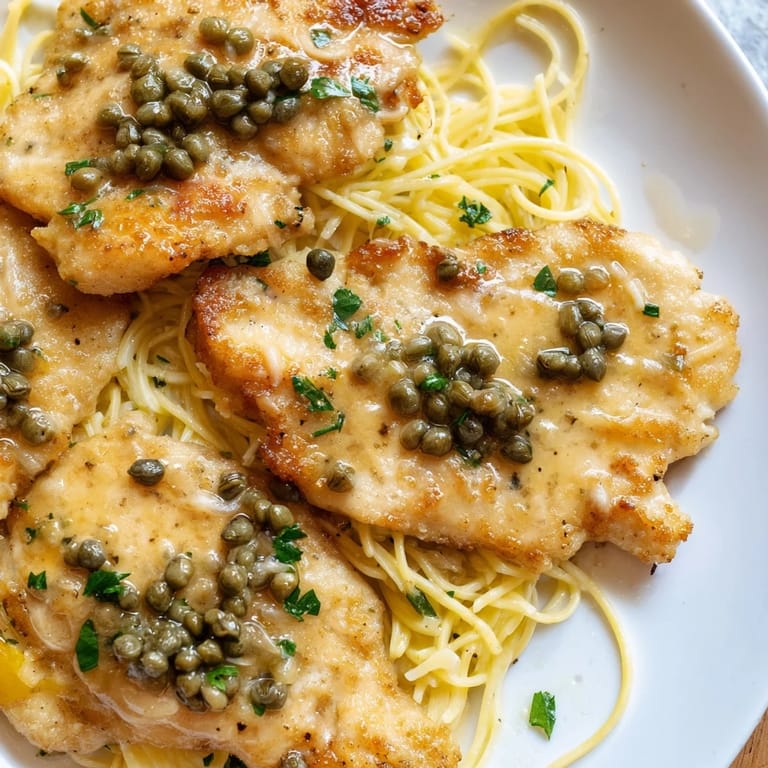
 There's something about the smell of chicken hitting hot oil that immediately lifts my mood, especially on nights when I need dinner on the table fast. Years ago, a friend mentioned she'd mastered chicken piccata, and I watched her work through it like a dance—searing, deglazing, tossing pasta with such ease that I knew I had to learn. Now it's become my go-to when I want to feel like I'm cooking something restaurant-worthy without the stress, and honestly, the brightness of lemon and the little briny pop of capers make everything feel a bit more intentional.
I made this for my partner on a random Tuesday after a long day, plated it with fresh lemon slices, and watched their whole face change when they took that first bite. It's one of those dishes that tastes elegant enough for company but feels personal enough to make for someone you love on a weeknight.
Ingredients
- Boneless, skinless chicken breasts (2 large): Butterfly them to create thin cutlets so they cook fast and stay tender—this is the trick that keeps everything from drying out.
- All-purpose flour (½ cup): Just enough to create a light golden crust that locks in moisture without making the dish heavy.
- Olive oil (2 tablespoons) and unsalted butter (1 tablespoon): Together they create the perfect temperature for searing without burning; the butter adds richness while oil prevents scorching.
- Garlic (3 cloves, minced): Don't skip mincing it small—bigger pieces can turn bitter in the hot skillet.
- Dry white wine (½ cup) or chicken broth: This is where the magic happens; it deglazes the pan and becomes the foundation of your sauce.
- Fresh lemon juice (⅓ cup, about 2 lemons): This is the heart of the dish, so use fresh lemons and squeeze them just before cooking so the juice stays bright.
- Capers (¼ cup, drained and rinsed): Rinsing them removes excess salt and keeps your sauce balanced.
- Low-sodium chicken broth (½ cup): Low-sodium matters here because you're reducing the sauce and don't want it to become overly salty.
- Unsalted butter (2 tablespoons, for finishing): This final addition creates that glossy, restaurant-quality finish.
- Fresh parsley (2 tablespoons, finely chopped): Add this at the very end so it stays bright green and adds a fresh herbal note.
- Pasta (12 ounces spaghetti or linguine): The long strands catch the sauce beautifully; reserve some pasta water because it's liquid gold for adjusting the sauce's consistency.
Tired of Takeout? 🥡
Get 10 meals you can make faster than delivery arrives. Seriously.
One email. No spam. Unsubscribe anytime.
Instructions
- Get your pasta going:
- Bring a pot of salted water to a rolling boil—it should taste like the sea. Add pasta and cook until just al dente, that moment where it still has a tiny bit of resistance; it'll keep cooking slightly when you toss it with the hot sauce later.
- Transform those chicken breasts:
- Lay them flat and carefully slice each one horizontally to create thin, even cutlets. This is the move that makes everything cook evenly and quickly.
- Season and dredge:
- Sprinkle salt and pepper on both sides, then dredge lightly in flour, shaking off any excess so you get a delicate crust, not a thick coating.
- Sear the chicken:
- Heat your skillet until it's hot enough that a drop of water sizzles immediately. Add the oil and butter, then gently lay in the chicken; listen for that satisfying sizzle. Cook about 3-4 minutes per side until golden brown and cooked through—the first side always looks better, so that's your presentation side.
- Build the sauce:
- Remove the chicken and add minced garlic to the same skillet, stirring for just 30 seconds so it becomes fragrant but doesn't burn. Pour in the wine, scraping up all those flavorful browned bits stuck to the bottom—this is called deglazing and it's pure flavor.
- Create the tangy base:
- Add lemon juice, capers, and broth; let it bubble and reduce for about 2-3 minutes until it tastes bright and slightly concentrated. You're looking for a glassy, reduced sauce, not a soup.
- Finish with richness:
- Lower the heat and whisk in the butter until everything is melted and silky. Return the chicken to the pan and spoon sauce over it, letting it warm through gently.
- Bring it all together:
- Add your drained pasta directly to the skillet with the chicken and sauce, tossing gently so everything gets coated. If it looks dry, splash in some reserved pasta water to create that silky, glossy texture.
- Plate and celebrate:
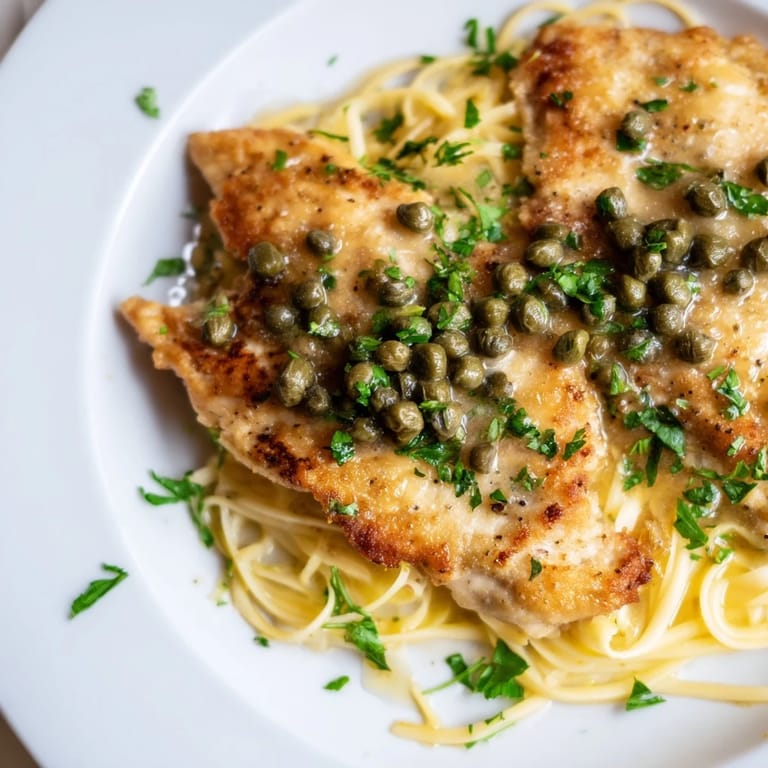
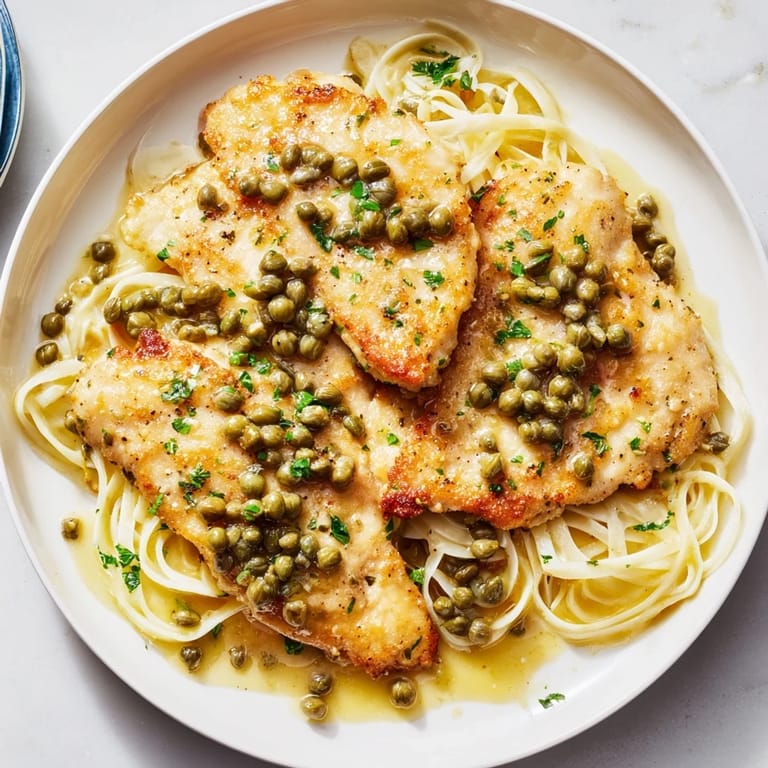
- Transfer to plates, laying the chicken on top of the pasta, then spoon any remaining sauce over everything. Garnish with fresh parsley and lemon slices for brightness.
 Save to Pinterest
 The first time someone told me this dish reminded them of a Roman trattoria, I realized how much I love cooking something that transports people through taste alone. There's something quietly powerful about a meal that takes 30 minutes but feels like you've been simmering memories all day.
The Magic of Deglazing
That moment when you pour white wine into a hot, empty skillet and all those brown, crusty bits magically dissolve into the liquid is where home cooks start believing in themselves. The Maillard reaction—that browning that happens when you sear the chicken—creates a thousand flavor compounds that would be wasted if you didn't scrape them up. This step is what separates something that tastes good from something that tastes like you actually know what you're doing.
Why Thin Cutlets Change Everything
Butterflying chicken breasts feels a bit intimidating the first time, but it's genuinely the secret that makes this meal possible in 30 minutes. Thinner pieces mean faster, more even cooking, which means you avoid the outer edges drying out while you wait for the center to finish. I used to skip this step thinking it was fussy, and my chicken was always slightly dry; now I butterfly almost everything because I understand how much it actually matters.
Variations and Adjustments
This recipe is forgiving enough to work with what you have, whether that's swapping the wine for more broth or using angel hair pasta for something lighter. I've made it with capers I forgot to rinse and learned that extra salt can be balanced with a squeeze of fresh lemon. The framework stays the same—seared chicken, bright sauce, good pasta—and that's what makes it reliable.
- Angel hair pasta creates a more delicate dish and cooks in about half the time if you're in a real hurry.
- Chicken broth is a perfect substitute if you don't have wine; you lose a touch of depth but gain about two minutes of peace not thinking about pantry staples.
- For gluten-free, swap regular flour and pasta one-to-one with quality GF versions—the dish works just as well, the sauce doesn't care.
 Save to Pinterest
 This is the kind of dish that fits into real life—quick enough for a Tuesday, elegant enough for when you want to care, and delicious enough to remind you that the best meals don't require hours. Make it once and you'll find yourself reaching for it again and again.
Recipe FAQs
- → What type of pasta works best for this dish?
Spaghetti or linguine are ideal as they hold the sauce well, but angel hair can be used for a lighter texture.
- → Can I substitute white wine in the sauce?
Yes, chicken broth can replace white wine to keep the sauce flavorful but mild.
- → How do I keep the chicken tender and juicy?
Slicing chicken breasts thin and cooking over medium-high heat until golden helps retain moisture without overcooking.
- → What is the role of capers in the sauce?
Capers add a tangy, briny contrast that brightens the overall flavor of the sauce.
- → Can this be adapted for a gluten-free diet?
Yes, use gluten-free flour and pasta alternatives to maintain the same flavors while accommodating dietary needs.