 Save to Pinterest
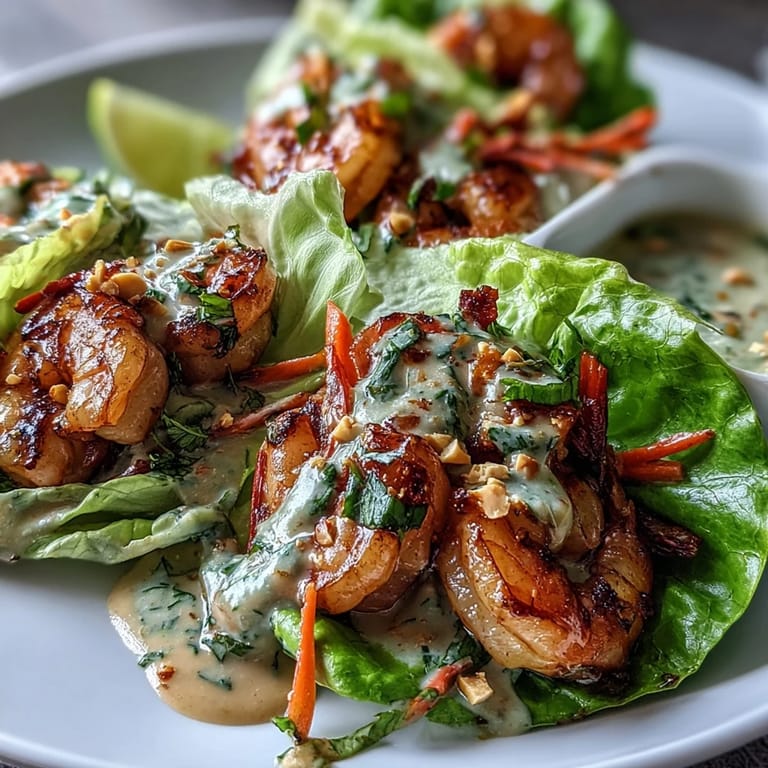
 There's something almost magical about the moment shrimp hits a hot skillet and transforms from gray to coral pink in seconds. I discovered these lettuce wraps on an ordinary Tuesday when I was too tired to cook anything elaborate but wanted something that felt special anyway. The first bite—crisp lettuce giving way to warm, garlicky shrimp, then that creamy peanut sauce—suddenly felt like I'd unlocked a secret. It's become my go-to when I want to impress without the fuss, or when I just want to feel good about what I'm eating.
I made these for my sister's surprise dinner party, and watching her guests pick up a lettuce leaf with both hands and dig in—totally abandoning fork etiquette—told me everything. There's something disarmingly fun about wraps; they give people permission to eat with their hands and actually engage with their food rather than just pushing it around a plate. That night, the platter emptied faster than I could refill it, and everyone asked for the peanut sauce recipe like it was the crown jewel.
Ingredients
- Large shrimp (400 g / 14 oz), peeled and deveined: They cook so quickly that there's barely a window before they toughen, so I always buy them already cleaned unless I'm feeling particularly patient that day.
- Vegetable oil (1 tbsp): Use whatever neutral oil you have on hand; the oil's only job is to prevent sticking and carry heat evenly across your skillet.
- Garlic clove (1, finely minced) and fresh ginger (1 tsp, grated): These two are your flavor foundation, and the 30-second bloom is non-negotiable—that's when the kitchen smells like it knows what it's doing.
- Salt and black pepper (1/4 tsp each): Simple seasoning that lets the shrimp shine rather than mask it.
- Creamy peanut butter (3 tbsp): The kind you'd actually eat from a spoon, not the natural stuff that separates—unless you prefer it, in which case just stir it back in.
- Soy sauce or tamari (1 tbsp): Tamari keeps this gluten-free if that matters in your kitchen; both add that savory depth that makes people wonder what your secret ingredient is.
- Lime juice (1 tbsp), honey or maple syrup (1 tsp), and sesame oil (1 tsp): This trio balances the richness of peanut butter and prevents the sauce from tasting one-dimensional.
- Warm water (2 tbsp, as needed): The difference between a sauce that coats and one that drips uselessly off your lettuce, so add it slowly and taste as you go.
- Butter lettuce (1 head, separated and dried): The leaves need to be genuinely dry or they'll turn soggy the moment warm shrimp meets them; I use a salad spinner or just pat them between paper towels and let them sit for a few minutes.
- Carrot, red bell pepper, and cucumber (julienned and sliced): The vegetables are your textural contrast, and keeping them uniform in size makes the wraps feel intentional rather than haphazard.
- Roasted peanuts (2 tbsp, chopped), cilantro (2 tbsp, optional), and green onions (1 tbsp, thinly sliced): These garnishes are where the personality lives; skip any you don't love, but don't skip all of them.
- Lime wedges (1 lime, cut): These sit on the side so people can squeeze as much brightness as they want into their wraps.
Tired of Takeout? 🥡
Get 10 meals you can make faster than delivery arrives. Seriously.
One email. No spam. Unsubscribe anytime.
Instructions
- Make the peanut sauce first:
- In a small bowl, whisk peanut butter with soy sauce, lime juice, honey, and sesame oil until it starts to come together, then add warm water a splash at a time until you reach that perfect drizzle consistency. It should coat the back of a spoon but still flow off it—not thick like peanut butter from the jar, but not watery either.
- Heat your skillet and build flavor:
- Set a large skillet over medium-high heat and let it get properly hot—you should hear a gentle sizzle when you add oil. Toss in your minced garlic and ginger and let them cook for about 30 seconds; your kitchen will smell incredible, and that's your cue to move forward.
- Cook the shrimp until just done:
- Add shrimp to the hot pan and season generously with salt and pepper. Stir frequently for 3 to 4 minutes—they'll shift from gray to pink, and the moment they look uniformly coral, pull the pan off heat because they'll keep cooking from residual warmth.
- Set up your assembly station:
- While shrimp cools slightly, arrange your butter lettuce leaves on a serving platter like you're laying out a canvas. Keep your julienned vegetables nearby and your peanut sauce within arm's reach.
- Build each wrap with intention:
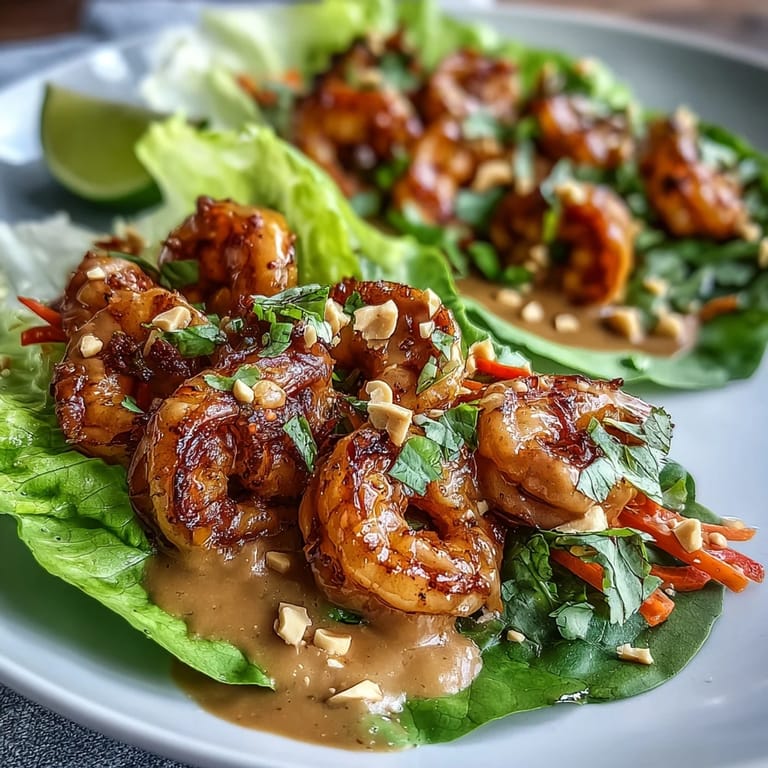
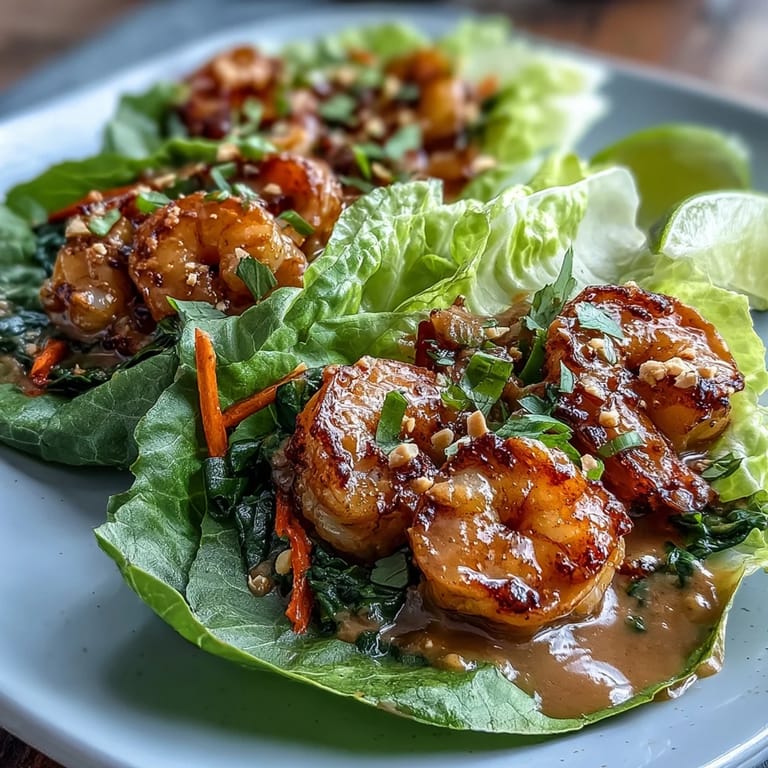
- Spoon a small handful of warm shrimp into each lettuce leaf, then layer in some carrot, bell pepper, and cucumber. Drizzle with peanut sauce and scatter chopped peanuts on top, then finish with cilantro and green onions if you're using them.
- Serve immediately with lime:
- These are best eaten right away while the shrimp is still warm and the lettuce is crisp. Set lime wedges on the side so everyone can add as much brightness as they want.
 Save to Pinterest
 My neighbor tasted these once and started growing fresh cilantro in her window box specifically for making them on weekends. Food that inspires people to start their own small gardens, to take little steps toward cooking more intentionally—that's the kind of recipe worth holding onto.
Why This Sauce Changes Everything
The peanut sauce is doing so much heavy lifting here that it deserves its own moment. It's not overly sweet, not too salty, and that sesame oil gives it an unexpected richness that makes people taste it and ask questions. I've learned to keep extra on hand because people inevitably want to spoon more onto their wraps, and it also works beautifully drizzled over roasted vegetables or used as a dip for summer rolls.
Variations That Still Feel Right
Grilled chicken works beautifully if you're not in the mood for shrimp, and tofu—if you press it well and crisp it in the skillet with the same garlic and ginger—becomes something really satisfying and substantial. I've also stirred in a teaspoon of sriracha for people who like heat, and added finely diced mango when I had it on hand, which turned the whole thing into something summery and unexpected. The lettuce-and-sauce foundation is flexible enough to support whatever proteins or vegetables you're craving.
Timing and Preparation Tips
The real secret to pulling this off smoothly is prepping your vegetables while the shrimp cooks. Everything should be cut and waiting before you turn on the heat, so you're not frantically slicing peppers while shrimp sits cooling on the counter. I prep my station like a little mise en place moment, which makes assembly feel almost meditative rather than stressful.
- Keep your lettuce leaves in a colander with a clean kitchen towel draped over top so they stay chilled and crisp.
- Toast your peanuts in a dry skillet for two minutes if you have time—it deepens their flavor and makes them taste almost luxurious.
- Make the peanut sauce earlier in the day if you want; it actually tastes better after sitting for a few hours as flavors meld together.
 Save to Pinterest
 These lettuce wraps have become my answer when someone asks what I want to cook but nothing feels quite right. They're light enough for a summer evening, impressive enough for guests, and easy enough that you'll actually make them on a Tuesday without overthinking it.
Recipe FAQs
- → What type of shrimp works best?
Large peeled and deveined shrimp are ideal for quick, even cooking and tender bites.
- → Can I substitute the peanut sauce?
Yes, you can adjust the sauce by adding sriracha for heat or swapping peanut butter for almond butter for a different flavor.
- → How do I keep the lettuce crisp?
Wash and dry lettuce leaves thoroughly and keep them chilled until serving for maximum crispness.
- → What sides pair well with these wraps?
Light sides like rice noodles, a crisp Riesling, or iced green tea complement this dish nicely.
- → Is this dish suitable for gluten-free diets?
Yes, by using tamari instead of soy sauce, the dish becomes gluten-free.