 Save to Pinterest
 The first time I tasted mango sticky rice was on a humid Bangkok evening, sitting at a plastic table outside a street vendor's stall, the air thick with jasmine and exhaust fumes. An older woman with flour-dusted hands handed me a small plate—the mango so perfectly ripe it seemed to glow under the overhead bulb, nestled against a warm mound of coconut rice that smelled like a tropical dream. I didn't know then that I'd spend years trying to recreate that exact moment in my own kitchen, chasing the memory of how the sweetness felt both simple and complex at the same time. Now when I make it, I'm not just cooking; I'm reaching back to that moment and everyone I've served it to since.
I made this for my roommate on a Tuesday night when she'd had a terrible day at work, and I watched her take one bite and just close her eyes. She didn't say anything for a moment—just sat there with her spoon halfway to her mouth—and that's when I realized some food does more than fill your stomach. When she finally looked up, she asked if I could teach her how to make it, and now it's become our secret weapon for bad days.
Ingredients
- Glutinous (sweet) rice, 1 cup: This is the foundation, and it's nothing like regular rice—it gets creamy and slightly sticky when steamed, which is exactly the texture you want. Don't skip the long soak; it hydrates the grains so they cook evenly and taste tender rather than chalky.
- Coconut milk, 1 cup (full fat): The richness here is non-negotiable; canned coconut milk works beautifully, but shake it well before opening so you get the cream and the liquid together.
- Granulated sugar, 1/4 cup: You're sweetening both the sauce and the rice with this, so taste as you go—the sweetness should make you smile, not grimace.
- Salt, 1/4 tsp: This tiny pinch is your secret weapon; it keeps the dish from tasting one-dimensional and somehow makes the mango flavor pop.
- Ripe mangoes, 2 large: The mango is the star, so choose ones that smell fragrant and yield slightly to pressure without being mushy. I've learned the hard way that the variety matters less than the ripeness—a perfect Ataulfo or Alphonso is better than an underripe Keitt.
- Coconut cream and toasted sesame seeds (optional): These garnishes add texture and elegance, but the dish is already complete without them if you're short on time.
Tired of Takeout? 🥡
Get 10 meals you can make faster than delivery arrives. Seriously.
One email. No spam. Unsubscribe anytime.
Instructions
- Rinse and soak the rice:
- Pour your glutinous rice into a fine-mesh strainer and rinse under cold water, stirring with your fingers, until the water runs completely clear—this removes excess starch so the rice doesn't turn into porridge. Cover with fresh water and let it sit for at least 4 hours, or overnight if you can; this step genuinely changes the texture, making it tender and custard-like instead of dense.
- Steam the rice to creamy perfection:
- Drain the soaked rice and spread it on a cheesecloth-lined steamer basket, then steam for 25–30 minutes until each grain is soft and cooked through. You'll smell when it's almost done—that warm, slightly sweet aroma that fills your kitchen means you're close.
- Warm the coconut sauce:
- While the rice steams, combine your coconut milk, sugar, and salt in a saucepan over medium heat, stirring gently until the sugar dissolves completely. The sauce should be warm and fragrant but never boiling, or the coconut flavor turns flat.
- Marry the rice and sauce:
- Transfer the hot rice to a bowl and pour in three-quarters of your coconut sauce, stirring gently to coat every grain evenly. Cover and let it sit for 10–15 minutes so the rice absorbs all that coconut richness and becomes even creamier.
- Prepare and arrange the mango:
- Peel your mangoes and slice them into thick, elegant pieces—you want them substantial enough to hold their shape and beautiful enough to show off. This is the moment when the dish transforms from simple to stunning.
- Plate and serve:
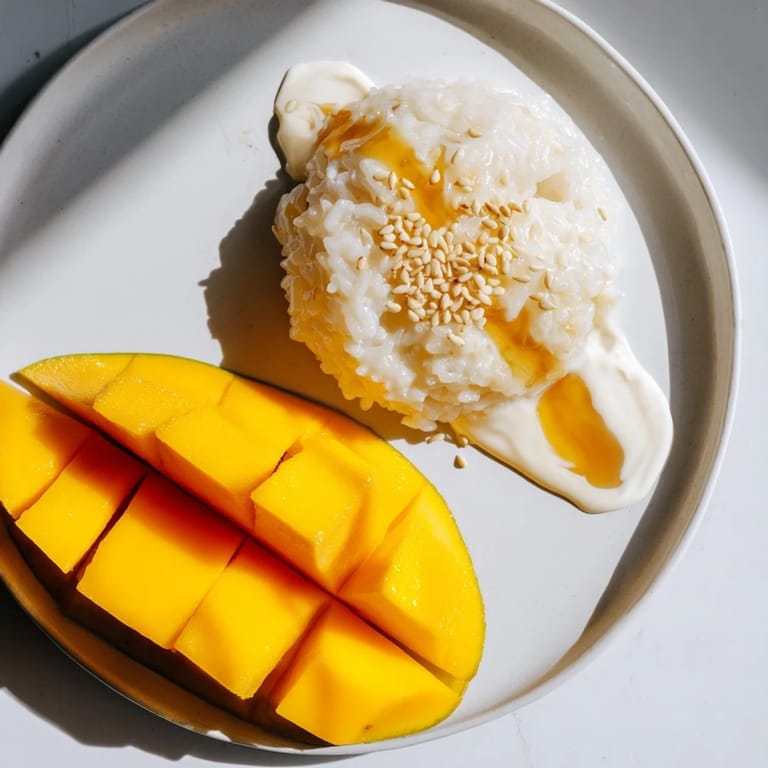
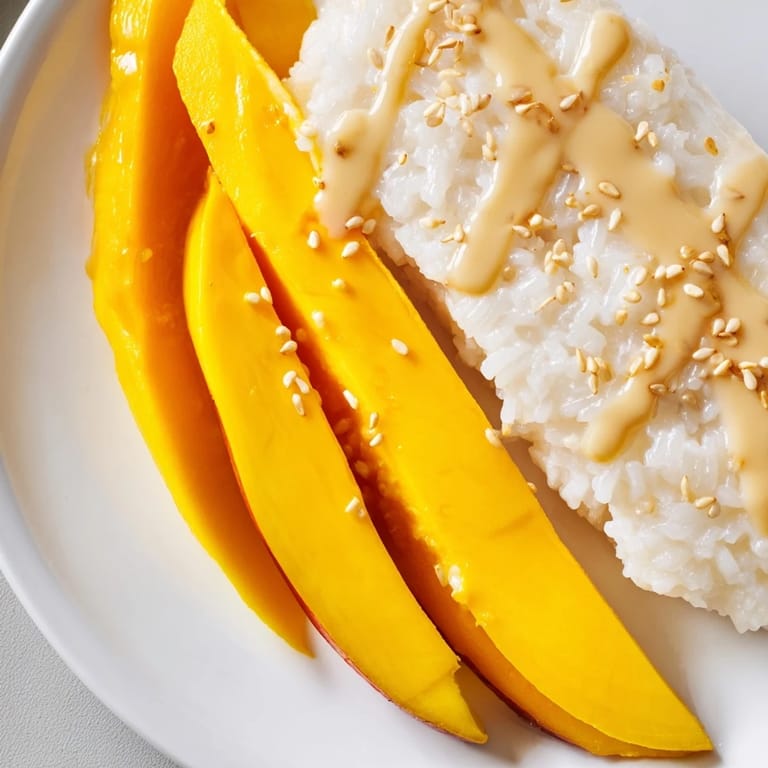
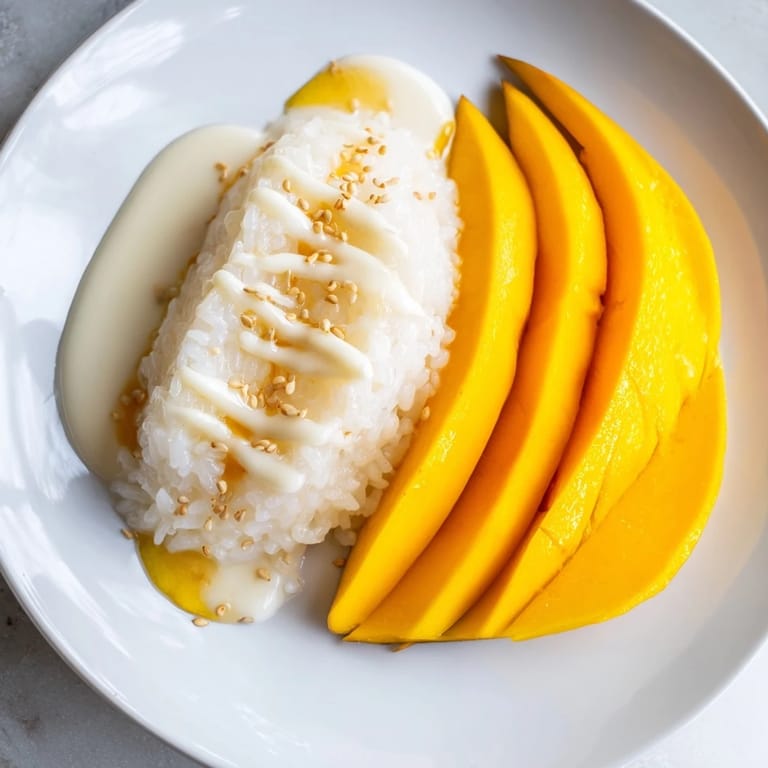
- Mound warm sticky rice on each plate, arrange your mango slices beside it, and drizzle the remaining coconut sauce over and around everything. Finish with a sprinkle of coconut cream and toasted sesame seeds if you're feeling fancy.
 Save to Pinterest
 There's a moment, right after you plate everything, when you step back and see the golden mango against the milky rice, the amber sauce pooling around it, and you realize you've created something genuinely beautiful. It's the kind of dessert that makes people understand why food matters beyond nutrition—why we gather, why we cook, why a single plate of something perfect can feel like an embrace.
How to Choose the Perfect Mango
The mango makes or breaks this dish, so it deserves a moment of attention at the market. Smell it near the stem—that's where the sweetness hides, and a ripe mango should smell almost floral, like you could eat it with your eyes closed. Gently squeeze it; you want something that yields to pressure without feeling mushy or bruised. I've learned to buy my mangoes a day or two before I plan to make this, letting them ripen on my counter where I can check them obsessively, because there's nothing worse than cutting into one that looked perfect but tastes like nothing.
Make-Ahead Magic
The beauty of this recipe is that you can prepare the rice hours before serving—just leave it covered at room temperature, and it stays creamy and perfect. I often soak the rice overnight, steam it in the morning, and let it cool slowly under a cloth so it stays moist. When guests arrive, I simply slice fresh mango and warm the leftover coconut sauce gently (never in the microwave, which makes it grainy), then plate everything in minutes. This flexibility means you can impress people without spending your entire evening in the kitchen, which feels like winning the lottery in my book.
Flavor Riffs and Personal Twists
Once you've mastered the classic version, this dish invites experimentation in the most forgiving way. I've added a whisper of pandan extract to the rice for extra fragrance, swapped palm sugar for regular sugar to deepen the coconut flavor, and even sprinkled a tiny pinch of cardamom into the sauce on occasions when I was feeling adventurous. Some friends use a mix of mango and other stone fruits—peaches or plums—which sounds unusual but somehow works because the sticky rice and coconut are flexible enough to play well with different flavors. The point is that once you understand how the parts work together, you can bend the rules without breaking the dish.
- Toast your sesame seeds or mung beans in a dry pan for 2–3 minutes to unlock their nutty flavor before garnishing.
- If you can find pandan leaves, add one or two to the steaming water for subtle fragrance that tastes authentically Thai.
- Serve with a small spoon of crème fraîche or Greek yogurt on the side for contrast, even though it's not traditional—it's my favorite secret.
 Save to Pinterest
 This dish has taught me that simple recipes with excellent ingredients beat complicated ones every single time. Make it for someone you care about, taste their reaction, and you'll understand why mango sticky rice has survived centuries and will probably outlive us all.
Recipe FAQs
- → What type of rice is used for authenticity?
Glutinous or sweet rice is essential for the right sticky texture and to absorb the coconut flavors properly.
- → How is the coconut sauce prepared?
It’s made by gently heating full-fat coconut milk with granulated sugar and a pinch of salt until the sugar dissolves, without boiling.
- → Can I prepare the sticky rice ahead of time?
It’s best enjoyed fresh since refrigerated sticky rice tends to harden and lose its creamy texture.
- → Are there any optional garnishes recommended?
Coconut cream and toasted sesame seeds or mung beans add extra flavor and a subtle crunch when sprinkled on top.
- → What substitution can enhance the coconut sauce flavor?
Replacing granulated sugar with palm sugar provides a richer, more fragrant taste to the sauce.
- → Is this dish suitable for special diets?
Yes, it’s naturally vegetarian and gluten-free, making it accessible for various dietary preferences.